

Optimize Your Car Crash Attorney SEO Strategy
In today’s digital landscape, personal injury lawyers must prioritize their online presence to attract potential clients. With over 80% of people using search engines like Google and Bing to find legal services, a well-crafted SEO strategy is crucial for law firms to stay competitive.
A robust search engine optimization approach involves multiple interconnected elements, including keyword optimization, content creation, technical website improvements, and local search tactics. By implementing these strategies, personal injury lawyers can increase their firm’s visibility and drive measurable results.
Effective SEO generates high-intent leads from individuals actively searching for legal help, making it a high-converting marketing channel for injury lawyers. This guide will provide actionable steps and strategies to help personal injury practices thrive in the competitive online landscape.
Key Takeaways
- Understand the importance of SEO for personal injury lawyers
- Learn how to increase online visibility and attract potential clients
- Discover the key elements of a robust SEO strategy
- Implement actionable steps to drive measurable results
- Maximize your law firm’s online presence with effective SEO tactics
Why SEO Matters for Car Crash Attorneys
The way people search for legal representation has changed dramatically, making SEO crucial for car crash attorneys. With the majority of potential clients turning to online searches to find legal help, having a strong online presence is no longer optional.
The Digital Shift in Legal Client Acquisition
The traditional methods of client acquisition, such as referrals and print advertising, have given way to digital marketing. Today, accident victims immediately turn to their smartphones and computers to search for legal representation, making online visibility during these critical moments essential for capturing cases.
Key aspects of this digital shift include:
- The rise of digital marketing channels as the primary method for finding legal representation
- The decline of traditional advertising methods like yellow pages and television advertisements
- The increasing reliance on search engines to find personal injury lawyers
How Potential Clients Search for Legal Representation
Understanding how potential clients search for legal representation is crucial for personal injury lawyers. They typically use specific search patterns and keywords, including geo-specific terms like “car accident lawyer near me” and urgent phrases indicating high intent.
Some common search patterns include:
- Using location-based searches to find local legal representation
- Employing urgent language to convey the need for immediate legal assistance
- Searching for specific types of legal services, such as “personal injury lawyers”
The Competitive Advantage of Strong Search Rankings
Strong search rankings provide a significant competitive advantage for car crash attorneys. By appearing at or near the top of search results, law firms can establish themselves as authoritative and reputable, even before potential clients visit their website.
The benefits of high search engine visibility include:
- Increased credibility and reputation
- Improved website traffic and lead generation
- A sustained flow of potential clients through effective SEO
By understanding and leveraging these aspects, personal injury lawyers can improve their online presence and attract more clients.
Understanding Search Engine Optimization for Personal Injury Law
In the digital age, personal injury law practices need to grasp the fundamentals of SEO to stay competitive. Search engine optimization is a critical component of online marketing that helps law firms appear prominently in search results.
What Is SEO and How Does It Work
SEO involves optimizing a website to rank higher in search engine results pages (SERPs) for specific keywords. This is achieved through a combination of strategies, including creating high-quality, relevant content and improving the website’s technical structure.
Key SEO practices include:
- Optimizing website content to inform search engines about the page’s topic
- Improving website structure for better user experience and crawlability
- Securing high-quality backlinks to signal authority to search engines
The Difference Between SEO and SEM for Law Firms
While often used interchangeably, SEO and Search Engine Marketing (SEM) are distinct strategies. SEO focuses on improving organic search rankings, whereas SEM includes paid advertising strategies like Pay-Per-Click (PPC) ads.
The key difference lies in their approach:
- SEO builds long-term, sustainable rankings
- SEM provides immediate visibility through paid placements
How Search Engines Like Google Evaluate Attorney Websites
Search engines use complex algorithms to evaluate websites based on factors such as content relevance, technical performance, authority signals from backlinks, and user experience. For personal injury law firms, demonstrating expertise and providing valuable content is crucial.
By understanding these principles, personal injury lawyers can optimize their online presence effectively and attract potential clients.
The Impact of AI on Personal Injury Search Results
Artificial intelligence is transforming how search engines present information to users seeking legal assistance. This shift is particularly significant for personal injury lawyers who rely on search engine visibility to attract potential clients.
Understanding AI Overviews in Search Results
Search engines are increasingly using artificial intelligence to provide quick answers to search queries through AI overviews. These are short, expandable paragraphs that appear at the top of search results, potentially answering the user’s question directly.
Key characteristics of AI Overviews:
- Provide immediate responses to user queries
- Appear at the top of search results
- Are expandable for further information
- May reduce click-throughs to individual websites
Optimizing Content for AI-Generated Answers
To remain visible in this new landscape, personal injury lawyers must optimize their content for inclusion in AI-generated answers. This involves creating clear, structured, and well-formatted content that directly addresses common legal questions.
Best practices include:
- Using clear headings and concise answers
- Providing authoritative information on personal injury law topics
- Structuring content to directly address common legal queries
How AI Changes Traffic Expectations
The integration of AI in search results changes traffic expectations for personal injury lawyers. While top search rankings are still valuable, they may not drive the same volume of traffic as before. Instead, being cited as a source within AI overviews becomes a new form of visibility.
Adapting to this change involves:
- Recalibrating performance metrics to account for AI-driven search results
- Focusing on being included as a source in AI overviews
- Understanding that visibility in AI overviews can establish authority even with different click-through rates
Building Your Car Crash Attorney SEO Strategy
A well-structured SEO strategy can significantly enhance the online presence of car crash attorneys, driving more qualified leads. To achieve this, it’s essential to understand the core components that make up a comprehensive SEO plan.
Defining Your Target Audience and Client Personas
Developing detailed client profiles based on demographics, behaviors, needs, and pain points is crucial. For instance, a 35-year-old construction worker in Houston seeking compensation for a workplace injury may search for “construction injury lawyer Houston.” Understanding these specifics helps in tailoring your content to meet the needs of potential clients.
Understanding Geographic Service Areas
Clearly defining the cities, counties, and regions where your injury law firm is licensed to practice is vital. This ensures that your SEO efforts are targeted towards areas you can effectively serve, enhancing your local search visibility.
Conducting Competitor Analysis
Analyzing what keywords your competitors target, the content they create, and their backlink profiles provides valuable insights. This information can be used to refine your SEO strategy and gain a competitive edge in the personal injury market.
Setting Measurable SEO Goals
Establishing specific, measurable objectives tied to business outcomes such as organic traffic increases, keyword ranking improvements, and lead generation targets is essential. This approach ensures that your SEO efforts are aligned with your law firm’s overall goals.
| SEO Goal | Target Metric | Timeline |
|---|---|---|
| Organic Traffic Increase | 20% increase | 6 months |
| Keyword Ranking Improvement | Top 3 for target keywords | 9 months |
| Lead Generation | 30 new leads per quarter | 12 months |
By focusing on these key areas and avoiding black hat SEO tactics, your law firm can develop a robust SEO strategy that drives long-term success.
Keyword Research for Personal Injury Lawyers

Keyword research is a foundational element of SEO strategy for personal injury lawyers, enabling them to target the right audience. Effective keyword research helps attorneys understand what potential clients are searching for online, allowing them to tailor their content and marketing efforts accordingly.
Identifying High-Intent Personal Injury Keywords
High-intent keywords are search terms that indicate a potential client is ready to hire a lawyer. These keywords often include phrases related to specific legal services, such as “car accident attorney” or “slip and fall lawyer.” Identifying and targeting these keywords can significantly improve a law firm’s online visibility and attract high-quality leads.
Using Geographic Modifiers for Local Search
For personal injury lawyers, incorporating geographic modifiers into their keyword strategy is crucial. This involves using city names, neighborhood terms, county designations, and “near me” variations to capture local search traffic. For example, targeting “car accident lawyer near me” or “personal injury attorney in [City]” can help attract local clients.
Tools for Discovering Valuable Search Terms
Several tools are available to help personal injury lawyers discover valuable search terms. Google Keyword Planner, SEMrush, Ahrefs, and Google Search Console are some of the most effective tools for this purpose. These tools provide insights into search volumes, competition levels, and related keyword opportunities, enabling lawyers to make informed decisions about their SEO strategy.
Balancing Search Volume with Competition
A key aspect of keyword research is finding a balance between search volume and competition. While high-volume keywords like “car accident lawyer” may be attractive, they are often highly competitive. Targeting more specific, lower-volume keywords that are less competitive can sometimes yield better results, as they may convert more effectively.
By understanding and implementing these keyword research strategies, personal injury lawyers can enhance their online presence, attract more relevant traffic, and ultimately grow their practice.
On-Page SEO Optimization for Law Firm Websites
Optimizing your law firm’s website for on-page SEO elements can significantly enhance your online visibility. This involves several key strategies that help search engines understand and rank your website pages for relevant personal injury searches.
Crafting Effective Title Tags for Legal Pages
Title tags are HTML elements that specify the webpage title, displayed as the clickable headline in search engine results pages (SERP). A well-crafted title tag is unique, descriptive, concise (50-60 characters), includes relevant keywords, and accurately describes page content. For example, “Personal Injury Lawyer – Expert Legal Assistance” is an effective title tag.
Writing Compelling Meta Descriptions
Meta descriptions are HTML attributes that summarize the webpage, appearing under title tags on SERPs, influencing click-through rates. Effective meta descriptions are 150-160 characters, include important keywords, and provide compelling reasons to visit. For instance, “Get expert legal help after a car accident. Our personal injury lawyers are here to guide you through the process.”
Using Header Tags to Structure Content
Headers (H1, H2, H3) organize content into subsections, allowing visitors to scan for information. Proper header structure improves user experience by enabling potential clients to quickly locate the information they need about your personal injury services.
Creating SEO-Friendly URLs
SEO-friendly URLs are clean and include primary keywords. For example, “www.yourwebsite.com/personal-injury-lawyer-services” is an SEO-friendly URL. This structure makes it easier for both users and search engines to navigate your site.
By implementing these on-page SEO strategies, law firms can improve their search engine rankings, drive more relevant traffic to their website, and ultimately attract more clients.
Technical SEO Essentials for Attorney Websites
Search engines can’t effectively crawl, index, and rank attorney websites without proper technical SEO. This foundational element ensures that law firms’ online presence is both visible and accessible to potential clients.
Mobile Optimization and Responsive Design
A mobile-friendly website is no longer optional; it’s a necessity. With Google’s mobile-first indexing, the mobile version of your site determines your search rankings. A responsive design provides an optimal user experience across various devices, from smartphones to desktop computers.
Improving Page Speed and Core Web Vitals
Page speed is a critical factor in user experience and search engine rankings. Google’s Core Web Vitals metrics assess loading performance, interactivity, and visual stability. Ensuring your site loads quickly and operates smoothly is vital, especially for stressed accident victims seeking legal representation.
Implementing Schema Markup for Legal Services
Schema markup helps search engines understand your practice areas, location, reviews, and other structured data. This can enhance search result displays, making your website a better match for specific searches and potentially displaying client reviews or services directly on search results.
Fixing Crawl Errors and Site Structure Issues
Using tools like Google Search Console, you can identify and fix crawl errors, broken links, and site structure issues. This ensures that search engines can properly index your pages, improving overall site performance.
| Technical SEO Aspect | Importance | Impact on User Experience |
|---|---|---|
| Mobile Optimization | High | Improves accessibility on various devices |
| Page Speed | High | Enhances user engagement and reduces bounce rates |
| Schema Markup | Medium | Provides additional context in search results |
| Crawl Error Fixing | High | Ensures proper indexing and site visibility |
By addressing these technical SEO essentials, attorney websites can improve their search engine rankings, user experience, and overall online visibility.
Local SEO Strategies for Car Crash Lawyers
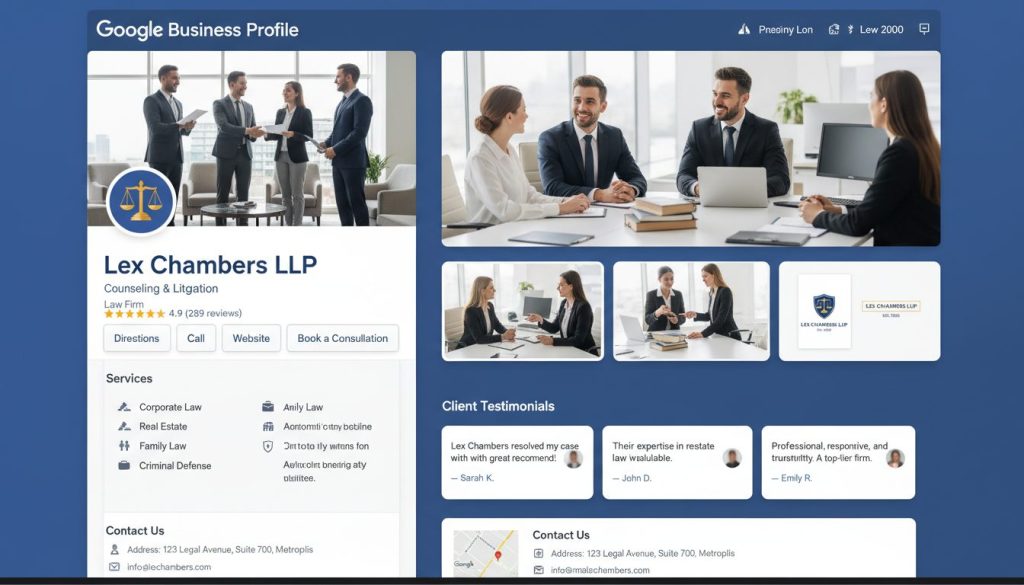
As a car crash lawyer, having a strong local SEO strategy can make all the difference in being found by potential clients online. Local SEO focuses on optimizations for search results tailored to specific geographic locations, helping personal injury lawyers dominate search results within their service areas.
Optimizing Your Google Business Profile
Optimizing your Google Business Profile is a critical step in local SEO. This free tool appears prominently in local search results, and a complete profile with accurate information, high-quality office photos, regular posts, and authentic client reviews significantly improves visibility for “lawyer near me” and city-specific searches.
Building and Managing Local Citations
Acquiring citations from local directories like Yelp, Avvo, and Yellow Pages boosts visibility in local searches. Citations need to be accurate and uniform across platforms to build authority signals that improve local search rankings for injury lawyer practices.
Leveraging Client Reviews for Local Rankings
Leveraging client reviews is essential for local SEO success, as Google heavily weights review quantity, quality, recency, and ratings when determining local rankings for personal injury lawyers. Strategies for requesting reviews from satisfied clients and responding professionally to all feedback are crucial.
Creating Location-Specific Landing Pages
Creating location-specific landing pages for each city or region served, optimized with local keywords, community information, and geographic relevance signals, helps improve local search visibility.
Using Local Business Schema Markup
Implementing local business schema markup provides search engines with structured data about your practice locations, service areas, and contact information, enhancing local search visibility and increasing chances of appearing in Google’s Local 3-Pack.
By implementing these local SEO strategies, car crash lawyers can improve their search engine rankings, increase online visibility, and attract more clients.
Website Design and User Experience Optimization
In the realm of personal injury law, website design and user experience play pivotal roles in establishing credibility and trust with potential clients. A website that is both visually appealing and user-friendly can significantly enhance a law firm’s online presence.

Creating Clear Navigation for Accident Victims
Clear navigation is essential for helping potential clients find the information they need quickly. This includes structuring intuitive menus and internal linking that allows stressed potential clients to access specific services and contact information easily.
- Simple and consistent menu structures
- Prominent display of contact information
- Internal linking to key service pages
Optimizing Above-the-Fold Content
The content visible without scrolling (above-the-fold) should include critical elements such as practice focus, geographic service area, contact methods, and trust signals to immediately engage visitors.
- Practice area descriptions
- Geographic service areas
- Clear call-to-action buttons
Strategic Call-to-Action Placement
For personal injury practices, the placement of call-to-action (CTA) elements should balance visibility with sensitivity, avoiding aggressive sales tactics that can alienate vulnerable prospects.
Effective CTAs are those that are clear, concise, and contextually relevant, encouraging potential clients to take the next step without feeling pressured.
Building Trust Through Testimonials and Credentials
Featuring client testimonials, case results, attorney credentials, and professional affiliations prominently on the website helps build the trust necessary for accident victims to choose qualified representation.
“The professionalism and compassion shown by this law firm were beyond our expectations. They truly care about their clients.” – Client Testimonial
Such trust-building elements are crucial for establishing credibility and making potential clients feel confident in their choice of legal representation.
Content Marketing Strategies for Personal Injury Law Firms
In the competitive landscape of personal injury law, content marketing stands out as a key differentiator. By creating and distributing valuable, relevant, and consistent content, personal injury law firms can attract and retain a clearly defined audience.
Creating High-Quality Practice Area Pages
Developing detailed, authoritative pages for each practice area is crucial. For instance, a page on car accident claims should comprehensively address what clients need to know, incorporating relevant keywords like “personal injury law” naturally while providing genuine educational value.
Practice area pages should cover various aspects, including the legal process, client rights, and how a law firm can assist. Here’s an example of how these pages can be structured:
| Practice Area | Key Topics to Cover | Relevant Keywords |
|---|---|---|
| Car Accident Claims | Legal process, client rights, compensation | Personal injury law, car accident |
| Slip and Fall Injuries | Premises liability, negligence, damages | Slip fall, personal injury |
Blogging About Car Accident Topics
Regularly publishing articles about car accident topics, injury law updates, and client guidance questions builds topical authority and attracts organic search traffic. For example, a blog post titled “What to Do After a Car Accident” can provide step-by-step guidance, incorporating keywords like “car accident” and “personal injury.”
“The key to successful blogging is consistency and relevance. By addressing common client questions and concerns, law firms can establish themselves as trusted authorities in their practice areas.”
Developing Helpful Resource Guides
Creating resource guides, checklists, and downloadable materials provides exceptional value to accident victims. These resources can cover topics like “Understanding Personal Injury Law” or “The Steps to Filing a Car Accident Claim.”
Using Case Studies Effectively
Anonymized case studies can illustrate a law firm’s experience and results without violating confidentiality. For instance, a case study on a successful car accident claim can help potential clients understand how the firm has helped others in similar situations.
Addressing Common Client Questions
Detailed FAQ content directly captures search traffic from people seeking specific answers about personal injury law processes and rights. Common questions include “What is the statute of limitations for personal injury claims?” or “How much compensation can I receive for my injuries?”
By incorporating strategic calls-to-action within educational content, law firms can gently guide readers toward consultation requests without undermining the genuine helpfulness that makes content valuable for both users and search engines.
Link Building Tactics for Personal Injury Attorneys
Link building stands as a cornerstone of SEO for personal injury attorneys, directly influencing their visibility online. High-quality backlinks from authoritative sites signal to search engines that your content is trustworthy and relevant, thereby improving your website’s ranking.
Earning Backlinks from Legal Directories
Listing your personal injury law firm in reputable legal directories is a straightforward way to earn valuable backlinks. Directories like Avvo, Martindale-Hubbell, and Justia are well-respected in the legal community and can enhance your firm’s credibility. Ensure your listings are accurate and up-to-date to maximize the benefits.
Guest Posting on Relevant Industry Websites
Guest posting on relevant blogs and websites not only helps in building backlinks but also establishes your authority in the personal injury law sector. Look for opportunities to contribute to legal blogs, local business websites, and industry-specific publications. This strategy helps in reaching a broader audience and driving relevant traffic to your site.
Building Relationships with Local Media
Building relationships with local journalists and media outlets can lead to high-quality backlinks from news articles and features. Offer expert insights on legal matters related to personal injury, and participate in interviews or quote opportunities. This not only boosts your backlink profile but also enhances your firm’s local reputation.
Partnering with Adjacent Service Providers
Collaborating with businesses that serve your clients, such as medical professionals or auto repair shops, can create natural link-building opportunities. These partnerships can lead to backlinks from their websites, enhancing your link profile while providing additional value to your clients.
Avoiding Black Hat Link Building Practices
It’s crucial to avoid black hat link building tactics, such as buying links or participating in link schemes, as they can lead to severe penalties from search engines. Focus on creating genuine, valuable content and building real relationships to earn your backlinks organically.
| Link Building Strategy | Benefits |
|---|---|
| Legal Directories | Enhances credibility, improves local SEO |
| Guest Posting | Establishes authority, drives targeted traffic |
| Local Media Relations | High-quality backlinks, boosts local reputation |
| Partnerships | Natural link building, additional client value |
By focusing on these link building tactics, personal injury attorneys can improve their online presence, drive more relevant traffic to their websites, and ultimately attract more clients.
Leveraging Social Media for SEO Benefits
In today’s digital landscape, a robust social media presence is crucial for personal injury lawyers to amplify their SEO strategy. By integrating social media into their online marketing efforts, law firms can enhance their visibility, drive more traffic to their website, and ultimately improve their search engine rankings.
Choosing the Right Platforms for Personal Injury Marketing
Not all social media platforms are created equal when it comes to personal injury marketing. Injury lawyers should focus on platforms like Facebook, LinkedIn, YouTube, Instagram, and TikTok, where potential clients are most active. Each platform serves different purposes and can be leveraged to reach clients at various stages of their information-gathering process.
Creating Engaging Video Content
Video content is particularly effective for building trust with potential clients. By creating short, informative videos that explain legal processes or share case handling tips, law firms can establish their expertise and build credibility.
Sharing Blog Posts and Legal Insights
Repurposing blog posts into social media content can significantly extend their reach. By sharing legal insights and tips on social media, injury lawyers can attract potential clients and drive traffic to their website.
Building Your Law Firm Brand Online
A consistent social media presence helps build a law firm‘s brand recognition, making it more likely that potential clients will seek them out online. By leveraging social media effectively, personal injury attorneys can enhance their online visibility and improve their overall SEO performance.
Measuring and Tracking Your SEO Performance

To effectively measure SEO performance, personal injury lawyers must track key metrics that directly impact their law firm’s online visibility and client acquisition. Implementing analytics tools allows them to gain insights into website performance, enabling data-driven decisions to enhance their SEO strategy.
Essential SEO Metrics to Monitor
Personal injury lawyers should focus on key metrics including organic traffic, conversion rate, user engagement (time on page), and bounce rate. These indicators provide a comprehensive view of how users interact with their website and the effectiveness of their online presence.
Using Google Analytics and Search Console
Integrating tools like Google Analytics and Google Search Console provides data on website traffic, user behavior, and keyword rankings. This information is crucial for understanding how users find and interact with the lawyer’s website through Google search.
Tracking Conversion Rates and Lead Quality
It’s essential to set up measurable KPI goals, such as contact form submissions and phone calls, to track users reaching out after visiting the website. Monitoring the conversion rate helps in understanding the quality of leads generated through the website.
Conducting Regular SEO Audits
Regular SEO audits using tools like SEMrush, Ahrefs, or Moz help track site health, check for broken links, monitor backlinks, and ensure keywords effectively target high-quality leads for personal injury cases. This process enables injury lawyers to identify areas for improvement and adjust their strategies accordingly.
By focusing on these metrics and using the right tools, personal injury lawyers can refine their SEO strategies, improve their online visibility, and attract more relevant traffic to their website.
Common SEO Mistakes Car Crash Attorneys Should Avoid
Effective SEO strategies for car crash attorneys involve steering clear of detrimental practices that can harm their online visibility and search rankings. By understanding and avoiding common SEO mistakes, personal injury lawyers can improve their chances of attracting potential clients.
Black Hat SEO Tactics That Can Harm Your Rankings
Using black hat SEO tactics, such as purchasing links or keyword cloaking, can lead to penalties from search engines. These practices may offer temporary gains but ultimately damage a law firm’s online reputation. It’s crucial for personal injury lawyers to opt for sustainable, organic growth strategies.
Keyword Stuffing and Over-Optimization
Keyword stuffing and over-optimization are outdated tactics that modern search engines can easily detect. Personal injury lawyers should focus on creating high-quality, relevant content rather than attempting to manipulate search rankings.
Neglecting Mobile Users
With the majority of personal injury searches occurring on mobile devices, neglecting mobile optimization can significantly impact a law firm’s search rankings. Ensuring a website is mobile-friendly is essential.
| SEO Mistake | Impact on Search Rankings |
|---|---|
| Black Hat SEO | Penalties from search engines |
| Keyword Stuffing | Detected and penalized by modern algorithms |
| Neglecting Mobile Users | Lower search rankings due to poor user experience |
Ignoring Local SEO Opportunities
Many personal injury lawyers fail to capitalize on local SEO opportunities, despite serving specific geographic areas. Optimizing for location-based searches can generate more qualified leads.
Poor Website Structure and Navigation
A poorly structured website with confusing navigation frustrates both users and search engines. Ensuring a clear and logical website structure is vital for improving search rankings and user experience.
Advanced SEO Strategies for Competitive Markets
In highly competitive legal markets, personal injury lawyers need sophisticated SEO strategies to stand out and attract potential clients. As the digital landscape evolves, it’s crucial for car crash attorneys to stay ahead of the curve.
Optimizing for Voice Search Queries
With the rise of voice assistants, optimizing for voice search queries has become essential. This involves focusing on conversational, question-based queries that people speak rather than type. For instance, phrases like “who’s the best personal injury lawyer near me” should be targeted. By doing so, attorneys can capture the growing voice search traffic.
Targeting Featured Snippets
Featured snippets are answer boxes that appear at the top of search results, providing direct answers to user queries. To capture these coveted top search results, content should be structured clearly with definitive answers to common questions. This increases the likelihood of appearing in position zero.
Creating Comprehensive Pillar Content
Developing authoritative, in-depth resources on core personal injury topics establishes expertise and helps related pages rank more effectively across search engines like Google. This comprehensive engine optimization technique is vital for dominating search results.
Using Video SEO for Personal Injury Topics
Video content is increasingly appearing in top search results, with YouTube being the second-largest search engine after Google. Injury lawyer practices can benefit from video SEO strategies, including YouTube optimization, video schema markup, transcription inclusion, and video embedding.
By implementing these advanced SEO strategies, car crash attorneys can gain a competitive edge in crowded markets. It’s essential to build upon fundamental optimization efforts, providing incremental advantages that amplify existing strengths.
The Future of SEO for Personal Injury Lawyers>
The future of SEO for personal injury lawyers will be shaped by emerging trends such as AI integration, visual search, and voice-activated queries. As technology continues to advance, it’s crucial for lawyers to understand these changes and adapt their strategies accordingly.
Emerging Trends in Legal Search Marketing
Several significant developments are on the horizon for personal injury lawyers. These include increased AI integration in search results, the growing importance of visual search capabilities, and the rise of zero-click search results. Local search features are also evolving, impacting how injury lawyers can reach potential clients.
The Growing Role of Artificial Intelligence
Artificial intelligence is transforming Google search by enabling more sophisticated content evaluation, conversational interfaces, and personalized results based on user context. Machine learning algorithms now prioritize content that demonstrates genuine expertise, authoritativeness, and trustworthiness over technical optimization tricks.
Adapting to Changing Search Engine Algorithms
To remain competitive, personal injury lawyers must build adaptable SEO strategies that can evolve with changing search engine algorithms. This involves focusing on comprehensive content that demonstrates authentic expertise and provides exceptional user experiences.
By understanding and optimizing for emerging technologies like voice interfaces and visual search, injury lawyers can stay ahead of the competition. The key to effective top search visibility for personal injury practices remains providing genuine value to potential clients seeking legal help.
Conclusion
In the ever-evolving digital marketplace, personal injury law firms must prioritize SEO to remain competitive and connect with potential clients actively searching for legal representation. By optimizing for relevant keywords, creating valuable content, and implementing local SEO strategies, law firms can significantly boost their online visibility and attract more high-quality leads.
A well-crafted SEO strategy is essential for personal injury lawyers to capture high-intent leads at the exact moment prospects need legal representation. This requires a sustained commitment to multiple interconnected elements, including technical website improvements, content creation, local visibility, and ongoing performance measurement. Search engine optimization is not a one-time task but an ongoing process that demands continuous effort and expertise.
The return on investment for comprehensive SEO strategies far exceeds most alternative marketing channels, making it a crucial component of a successful law firm’s marketing plan. By combining empathetic client service with strategic online visibility, law firms can dominate their markets, attracting the potential clients who need their expertise while competitors struggle with outdated marketing approaches.
As the digital landscape continues to evolve, it’s essential for injury lawyers to stay ahead of the curve by adopting sophisticated SEO techniques. By doing so, they can ensure their practice remains visible and competitive, ultimately serving two critical purposes: helping personal injury victims find qualified legal help and building sustainable, thriving practices.
FAQ
What is the importance of having a strong online presence for personal injury lawyers?
A strong online presence is crucial for personal injury lawyers as it allows them to reach potential clients actively searching for legal representation, increasing their visibility and credibility in a competitive market.
How do search engines like Google evaluate law firm websites?
Search engines evaluate law firm websites based on factors such as relevance, user experience, page speed, mobile responsiveness, and the quality of content, with the goal of providing users with the most accurate and helpful results.
What is the difference between SEO and SEM for law firms?
SEO (Search Engine Optimization) focuses on improving a website’s organic search rankings, while SEM (Search Engine Marketing) involves paid advertising on search engines, allowing law firms to reach potential clients through both organic and paid channels.
How can personal injury lawyers optimize their website for local search?
Personal injury lawyers can optimize their website for local search by including geographic modifiers in their keywords, creating location-specific landing pages, and claiming their Google Business Profile to increase visibility in local search results.
What are some common SEO mistakes that personal injury lawyers should avoid?
Common SEO mistakes include keyword stuffing, neglecting mobile users, ignoring local SEO opportunities, and poor website structure and navigation, which can harm search rankings and user experience.
How can law firms measure the success of their SEO efforts?
Law firms can measure the success of their SEO efforts by tracking essential metrics such as search rankings, website traffic, conversion rates, and lead quality, using tools like Google Analytics and Search Console.
What role does content marketing play in SEO for personal injury law firms?
Content marketing plays a crucial role in SEO by providing high-quality, relevant content that attracts potential clients, establishes the law firm’s authority, and improves search engine rankings.
How can personal injury lawyers leverage social media for SEO benefits?
Personal injury lawyers can leverage social media by creating engaging content, sharing blog posts and legal insights, and building their law firm brand online, which can drive traffic to their website and improve their online presence.

Motor Vehicle Accident Lead Generation: Get More Clients
The United States witnesses a staggering 6.1 million motor vehicle accidents annually, resulting in over 2.2 million injuries and approximately 44,000 deaths. The sheer scale of these incidents creates a continuous demand for legal representation, making personal injury law a thriving practice area.
For personal injury law firms, motor vehicle accident lead generation is a critical service that connects them with potential clients actively seeking legal representation after being injured in crashes. This service provides a direct path to high-value cases, serving as a scalable and efficient alternative to traditional marketing methods.
By leveraging lead generation, law firms can grow their caseloads with pre-qualified, high-intent prospects while helping injured victims find competent legal representation.
Key Takeaways
- Motor vehicle accidents create a high demand for legal representation.
- Lead generation connects law firms with potential clients seeking legal help.
- It provides a scalable alternative to traditional marketing methods.
- Law firms can grow their caseloads with pre-qualified prospects.
- Injured victims can find competent legal representation.
Why Motor Vehicle Accident Leads Are Essential for Growing Your Law Firm
For personal injury law firms, acquiring motor vehicle accident leads is a strategic move towards sustainable growth. Motor vehicle accidents are an evergreen practice area, generating consistent demand regardless of economic conditions or seasonal fluctuations.
Motor vehicle accident leads provide law firms with a consistent pipeline of potential clients. Unlike other marketing channels, MVA leads deliver immediate access to prospects who have already expressed interest in legal representation.
- Predictable accident occurrence rates allow firms to forecast caseload growth and scale operations systematically.
- Pre-qualified leads eliminate the need for broad-spectrum advertising campaigns.
- MVA leads offer superior conversion potential due to the high intent of recipients.
Establishing reliable lead generation partnerships gives law firms a competitive advantage in their markets. The evergreen nature of motor vehicle accidents ensures that investment in lead generation continues to deliver returns year after year.
| Benefits of MVA Leads | Description |
|---|---|
| Consistent Pipeline | Provides law firms with a steady stream of potential clients. |
| Predictable Growth | Enables firms to forecast caseload growth and scale operations. |
| Superior Conversion | Offers higher conversion rates due to the high intent of leads. |
By leveraging motor vehicle accident leads, law firms can drive growth, improve their competitive standing, and achieve a strong return on investment.
What Are Motor Vehicle Accident Leads?
MVA leads represent potential clients who have been involved in vehicle collisions and are seeking legal representation. These individuals are looking for attorneys to help them recover compensation for their injuries and damages.
Understanding MVA Lead Types
MVA leads encompass a broad range of motor vehicle accidents, including car accidents, truck accidents, motorcycle accidents, pedestrian accidents, and more. The information contained in these leads is critical for law firms, as it includes details about the accident, the individuals involved, and their need for legal services.
- Motor vehicle accident leads contain essential information such as the prospect’s name, phone number, email address, location, accident details, and injury description.
- These leads help law firms identify potential clients who are actively seeking legal representation.
- Understanding the different types of MVA leads is vital for law firms to effectively target their services.
The Value of Exclusive vs. Shared Leads
The distinction between exclusive and shared leads significantly impacts a law firm’s conversion rates and overall ROI. Exclusive MVA leads are sold to only one attorney, while shared leads may be distributed to multiple firms simultaneously.
- Exclusive leads command higher prices but deliver substantially better ROI because your firm faces no competition from other attorneys.
- Shared leads cost less initially but require faster response times and more aggressive follow-up, often leading to lower conversion percentages.
The choice between exclusive and shared leads should align with your firm’s intake capacity, response speed capabilities, and budget considerations.
How Motor Vehicle Accident Lead Generation Works

To successfully generate motor vehicle accident leads, law firms must employ a multi-channel marketing approach. This involves leveraging various digital marketing strategies to capture potential clients actively searching for legal representation.
Pay-Per-Click (PPC) Advertising for Attorney Leads
Pay-per-click advertising places law firm advertisements at the top of search engine results when accident victims search for terms like “car accident lawyer” or “auto injury attorney.” This captures prospects at the exact moment they’re seeking legal help.
PPC campaigns for motor vehicle accident leads are highly competitive, with single clicks often costing $200-$300 or more in major metropolitan markets. Sophisticated campaign management is required to achieve profitable cost-per-acquisition ratios.
SEO-Driven Lead Generation
SEO-driven lead generation focuses on creating authoritative content that ranks organically in search engines for accident-related queries. This provides a more sustainable long-term approach that doesn’t require paying for each individual click.
Professional lead generation companies invest heavily in building websites that rank for high-value search terms like “T Bone Car Accident Settlement” and similar queries that indicate strong intent to pursue legal claims.
Social Media and Digital Advertising
Social media advertising complements search marketing by targeting users based on demographics, interests, and behaviors that correlate with accident involvement. This creates awareness even before individuals begin actively searching for attorneys.
Real-Time Lead Delivery Systems
Real-time lead delivery systems use advanced technology to instantly route qualified prospects to the appropriate law firm based on geographic location, practice area focus, and pre-established matching criteria within milliseconds of form submission.
The process relies on sophisticated tracking and analytics to continuously optimize campaign performance, identifying which channels, messages, and targeting parameters produce the highest quality leads at the most favorable cost ratios.
Our Lead Screening and Quality Assurance Process
To protect attorney investments, our lead screening process implements multiple quality checkpoints to verify that every motor vehicle accident lead meets stringent qualification criteria before being delivered to law firm partners.
Our comprehensive screening process ensures that every lead is thoroughly vetted. This involves checking several essential qualification criteria: the prospect must have been injured in the accident, not found at fault, not already have legal representation, and the incident must have occurred within the applicable statute of limitations.
Essential Qualification Criteria
The qualification criteria are designed to ensure that leads are viable and relevant. This includes verifying that the accident was a motor vehicle accident, the injured party was not at fault, and they have sustained physical injuries. Additionally, we confirm that the injured party does not already have legal representation and that the accident occurred within the statute of limitations.
Geographic and Jurisdictional Matching
We ensure that leads are matched geographically and jurisdictionally to the attorneys’ practice areas. This means that leads are only sent to attorneys who are licensed to practice in the state where the accident occurred and who have specifically requested cases from that coverage area.

Flexible Return Policy
Our flexible return policy protects law firms by allowing credits for leads that are invalid due to wrong contact information, jurisdictional issues, or the prospect having already retained another attorney. This ensures that law firms are not charged for leads that do not meet their needs or criteria.
By implementing a rigorous lead screening and quality assurance process, we significantly improve conversion rates for our law firm partners. This comprehensive approach ensures that attorneys receive high-quality leads that meet their specific practice areas and requirements.
Types of Motor Vehicle Accident Cases We Cover
From car accidents to wrongful death cases, our lead generation covers a broad spectrum of motor vehicle accident-related legal needs. Our services are designed to connect attorneys with clients across various accident categories, ensuring a wide reach and diverse case handling.
Car Accident Leads
Car accident leads represent the largest volume category, encompassing T-bone collisions, rear-end crashes, head-on impacts, rollovers, and multi-vehicle pileups that result in injuries ranging from whiplash to severe trauma. These cases are critical for attorneys looking to expand their client base in the personal injury law sector.
Truck and Motorcycle Accident Leads
Truck and motorcycle accident leads typically involve more serious injuries and higher settlement values due to the severity of crashes involving commercial vehicles or the vulnerability of motorcyclists. These high-value cases are crucial for law firms specializing in personal injury law.
| Type of Accident | Common Injuries | Settlement Values |
|---|---|---|
| Car Accidents | Whiplash, Broken Bones | $5,000 – $50,000 |
| Truck Accidents | Severe Trauma, Spinal Cord Injuries | $50,000 – $500,000 |
| Motorcycle Accidents | Head Injuries, Road Rash | $20,000 – $200,000 |
Pedestrian and Bicycle Accident Leads
Pedestrian and bicycle accident leads involve victims who were struck by vehicles, often resulting in catastrophic injuries. These cases present opportunities for attorneys to help clients seek compensation for their injuries and related expenses.
Hit-and-Run and Wrongful Death Cases
Hit-and-run cases and wrongful death cases arising from motor vehicle accidents require specialized legal handling. Our lead generation services connect attorneys with clients in these complex and often emotionally charged cases.
By covering a wide range of motor vehicle accident cases, we provide attorneys with the opportunity to diversify their practice and help more clients in need of legal representation.
Benefits of Motor Vehicle Accident Lead Generation Services
By leveraging Motor Vehicle Accident Lead Generation Services, law firms can gain a competitive edge in the personal injury market. These services are designed to provide high-quality leads that are more likely to convert into clients.
Higher Conversion Rates and Better ROI
Motor Vehicle Accident Lead Generation Services deliver substantially higher conversion rates than traditional advertising methods. This is because the leads generated are typically individuals who are actively seeking legal representation following a motor vehicle accident.
Cost-Effective Compared to Traditional Marketing
The cost-effectiveness of these services becomes apparent when comparing the cost of a fully vetted lead to Pay-Per-Click (PPC) advertising. A single click on Google can cost between $200-$300 without any guarantee of conversion, whereas a fully vetted lead costs between $225-$325.
Understanding Settlement Ranges and Case Value
Understanding the potential settlement ranges for different types of motor vehicle accident cases is crucial for law firms. Settlement amounts can vary greatly, from $5,000 for minor injuries to over $1,000,000 for wrongful death cases.
Scalability and Competitive Advantage
Lead generation services offer law firms the scalability they need to grow their client base systematically. By increasing lead volume as their intake capacity grows, firms can expand their operations without the unpredictability associated with traditional marketing campaigns.
Moreover, the real-time delivery of leads enables law firms to connect with potential clients quickly, often before competitors are even aware of the case. This competitive advantage, combined with the predictable cost structure of lead generation services, allows for more accurate marketing budget forecasting and ROI calculation.
Pricing and Investment: What MVA Leads Cost
Law firms seeking to acquire new clients through MVA leads must navigate a pricing structure that depends on several critical factors. The cost of motor vehicle accident leads is not one-size-fits-all; it varies based on the specifics of the lead and the needs of the law firm.
Key Factors Influencing Lead Pricing
The pricing of motor vehicle accident leads is influenced by several key factors, including geographic location, lead exclusivity, case type, and lead delivery speed. For instance, leads from competitive legal markets like Los Angeles or New York tend to be more expensive due to higher demand and advertising costs.
- Geographic location significantly impacts pricing, with major cities commanding premium rates.
- Lead exclusivity is another crucial factor, as exclusive leads cost more but offer higher conversion rates.
- The type of case, such as truck accidents or wrongful death, can also affect pricing due to their complexity and potential settlement value.
- Lead delivery speed, particularly for real-time leads, can increase costs due to their urgency and higher likelihood of conversion.
Comparing Lead Costs to PPC Advertising
When evaluating the cost of MVA leads, it’s essential to compare them to other marketing strategies like PPC advertising. A qualified lead can be more cost-effective than a single click on competitive keywords, especially since leads represent potential clients who have already expressed intent to retain an attorney.
The investment in vehicle accident leads should be considered in the context of the lifetime value of a client, not just the initial acquisition cost. Successful cases can generate significant attorney fees, far exceeding the original lead expense.
Get Started With Exclusive Motor Vehicle Accident Leads Today

Are you ready to grow your personal injury law firm with high-quality motor vehicle accident leads? Our exclusive leads can help you increase your conversion rates and boost your revenue.
Our Onboarding Process
Getting started with our exclusive motor vehicle accident leads is a straightforward process. It begins with an initial consultation where you discuss your law firm’s specific needs, geographic service areas, desired case types, and monthly volume requirements with a lead generation specialist.
The onboarding process typically moves quickly, with accounts becoming active within hours to a few days once payment is processed and delivery preferences are configured according to your firm’s workflow.
Best Practices for Lead Conversion
To maximize the effectiveness of our leads, it’s essential to have a good intake protocol in place and trained staff who can quickly build rapport with potential clients.
- Rapid response is critical: Successful firms contact new leads within 5 minutes of receipt to maximize connection rates.
- Effective intake protocols require trained staff who can demonstrate empathy for the accident victim’s situation and clearly explain your firm’s value proposition.
- Performance tracking and optimization involve regularly reviewing conversion metrics and adjusting your lead purchasing parameters to focus on the highest-performing categories.
By following these best practices and leveraging our high-quality motor vehicle accident leads, you can significantly improve your law firm’s growth and revenue.
Conclusion
Motor vehicle accident lead generation represents a crucial investment for personal injury law firms looking to expand their client base. By leveraging exclusive, high-quality leads, firms can significantly boost their caseload and revenue. The combination of rigorous lead screening, real-time delivery, and flexible return policies creates a risk-mitigated investment that outperforms traditional advertising.
Law firms that embrace lead generation as a core component of their growth strategy gain competitive advantages by connecting with accident victims immediately after incidents occur. To succeed, firms must commit to rapid response protocols and professional intake procedures. By partnering with a reputable lead generation company, law firms can capture more cases, increase revenue, and establish market dominance in their service areas.
FAQ
What is the typical cost of a MVA lead?
The cost of a MVA lead varies based on factors like location, case type, and lead quality. On average, law firms can expect to pay between $50 to $200 per lead.
How do I know if a lead generation company is reputable?
Research the company’s reputation online, check for reviews, and ask about their lead screening and quality assurance processes to ensure they meet your needs.
Can I get exclusive leads for my law firm?
Yes, many lead generation companies offer exclusive leads, which means you’ll be the only law firm contacted by the potential client.
What types of auto accident cases do you cover?
We cover a wide range of cases, including car accidents, truck accidents, motorcycle accidents, pedestrian accidents, and more.
How long does it take to receive MVA leads after signing up?
The time it takes to receive leads can vary, but most law firms start receiving leads within a few days to a week after completing the onboarding process.
Can I target specific geographic areas with my lead generation campaign?
Yes, you can target specific geographic areas, including cities, states, or zip codes, to ensure you’re reaching potential clients in your desired location.
What is the return policy if I’m not satisfied with the leads?
Many lead generation companies offer a flexible return policy or guarantee, so be sure to review their terms before signing up.
How do MVA leads help my law firm’s ROI?
High-quality MVA leads can help increase your law firm’s return on investment by providing a steady stream of potential clients and reducing marketing costs.
How To Start an IV Hydration Business: Blueprint To Start Your Own Clinic
Are you interested in health and wellness and like working with people? Consider starting an IV hydration business. It’s a profitable venture. IV hydration is popular for boosting health and wellness. The global IV industry will grow by 8% by 2028. To start, think about the benefits, disadvantages, services to offer, earning potential, and entry barriers.

Key Takeaways:
- Starting an IV hydration business can be a profitable venture in the health and wellness industry.
- The global IV industry is projected to grow at a rate of 8% by 2028, indicating a growing demand for IV hydration services.
- Before starting your own IV hydration business, it is essential to assess the benefits and disadvantages associated with the industry.
- Consider the earning potential, barriers to entry, and the type of services you wish to offer.
- Thorough planning and a comprehensive business plan are crucial for launching a successful IV hydration business.
Benefits and Disadvantages of Starting an IV Hydration Business
Starting an IV hydration business can pay off well, giving you several chances in the health and wellness field. Yet, there are also downsides to think about. Here, we’ll look at both the good and the bad aspects of starting such a business:
Benefits of Starting an IV Hydration Business
1. Part of the Health and Wellness Movement: IV hydration therapy is now a big part of staying healthy. Your business will be right at the top of a trend that helps people look after themselves better.
2. Flexible and Convenient Services: The good thing about an IV business is how easy and flexible it can be. You could have a clinic people visit or go to them in a mobile unit. This makes it perfect for those who are always on the go.
3. Potential for Steady Growth: The IV hydration market is expected to keep growing. This means there will be more and more people looking for ways to stay well. Your business can get bigger and do well because of this.
4. Versatile Service Offering: Your business, which focuses on IV hydration, can offer many services. You can give simple hydration treatments, as well as special vitamin treatments or help in recovering from sports. This way, many people will find your services helpful.
5. Mobile and Storefront Options: You get to pick whether to run your business from a store where people come to you, or go to them with a mobile service. This choice lets you adjust your business for different places and people.
Disadvantages of Starting an IV Hydration Business
1. Requirement for Trained Professionals: It’s crucial to have well-trained people to handle IV drips and make sure people are safe. But finding and keeping these qualified staff can be hard because there’s a big need for them.
2. Strong Marketing Needed: Many people are now interested in IV hydration, so the market is crowded. To stand out and keep customers, you’ll really need to work on getting the word out about your business. Making your brand unique and marketing well is very important.
3. Limited Customer Base Due to Pricing: Some might see IV hydration as something costly for only a few. This could limit the number of people who use your services. To address this, you’ll need to think carefully about how you price things and find the right people to target.
Even with these challenges, starting an IV hydration business can be a rewarding move. As the need for health and wellness keeps growing, offering a quality and easy-to-access service can help your business stand out and succeed.
Earning Potential of an IV Hydration Business
Starting an IV hydration business brings a good chance to earn money. Many people want IV therapy now. So, you can make a lot of money from this.
Each IV therapy session costs $280 on average. If you do four to five a day, these can bring in $400,000 a year. You might earn $140,000 in profit, which is quite good.
For places that serve 8-10 people every day, you could see more money coming in. These places may make around $600,000 a year. After all the costs, that’s $210,000 in profit. This shows how profitable IV hydration businesses can be.
Once your IV business starts growing, you could earn even more. Opening more shops can lead to bigger profits and earnings every year.
Benefits of High Earning Potential
Having an IV business that makes a lot of money lets you do more. It helps you grow and offer better services.
- More financial security and profit
- Better equipment and technology
- Wider choice of services
- A great team to work with
- Chances to open more shops
By making good use of the earning potential of an IV business, you can be very successful. This field is growing, and people want these health services. It’s a great chance for new businesses.
“The earning potential of an IV hydration business is substantial, and with the right strategies in place, you can build a profitable enterprise that serves the health and wellness needs of your community.” – [Founder of Successful IV Hydration Clinic]
Let’s see an example to understand how much money an IV business can make:
| Metrics | Revenue | Profit |
|---|---|---|
| Average IV hydration session cost | $280 | N/A |
| Sessions per day | 4-5 | N/A |
| Annual revenue | $400,000 | $140,000 |
Remember, these numbers are based on average prices and how often people come. Your actual money might be different. It will depend on where you are, how you market, and the costs of running your business.
Knowing the money you can make with an IV business is important. It helps you plan well and be more successful in this field.
Barriers to Entry in the IV Hydration Business
The IV hydration business has big earning chances. But, there are many challenges to face. Aspiring entrepreneurs need to know these hurdles. This knowledge will help them make a winning plan to tackle these challenges.
Regulatory Requirements and Professional Ownership
One big challenge is the rules. Each state can have its own. Some states say you must have a medical expert in charge. If you’re not a medical pro, you might find it hard to start this business.
Stringent Regulation of IV Therapy
There are tough rules for giving IV therapy in some places. Providers need to be licensed and certified. Keeping up with these rules takes time and money.
Low Awareness and Marketing Investment
Many people don’t know about IV hydration services yet. So, explaining these benefits takes a lot of effort. You need to spend on marketing. This helps build your brand and find customers.
“Overcoming the barriers to entry in the IV hydration industry requires a strategic approach, including understanding regulatory requirements, investing in marketing efforts, and partnering with qualified healthcare professionals.”
Startup Costs and Liability Risks
Starting this business is expensive. You need money for equipment, staff, and your place. Plus, there’s the risk of being sued. Having the right insurance is a must.
Success in this business means planning well. Addressing the rules, marketing right, and handling costs and risks are key. This way, you set yourself up for a good start and a bright future.
| Barriers to Entry | Challenges |
|---|---|
| Regulatory Requirements and Professional Ownership | Medical professional ownership |
| Stringent Regulation of IV Therapy | Licensing and certification processes |
| Low Awareness and Marketing Investment | Promoting the benefits of IV hydration |
| Startup Costs and Liability Risks | Expenses and insurance considerations |
Steps to Start an IV Hydration Business
Starting an IV hydration business means following key steps. You need to do the right things for your drip clinic to succeed.
Determine Your Motivation
Think about why you want to start this business. Is it because you love health and wellness? Knowing your motivation will keep you on track.
Decide on Business Structure
Decide if you’ll go it alone or join a franchise. Going solo gives you more control. Franchises offer support and a known name.
Select IV Treatments
Choosing IV treatments is important. Pick the ones that people want. Think about what your customers will like.
Find a Suitable Location
Your clinic’s location can make or break your business. It should be in a busy spot. It needs to be easy to reach for your customers.
Identify Your Target Market
Figure out who your customers will be. Know their age, interests, and needs. Focus your marketing and services to appeal to them.
Choose an Appealing Business Name
Find a name that sticks in people’s minds. A catchy, unique name can help you stand out. You might want to get advice from a branding expert.
Create a Comprehensive Business Plan
Write a detailed business plan. It should cover your goals, finances, and how you’ll operate. A good plan is key to your success.
Register Your Business and Choose a Legal Structure
Decide what legal structure fits your business. This includes things like if you’ll be a sole owner. You need to get the right permits and licenses too.
Secure Financing if Needed
If you need money, look at your options. You might consider bank loans or investors. Show that your business can make money.
Obtain Permits and Licenses
Check what permits and licenses you need. You have to follow safety and health rules. This is important for your customers and your business.
Open a Business Bank Account
Keep your business money separate from your personal funds. This makes bookkeeping easier. It helps with taxes too.
Get Business Insurance
Protect your business with the right insurance. Get general and professional liability coverage. This helps protect you from unexpected costs.
Following these steps can help you start a successful IV hydration business.

| Step | Description |
|---|---|
| 1 | Determine Your Motivation |
| 2 | Decide on Business Structure |
| 3 | Select IV Treatments |
| 4 | Find a Suitable Location |
| 5 | Identify Your Target Market |
| 6 | Choose an Appealing Business Name |
| 7 | Create a Comprehensive Business Plan |
| 8 | Register Your Business and Choose a Legal Structure |
| 9 | Secure Financing if Needed |
| 10 | Obtain Permits and Licenses |
| 11 | Open a Business Bank Account |
| 12 | Get Business Insurance |
Regulatory Requirements and Healthcare Compliance for IV Hydration
Starting an IV hydration business means staying within certain rules. These rules help make sure patients get safe and top-quality care. Each state might have its own rules, but following guidelines from groups like the Centres for Medicare and Medicaid Services is a must.
To give IV treatments, a licensed health expert must be in charge. They make sure treatments are safe and done right. This is because skilled nurses or doctors know how to care for patients during IV therapy.
A clinic must also have a medical director. This director is a doctor or health expert who checks the clinic’s care process. They keep the care up to standard and make sure the clinic’s rules follow what professionals agree is the best way to do things.
Keeping good records is very important. It helps keep track of each patient’s care. It’s also a must for showing the clinic is obeying the rules if it gets checked or tested.
Fighting infections is key too. A clinic must keep things very clean. This means sterilizing tools, washing hands often, and making sure the whole place is germ-free. These steps keep both patients and clinic workers safe.
“Meeting rules and keeping to high health standards is very important for an IV hydration business. It keeps patients safe and builds trust with the public.”
By following the rules, IV clinics show they’re serious about patient safety. This effort means patients don’t just get care, they get care they can trust.
| Key Points | Regulatory Requirements and Healthcare Compliance for IV Hydration Clinics |
|---|---|
| Requirement 1 | A licensed healthcare professional must administer the IV hydration treatments. |
| Requirement 2 | A medical director should be appointed for clinical oversight and policy establishment. |
| Requirement 3 | Thorough documentation is crucial for tracking patient treatments and ensuring compliance. |
| Requirement 4 | Following infection control measures is essential to prevent the spread of infections. |
Documenting Standard Medical Procedures for IV Hydration
Writing down standard medical ways is key to safely giving IV hydration therapy at your place. By doing this, you keep patients well and your clinic safe from legal issues. Plus, it shows you follow medical rules and helps in patient care.
When you write about IV hydration, you should talk about certain things. These are the main points to include:
- Equipment and supplies: You should write down the tools and supplies for the therapy. This means the IV fluids, catheters, and more used.
- Patient assessment processes: Talk about how to check patients before the therapy. This includes checking their vital signs and going over their medical past.
- Informed consent: Explain how you get patients’ okay before starting the IV therapy. This makes sure they know about the process, risks, benefits, and other options.
- IV administering service: Give details about how to give IV therapy. This covers picking the right vein, staying clean, and watching the rate of the medicine going in.
- Compliance with medical regulations: Say why following medical rules for IV therapy is so important. It includes keeping infections away and reporting bad reactions.
Doing a good job writing these things keeps patients safe and your clinic out of trouble. It shows you’re careful, follow medical rules, and care about your patients a lot.
“Accurate and thorough documentation is a cornerstone of patient care, ensuring the safe and effective delivery of IV hydration therapy. By documenting medical procedures, clinics can fulfill legal requirements, uphold compliance, and provide a detailed record of patient care.” – Dr. Emily Collins, Medical Documentation Expert
Good notes help your clinic run well. They make sure everyone knows the plan for care. They also keep track of how the patient is doing over time.
Also, these notes help with money stuff, like getting paid back and checking that things are done right. They are very helpful for doctors too. They make sure the next steps in treatment are smart, based on the patient’s history with IV therapy.
Developing a Business Plan for Your IV Hydration Business
Starting an IV hydration business needs a good plan. This plan is like a map, showing your goals and how to reach them. It helps your business start strong and get support from investors.
Key Components of a Business Plan
Your plan should have key parts:
- Executive Summary: Outline your business and what makes it special.
- Company Overview: Tell about your IV hydration business, its mission, and legal setup.
- Industry Analysis: Look at the IV hydration market, trends, and growth opportunities.
- Customer Analysis: Figure out who your customers are and what they want.
- Competitive Analysis: Study your rivals and how you can stand out.
- Marketing Plan: Show how you’ll promote your business and get customers.
- Operations Plan: Explain your day-to-day work and what you need to do it.
- Management Team Details: Talk about your team’s skills and experiences.
- Financial Plan: Share your financial forecasts and budget plans.
- Appendix: Add any extra important papers, like research or legal info.
The Importance of a Well-Structured Business Plan
A solid business plan tells investors you’ve thought things through. It explains your goals, shows how you’ll stand out, and predicts your finances. It also helps you stay on track and make smart choices.
| Benefits of a Business Plan for Your IV Hydration Business | Business Plan for IV Therapy Clinic |
|---|---|
| Helps identify and mitigate potential risks and challenges | Outlines the services, treatments, and pricing models |
| Serves as a guide for strategic decision-making | Defines the target market and marketing strategies |
| Assists in securing financing and attracting investors | Details the operational processes and staffing requirements |
| Provides a framework for monitoring and measuring business performance | Offers a financial plan and projections |
Creating a detailed plan is key to your IV hydration business’s success. It helps you avoid problems, stay profitable, and grow.
Choosing a Legal Structure and Registering Your IV Hydration Business
Starting an IV hydration business means selecting a legal structure. This choice should match your business targets and offer needed support. Each structure comes with its own pros and cons.
For IV hydration businesses, some common structures include:
- Sole Proprietorship: Here, you’re the only owner. You make all decisions but also handle all financial and legal risks.
- Partnership: This involves two or more owners. You share responsibilities but a partner’s actions might affect you too.
- Limited Liability Company (LLC): An LLC mixes corporation and partnership benefits. It shields your personal assets and offers tax flexibility.
- Corporation: A corporation is its own legal entity. It helps protect your personal assets but setting it up involves more steps.
After choosing the best structure, you need to register your business. The process and necessary steps vary depending on the location and structure you pick. Generally, you must:
- Register with the right government bodies, like the IRS.
- Get an Employer Identification Number (EIN) or something similar.
- Complete paperwork and pay the registration fees.
Registering makes your business legal. It ensures you follow laws, shows you’re reliable, and allows you to run your business lawfully.
Getting advice from legal experts and business attorneys can make the process smoother. They can help you pick the right structure and manage the registration process.
Benefits of Choosing the Right Legal Structure
“Picking the right legal structure affects your risk, taxes, and how you run the business. Talk to legal experts to get the pros and cons. This will help you choose well.” – Legal Expert
Comparison of Legal Structures for IV Hydration Businesses
| Legal Structure | Advantages | Disadvantages |
|---|---|---|
| Sole Proprietorship | – Easy and inexpensive to set up – Complete control over the business – Full ownership of profits |
– Unlimited personal liability – Difficulty in raising funds – Limited growth potential |
| Partnership | – Shared decision-making and resources – Flexibility in ownership and management – No double taxation |
– Joint and several liabilities – Potential for conflicts among partners – Strained partnerships |
| Limited Liability Company (LLC) | – Limited liability protection – Flow-through taxation – Flexibility in ownership and management |
– More paperwork and formalities – Additional costs – Limited life span |
| Corporation | – Limited personal liability – Easier access to financing – Perpetual existence |
– Complex legal and tax requirements – Double taxation on profits – More expensive to establish |
Securing Financing and Obtaining Permits and Licenses
To start your IV hydration business, you’ll need to arrange financing. You must also get the right permits and licenses to follow the law. Options to finance your business include bank loans, SBA-backed loans, grants, and more. You should check each one to see what works best for you.
Once you have the money, getting permits is next. You’ll need health licenses, OSHA permits, and others. Making sure you follow all the rules helps you avoid trouble later on.
It’s smart to talk to experts or look up what permits you need. They can tell you everything you need to know. Plus, having the proper paperwork shows you’re a trustworthy business.
Permits and Licenses Checklist:
| Permit/License | Issuing Authority | Description |
|---|---|---|
| Health License | State Health Department | License to operate as a healthcare service provider |
| OSHA permits | Occupational Safety and Health Administration (OSHA) | Permits related to occupational safety and health standards |
| Business License | Local Government | License to operate a business in the locality |
| Medical Waste Permit | State Environmental Agency | Permit to handle and dispose of medical waste properly |
| Fire Safety Certification | Fire Department | Certification of compliance with fire safety regulations |
| Pharmacy Permit | State Pharmacy Board | Permit required if medications are dispensed |
Always check with local officials and experts to get the right permits. Following the rules is key to a successful and safe business.
Opening a Business Bank Account and Getting Business Insurance
Starting an IV hydration business? It’s vital to keep your money separate. Get a business bank account for this. It helps track your cash flow and control costs. You’ll need certain documents to open one:
- Employer Identification Number (EIN)
- Articles of Incorporation (if applicable)
- Business license or permit
- Proof of identity (like a driver’s license or passport)
Remember, the right bank is key. Look into various banks. Pick the one that fits your business needs the best.
Also, getting business insurance is a big step. It protects your IV therapy clinic. If accidents, property damage, or lawsuits happen, you’re covered. Start with general liability insurance. It covers claims from others getting hurt or their stuff damaged by your services.
You should also think about these insurances for your IV therapy clinic:
- Professional liability insurance: This covers your business from claims about professional mistakes or carelessness.
- Commercial property insurance: It protects your clinic’s stuff from bad weather, thieves, or accidents.
- Workers’ compensation insurance: If you have staff, it covers their medical bills and missed work due to work injuries or sickness.
It’s wise to work with a business insurance expert. They can help you understand what you need. They’ll guide you to the best insurance fit for your IV therapy clinic.
So, with a business bank account and the right insurance, your IV hydration business is safer. It’s a smart move to protect your clinic’s finances and future.

Conclusion
Starting an IV hydration business can be rewarding. Entrepreneurs who love health and wellness will find joy in it. With planning and following rules, your clinic idea can succeed.
By using this guide and thinking about important points, you can start well. The need for IV services is growing. This means good earnings and helping people get healthier.
Make a detailed business plan and learn the rules. Also, get the money and permissions to open your clinic. Doing this will help your business succeed in the IV market.
IV hydration businesses have a bright future. They are getting more popular, so there’s a big chance to succeed. With hard work and a love for health, you can make a difference in people’s lives with your IV business.
FAQ
What are the benefits of starting an IV hydration business?
Starting an IV hydration business is a good idea these days. It’s a big part of the health and wellness movement. You can set up shop almost anywhere, and people will love you for making their lives easier.
What are the disadvantages of starting an IV hydration business?
But there are also some downsides to think about. You have to find folks who know how to do IV drips. It’s also going to take a lot of work to get your name out there. And be ready – some customers might think it’s too expensive.
What is the earning potential of an IV hydration business?
Your wallet could get pretty full running an IV hydration business. A single session can bring in about 0. If you do four or five a day, that’s 0,000 a year. You could keep 0,000 of that as profit.
A busier place, seeing 8-10 clients daily, could pull in 0,000. The profit here might jump to 0,000 a year.
What are the barriers to entry in the IV hydration business?
Starting up does have some hurdles. In some places, you must be a medical pro to own this kind of business. Also, there’s a lot of rules to follow in the IV therapy world. Plus, you’ll need a nice chunk of change to get the word out there.
What are the steps to start an IV hydration business?
First, figure out why you’re doing this. Then, decide if you’re going solo or picking a franchise. Choose what treatments you’ll offer. Find a great spot for your business.
Know who your customers are and pick a catchy name for your business. Write a solid business plan. Register your business and find some money to get it going. Make sure you’ve got all the right permits and insurance, too.
What are the regulatory requirements and healthcare compliance for IV hydration?
To run an IV hydration business, you need to meet health regulations. A health pro must give the IVs. And you need someone in charge making sure everything is right.
Keep good records and make sure things are clean. This is very important.
How should standard medical procedures for IV hydration be documented?
It’s a good idea to write down everything about IV treatments. This keeps your clinic and your team safe. Include details about the tools and how patients are checked. Also, have a place where people say it’s ok to get the IVs. Your whole operation should follow medical rules closely.
What is involved in developing a business plan for an IV hydration business?
A good business plan sets out what your IV hydration place is about. It looks at the market and the people you’ll serve. It also checks out the competition.
Your plan talks about how you’ll let folks know about your business. And who’s running the show and how you’ll keep it going. It also sorts out your money stuff and keeps all important documents in one place.
How do you choose a legal structure and register an IV hydration business?
Decide how you’ll set up your business first. This could be a partnership or your own company name. Then, make it official by registering with the government. You’ll need an EIN to do business by the rules.
What options are available for securing financing and obtaining permits and licenses for an IV hydration business?
You can get money in different ways, like loans or crowdfunding. Plus, you need to get the right papers to do your business. Things like health permits and other official nods show you’re on top of things.
Why is opening a business bank account and getting business insurance important for an IV hydration business?
It’s smart to keep your business money separate. This makes it easier to see how your IV business is doing. And business insurance protects you from getting hurt financially if something bad happens. Always be ready for the unexpected.
Source Links
How To Created A Successful Mobile IV Therapy Company
Starting a mobile IV therapy business involves many steps. You should do market research and create a strong business plan. It’s also important to learn about legal needs and get the right certifications. Then, you need a great medical team, the right equipment, and a solid marketing plan. Don’t forget about insurance and keeping track of how your business is doing. Following these steps will help you run a successful mobile IV therapy company.

Key Takeaways:
- Create a comprehensive business plan based on thorough market research and analysis.
- Comply with all legal requirements, including business registrations, permits, and licenses.
- Obtain the necessary certifications and training for you and your medical team.
- Build a qualified and professional medical team to deliver top-notch services.
- Procure reliable equipment and supplies to ensure a smooth operation.
- Establish your mobile service with a suitable vehicle and efficient workspace.
- Implement a robust marketing strategy to attract customers to your mobile IV therapy business.
- Regularly monitor and optimize your business performance for continuous improvement.
Market Research and Business Plan
Thinking about a mobile IV therapy business? Start by digging into the market research. Learn about your customers, see if they want IV services, and know your rivals. This info helps you spot chances and stand out.
First, figure out who your target customers are. What do they like, need, and what makes them struggle? Knowing this lets you shape your services to fit their wants.
Market research lets you find key insights for better choices.
Then, check if people in your area are into IV hydration services. Are there groups who would love your help? Knowing where your service is needed helps you stand out.
It’s key to look at the competitive landscape. Who else is out there? What do they offer, and what are they good and bad at? This helps you find ways to be different and offer something special.
With what you’ve learned, make a solid business plan. Include things like:
- A clear vision that meets your customers’ needs.
- Financial plans, like where you plan to make money.
- How you’ll let people know about your business, like ads and social media.
- And how you’ll run things day to day, like who’ll be on your team.
Market research and a great business plan will set you up for success. You’ll be more ready to take on the competition and win over your customers.
| Market Research Insights | Importance |
|---|---|
| Understanding target customers | Identify their preferences and needs to tailor services accordingly |
| Assessing demand for IV hydration services | Position your business as a solution provider |
| Analyzing the competitive landscape | Differentiate your business and develop a unique value proposition |
Legal Requirements and Registrations
After researching and making your business plan, it’s time to check the legal needs. This is key for starting a mobile IV therapy business. You have to follow several steps to stay on the right side of the law.
Choose a Suitable Business Structure
Picking the right business setup is important. It affects your responsibilities, taxes, and how you run your business. You might choose from:
- Limited Liability Company (LLC)
- Partnership
- Corporation
Get advice from a business lawyer or advisor. They can help choose what’s best for your mobile IV therapy business.
Register Your Business
Next, register your business based on the structure you’ve chosen. Registering with local, state, and federal bodies makes your business official. It also makes sure you follow all the rules.
Obtain Permits and Licenses
You also need to get the right permits and licenses. This is to stay legal. You might need things like:
- Professional licenses
- Business licenses
- Health department permits
Look up what’s necessary for your business and area. Make sure you have everything you need.
Employer Identification Number (EIN)
If you’re hiring employees, you need an EIN. This special number is from the IRS for tax purposes. You also need it for partnerships or corporations. You can apply for one on the IRS website.

Dealing with these legal steps makes your mobile IV therapy business correct and ready for growth.
Certifications and Training
Top-quality IV therapy services require the right certifications and training. You and your team need the best knowledge and skills. This ensures safe and effective treatments for patients. Let’s look at key certifications and training for a great mobile IV therapy business.
BLS/CPR Certification
Basic Life Support (BLS) and Cardiopulmonary Resuscitation (CPR) are crucial. They teach life-saving skills for heart emergencies. It’s important for all IV therapy healthcare providers to have current BLS/CPR. This allows for quick and effective help during emergencies.
IV Therapy Certification
Getting an IV therapy certification shows you’re good at giving intravenous therapies. You understand infection control, drug compatibility, and how to monitor patients. This certification proves you can provide safe and top-notch IV therapy. Patients will trust you as a qualified professional.
Continuing Medical Education (CME)
Healthcare is always changing. It’s key to learn the newest and best ways. Continuing Medical Education (CME) lets healthcare workers, including those in mobile IV therapy, learn and sharpen skills. Through CME, like attending conferences and taking online courses, you stay updated on the latest trends and practices.
Getting certified and keeping up with training shows your dedication to great care. It also helps your mobile IV therapy business stay ahead and follow the rules. By focusing on certifications and learning, you offer your patients the best care. You build a reputation for excellence.
It’s important to get the right certifications and training. Equip yourself and your team with the necessary skills to succeed in mobile IV therapy.
Certifications and Training Overview
| Certification/Training | Description |
|---|---|
| BLS/CPR Certification | Provides life-saving techniques and cardiac emergency response skills. |
| IV Therapy Certification | Demonstrates proficiency in administering intravenous therapies and understanding related principles. |
| Continuing Medical Education (CME) | Offers opportunities to stay updated on advancements and best practices in healthcare. |
With the right certifications and ongoing training, your mobile IV therapy business will lead in patient care. You’ll offer exceptional services and better health outcomes.
Build a Strong Medical Team
Your medical team is key to your mobile IV business. It’s crucial to hire skilled nurses, doctors, and other medical staff. They need experience in IV therapy. They must be ready to tackle the challenges of on-the-go IV therapy.
Make sure to check your team’s background well. This is to see if they’re dependable. Check their certifications and licenses too. This ensures they meet all requirements. A team with broad experience will be strong and diverse.
Your team should love caring for patients and strive for excellence. They should know the latest in IV therapy. They must keep learning, like getting BLS/CPR and IV therapy certifications. This keeps them sharp and guarantees top care.
Focusing on hiring well, checking backgrounds, and giving ongoing training benefits your business. This way, you’ll make a robust medical team for your IV therapy service to succeed.
| Position | Qualifications and Certifications |
|---|---|
| Nurses | – Registered Nurse (RN) license – IV Therapy Certification – BLS/CPR Certification |
| Physicians | – Medical Degree (MD or DO) – State Medical License – IV Therapy Training or Certification (optional) |
| Medical Assistants | – Certified Medical Assistant (CMA) or equivalent – IV Therapy Training or Certification – BLS/CPR Certification |
Procure Equipment and Supplies
Having the right equipment and supplies for IV hydration services is key. You’ll need IV poles, infusion pumps, and more. Choose reputable suppliers for these needs. They should provide high-quality medical equipment.
It’s crucial to pick the right suppliers. They need to be reliable and budget-friendly. Building good relationships with them is also important.
Make sure your list includes IV Poles, Infusion Pumps, Bags, Needles, Catheters, and Hydration Solutions. With good tools and products, you can offer top-notch IV services.
Choosing the Right Equipment
Select equipment like IV poles and pumps carefully. They should be strong, simple to use, and light. This makes them perfect for a mobile service.
Choose infusion pumps with special features for the best service quality. They should have accurate flow control and safety measures built-in.
Ensuring Safety and Hygiene
Safety and cleanliness are crucial for needles and catheters. Always use single-use, sterile ones. This lowers the chances of infections.
Disposing needles and catheters properly is vital for safety. It helps keep your working space clean.
Stocking Ample Supplies
Having enough bags, needles, and catheters is a must. Keep a close eye on your supplies and restock as needed. This ensures you can serve your clients without any hiccups.
Good IV hydration services need skilled staff and the right tools. By getting quality equipment and maintaining your supplies well, you can offer great care.
Establish Your Mobile Service
Your mobile service is like your store. It’s key to pick a vehicle that’s safe and fits rules, giving your team a good place to work. Customizing it helps show off your brand and draws in customers.
Choose a vehicle that’s big enough and fits your needs. Vans and RVs are a great choice because they’re roomy and can move around easily. Make sure your vehicle has everything needed for IV therapy services.
To stay legal and safe, talk to local authorities for permits and certifications. This includes health department checks and getting your vehicle looked at.
Customize your mobile service to stand out. Use your logo, colors, and designs to make your brand’s look. Get help from pros to make your vehicle look just right.
The inside of your mobile service needs to be set up well for your team. Arrange things so they’re easy to get to and help work go smoothly. Put IV poles and pumps in spots that make sense to use.
Making a comfy place to work is important for your team’s happiness. Have good seats, lights, and air to make it nice to work in. Place to keep things tidy and safe is a must too.
Your mobile service’s look and how well it works will stick with your customers. Make sure it’s pretty and useful to make your IV therapy stand out.

Now, we’ll look at how to market your mobile IV hydration business. This helps you get your message to the people who need it.
Market Your Mobile IV Hydration Business
Marketing helps bring customers to your mobile IV hydration business. A good marketing plan uses online and offline ways. This way, you can show your service to the right people and make more people know about your brand.
Create an Engaging Website
Start marketing by making a great website. It should show your services and help customers. Make sure to use the right words so your site shows up in search engines.
Pro Tip: Add blog posts, FAQs, and customer reviews to build trust.
Harness the Power of Social Media
Social media is a great way to reach customers without spending a lot. Find out where your customers are and share the good things about your service. Ask customers to share their stories to spread the word more.
Pro Tip: Work with health influencers to get seen by more people.
Network with Local Healthcare Professionals
Working with local health pros can bring in more customers. Talk to local doctors and clinics to recommend your service. You can also offer deals to their patients.
Pro Tip: Teach healthcare pros about your service with events. This can make you more trusted in your field.
Collaborate with Gyms, Offices, and Events
Team up with gyms, offices, and events for more chances to talk about your service. Offer IVs at gyms or offices. Be part of health events to show off what you do.
Pro Tip: Make special deals for partners to get more people interested.
Track and Analyze Marketing Efforts
It’s key to check how well your marketing is doing. Look at things like website visits and how people interact with you on social media. This helps you see what’s working and what needs to change.
Pro Tip: Use tools like Google Analytics to really understand how your marketing is doing.
By using a mix of online and offline marketing, your IV hydration business can grow. You’ll get your name out, bring in more customers, and set your business up to do well for the long haul.
Monitor and Optimize Business Performance
After starting your mobile IV hydration business, it’s key to check and improve its performance for long-lasting victory. Reviewing its financial health, hearing from customers, and checking patient results will show where to get better. This helps you make choices that will boost your business.
Looking at your financial stats helps keep track of money, profit, and health. Studying this info finds problems and areas to cut costs. By making your finances better, you can earn more, reduce spending, and grow.
Getting feedback from customers is very important. It tells you what they like, need, and how happy they are. By listening, fixing issues, and adding their ideas, you make them happier. This also makes them want to recommend you to others.
It’s also important to see how well your treatments work. Watch things like how well patients recover or their hydration after. This data helps you make treatments better. Doing this, you can give better care and see better results for your patients.
Improving how you work also boosts business. Regularly check your processes. Find ways to do better, like making things simpler or cutting out steps. This makes you work better and saves money. Better working means happier customers and more financial success.
Keeping an eye on and improving your business’s performance keeps you ahead. It makes sure you stand out by offering great customer care and steady growth in healthcare’s changing world.
FAQ
How do I conduct market research for my mobile IV therapy business?
Start by learning about your customers and what they need. Look at the demand for IV services. Also, see who else is offering these services.
This will show you where you can fit in the market.
What should be included in my business plan for a mobile IV therapy company?
Your business plan must have your goals and how you will meet them. Include your budget, how you plan to market, and how your business will run day-to-day.
What legal requirements do I need to address when starting a mobile IV therapy business?
First, choose the right way to set up your business. Then, register it with the authorities. Make sure you have all the permits and licenses needed.
Don’t forget to get an Employer Identification Number (EIN) from the IRS.
What certifications and training do I and my team need to provide IV therapy services?
You and your team should have BLS/CPR and IV therapy certs. Keep learning with Continuing Medical Education (CME) courses.
How can I build a strong medical team for my mobile IV therapy business?
Select nurses, doctors, and medics who know about IV therapy. Do background checks and check their certs. Train them well.
What equipment and supplies do I need for a mobile IV therapy business?
You’ll need IV poles, pumps, and the fluids. Find good suppliers for your items. Having a reliable source is key.
How can I establish my mobile service for my IV therapy business?
Get a good vehicle and brand it with your logo. Make sure it’s safe and meets all the rules. Inside, equip it with all you need to work well.
How can I market my mobile IV hydration business?
Start with a strong website and good SEO. Engage people on social media. Also, work closely with other health pros and look for chances to team up.
How can I monitor and optimize the performance of my mobile IV therapy business?
Keep an eye on your money, what your clients are saying, and how well your treatments work. Use these to find ways to do better, like spending less or finding new chances to grow.
How To Created A Successful Mobile IV Therapy Company
Starting a mobile IV therapy business involves many steps. You should do market research and create a strong business plan. It’s also important to learn about legal needs and get the right certifications. Then, you need a great medical team, the right equipment, and a solid marketing plan. Don’t forget about insurance and keeping track of how your business is doing. Following these steps will help you run a successful mobile IV therapy company.
Key Takeaways:
- Create a comprehensive business plan based on thorough market research and analysis.
- Comply with all legal requirements, including business registrations, permits, and licenses.
- Obtain the necessary certifications and training for you and your medical team.
- Build a qualified and professional medical team to deliver top-notch services.
- Procure reliable equipment and supplies to ensure a smooth operation.
- Establish your mobile service with a suitable vehicle and efficient workspace.
- Implement a robust marketing strategy to attract customers to your mobile IV therapy business.
- Regularly monitor and optimize your business performance for continuous improvement.
Market Research and Business Plan
Thinking about a mobile IV therapy business? Start by digging into the market research. Learn about your customers, see if they want IV services, and know your rivals. This info helps you spot chances and stand out.
First, figure out who your target customers are. What do they like, need, and what makes them struggle? Knowing this lets you shape your services to fit their wants.
Market research lets you find key insights for better choices.
Then, check if people in your area are into IV hydration services. Are there groups who would love your help? Knowing where your service is needed helps you stand out.
It’s key to look at the competitive landscape. Who else is out there? What do they offer, and what are they good and bad at? This helps you find ways to be different and offer something special.
With what you’ve learned, make a solid business plan. Include things like:
- A clear vision that meets your customers’ needs.
- Financial plans, like where you plan to make money.
- How you’ll let people know about your business, like ads and social media.
- And how you’ll run things day to day, like who’ll be on your team.
Market research and a great business plan will set you up for success. You’ll be more ready to take on the competition and win over your customers.
| Market Research Insights | Importance |
|---|---|
| Understanding target customers | Identify their preferences and needs to tailor services accordingly |
| Assessing demand for IV hydration services | Position your business as a solution provider |
| Analyzing the competitive landscape | Differentiate your business and develop a unique value proposition |
Legal Requirements and Registrations
After researching and making your business plan, it’s time to check the legal needs. This is key for starting a mobile IV therapy business. You have to follow several steps to stay on the right side of the law.
Choose a Suitable Business Structure
Picking the right business setup is important. It affects your responsibilities, taxes, and how you run your business. You might choose from:
- Limited Liability Company (LLC)
- Partnership
- Corporation
Get advice from a business lawyer or advisor. They can help choose what’s best for your mobile IV therapy business.
Register Your Business
Next, register your business based on the structure you’ve chosen. Registering with local, state, and federal bodies makes your business official. It also makes sure you follow all the rules.
Obtain Permits and Licenses
You also need to get the right permits and licenses. This is to stay legal. You might need things like:
- Professional licenses
- Business licenses
- Health department permits
Look up what’s necessary for your business and area. Make sure you have everything you need.
Employer Identification Number (EIN)
If you’re hiring employees, you need an EIN. This special number is from the IRS for tax purposes. You also need it for partnerships or corporations. You can apply for one on the IRS website.
Dealing with these legal steps makes your mobile IV therapy business correct and ready for growth.
Certifications and Training
Top-quality IV therapy services require the right certifications and training. You and your team need the best knowledge and skills. This ensures safe and effective treatments for patients. Let’s look at key certifications and training for a great mobile IV therapy business.
BLS/CPR Certification
Basic Life Support (BLS) and Cardiopulmonary Resuscitation (CPR) are crucial. They teach life-saving skills for heart emergencies. It’s important for all IV therapy healthcare providers to have current BLS/CPR. This allows for quick and effective help during emergencies.
IV Therapy Certification
Getting an IV therapy certification shows you’re good at giving intravenous therapies. You understand infection control, drug compatibility, and how to monitor patients. This certification proves you can provide safe and top-notch IV therapy. Patients will trust you as a qualified professional.
Continuing Medical Education (CME)
Healthcare is always changing. It’s key to learn the newest and best ways. Continuing Medical Education (CME) lets healthcare workers, including those in mobile IV therapy, learn and sharpen skills. Through CME, like attending conferences and taking online courses, you stay updated on the latest trends and practices.
Getting certified and keeping up with training shows your dedication to great care. It also helps your mobile IV therapy business stay ahead and follow the rules. By focusing on certifications and learning, you offer your patients the best care. You build a reputation for excellence.
It’s important to get the right certifications and training. Equip yourself and your team with the necessary skills to succeed in mobile IV therapy.
Certifications and Training Overview
| Certification/Training | Description |
|---|---|
| BLS/CPR Certification | Provides life-saving techniques and cardiac emergency response skills. |
| IV Therapy Certification | Demonstrates proficiency in administering intravenous therapies and understanding related principles. |
| Continuing Medical Education (CME) | Offers opportunities to stay updated on advancements and best practices in healthcare. |
With the right certifications and ongoing training, your mobile IV therapy business will lead in patient care. You’ll offer exceptional services and better health outcomes.
Build a Strong Medical Team
Your medical team is key to your mobile IV business. It’s crucial to hire skilled nurses, doctors, and other medical staff. They need experience in IV therapy. They must be ready to tackle the challenges of on-the-go IV therapy.
Make sure to check your team’s background well. This is to see if they’re dependable. Check their certifications and licenses too. This ensures they meet all requirements. A team with broad experience will be strong and diverse.
Your team should love caring for patients and strive for excellence. They should know the latest in IV therapy. They must keep learning, like getting BLS/CPR and IV therapy certifications. This keeps them sharp and guarantees top care.
Focusing on hiring well, checking backgrounds, and giving ongoing training benefits your business. This way, you’ll make a robust medical team for your IV therapy service to succeed.
| Position | Qualifications and Certifications |
|---|---|
| Nurses | – Registered Nurse (RN) license – IV Therapy Certification – BLS/CPR Certification |
| Physicians | – Medical Degree (MD or DO) – State Medical License – IV Therapy Training or Certification (optional) |
| Medical Assistants | – Certified Medical Assistant (CMA) or equivalent – IV Therapy Training or Certification – BLS/CPR Certification |
Procure Equipment and Supplies
Having the right equipment and supplies for IV hydration services is key. You’ll need IV poles, infusion pumps, and more. Choose reputable suppliers for these needs. They should provide high-quality medical equipment.
It’s crucial to pick the right suppliers. They need to be reliable and budget-friendly. Building good relationships with them is also important.
Make sure your list includes IV Poles, Infusion Pumps, Bags, Needles, Catheters, and Hydration Solutions. With good tools and products, you can offer top-notch IV services.
Choosing the Right Equipment
Select equipment like IV poles and pumps carefully. They should be strong, simple to use, and light. This makes them perfect for a mobile service.
Choose infusion pumps with special features for the best service quality. They should have accurate flow control and safety measures built-in.
Ensuring Safety and Hygiene
Safety and cleanliness are crucial for needles and catheters. Always use single-use, sterile ones. This lowers the chances of infections.
Disposing needles and catheters properly is vital for safety. It helps keep your working space clean.
Stocking Ample Supplies
Having enough bags, needles, and catheters is a must. Keep a close eye on your supplies and restock as needed. This ensures you can serve your clients without any hiccups.
Good IV hydration services need skilled staff and the right tools. By getting quality equipment and maintaining your supplies well, you can offer great care.
Establish Your Mobile Service
Your mobile service is like your store. It’s key to pick a vehicle that’s safe and fits rules, giving your team a good place to work. Customizing it helps show off your brand and draws in customers.
Choose a vehicle that’s big enough and fits your needs. Vans and RVs are a great choice because they’re roomy and can move around easily. Make sure your vehicle has everything needed for IV therapy services.
To stay legal and safe, talk to local authorities for permits and certifications. This includes health department checks and getting your vehicle looked at.
Customize your mobile service to stand out. Use your logo, colors, and designs to make your brand’s look. Get help from pros to make your vehicle look just right.
The inside of your mobile service needs to be set up well for your team. Arrange things so they’re easy to get to and help work go smoothly. Put IV poles and pumps in spots that make sense to use.
Making a comfy place to work is important for your team’s happiness. Have good seats, lights, and air to make it nice to work in. Place to keep things tidy and safe is a must too.
Your mobile service’s look and how well it works will stick with your customers. Make sure it’s pretty and useful to make your IV therapy stand out.
Now, we’ll look at how to market your mobile IV hydration business. This helps you get your message to the people who need it.
Market Your Mobile IV Hydration Business
Marketing helps bring customers to your mobile IV hydration business. A good marketing plan uses online and offline ways. This way, you can show your service to the right people and make more people know about your brand.
Create an Engaging Website
Start marketing by making a great website. It should show your services and help customers. Make sure to use the right words so your site shows up in search engines.
Pro Tip: Add blog posts, FAQs, and customer reviews to build trust.
Harness the Power of Social Media
Social media is a great way to reach customers without spending a lot. Find out where your customers are and share the good things about your service. Ask customers to share their stories to spread the word more.
Pro Tip: Work with health influencers to get seen by more people.
Network with Local Healthcare Professionals
Working with local health pros can bring in more customers. Talk to local doctors and clinics to recommend your service. You can also offer deals to their patients.
Pro Tip: Teach healthcare pros about your service with events. This can make you more trusted in your field.
Collaborate with Gyms, Offices, and Events
Team up with gyms, offices, and events for more chances to talk about your service. Offer IVs at gyms or offices. Be part of health events to show off what you do.
Pro Tip: Make special deals for partners to get more people interested.
Track and Analyze Marketing Efforts
It’s key to check how well your marketing is doing. Look at things like website visits and how people interact with you on social media. This helps you see what’s working and what needs to change.
Pro Tip: Use tools like Google Analytics to really understand how your marketing is doing.
By using a mix of online and offline marketing, your IV hydration business can grow. You’ll get your name out, bring in more customers, and set your business up to do well for the long haul.
Monitor and Optimize Business Performance
After starting your mobile IV hydration business, it’s key to check and improve its performance for long-lasting victory. Reviewing its financial health, hearing from customers, and checking patient results will show where to get better. This helps you make choices that will boost your business.
Looking at your financial stats helps keep track of money, profit, and health. Studying this info finds problems and areas to cut costs. By making your finances better, you can earn more, reduce spending, and grow.
Getting feedback from customers is very important. It tells you what they like, need, and how happy they are. By listening, fixing issues, and adding their ideas, you make them happier. This also makes them want to recommend you to others.
It’s also important to see how well your treatments work. Watch things like how well patients recover or their hydration after. This data helps you make treatments better. Doing this, you can give better care and see better results for your patients.
Improving how you work also boosts business. Regularly check your processes. Find ways to do better, like making things simpler or cutting out steps. This makes you work better and saves money. Better working means happier customers and more financial success.
Keeping an eye on and improving your business’s performance keeps you ahead. It makes sure you stand out by offering great customer care and steady growth in healthcare’s changing world.
FAQ
How do I conduct market research for my mobile IV therapy business?
Start by learning about your customers and what they need. Look at the demand for IV services. Also, see who else is offering these services.
This will show you where you can fit in the market.
What should be included in my business plan for a mobile IV therapy company?
Your business plan must have your goals and how you will meet them. Include your budget, how you plan to market, and how your business will run day-to-day.
What legal requirements do I need to address when starting a mobile IV therapy business?
First, choose the right way to set up your business. Then, register it with the authorities. Make sure you have all the permits and licenses needed.
Don’t forget to get an Employer Identification Number (EIN) from the IRS.
What certifications and training do I and my team need to provide IV therapy services?
You and your team should have BLS/CPR and IV therapy certs. Keep learning with Continuing Medical Education (CME) courses.
How can I build a strong medical team for my mobile IV therapy business?
Select nurses, doctors, and medics who know about IV therapy. Do background checks and check their certs. Train them well.
What equipment and supplies do I need for a mobile IV therapy business?
You’ll need IV poles, pumps, and the fluids. Find good suppliers for your items. Having a reliable source is key.
How can I establish my mobile service for my IV therapy business?
Get a good vehicle and brand it with your logo. Make sure it’s safe and meets all the rules. Inside, equip it with all you need to work well.
How can I market my mobile IV hydration business?
Start with a strong website and good SEO. Engage people on social media. Also, work closely with other health pros and look for chances to team up.
How can I monitor and optimize the performance of my mobile IV therapy business?
Keep an eye on your money, what your clients are saying, and how well your treatments work. Use these to find ways to do better, like spending less or finding new chances to grow.
How To Market Your IV Hydration Business Successfully
Launching a successful IV hydration business involves much more than just understanding the medical aspects; it also requires effective marketing tactics to attract and retain customers. Marketing your IV hydration business using a blend of traditional and digital strategies can substantially increase your client base and revenue. In this guide, we will delve into pivotal marketing strategies for IV hydration businesses, encompassing advertising iv hydration services, digital marketing for hydration clinics, and tips on how to market iv hydration business through various promotional activities.
Understanding the nuances of promoting iv therapy business is fundamental. Strategic advertising and client engagement plays a crucial role in not just reaching out to potential clients but also in establishing a trusted brand reputation. With a focus on attracting clients to iv therapy business and iv hydration business growth tips, we will explore how integrated marketing approaches can catalyze the growth of your business in a competitive market.
To thrive in this flourishing industry, it’s essential to employ a comprehensive marketing strategy that includes both online and offline methods to enhance visibility and client interaction. By leveraging tools and techniques such as SEO, content marketing, social media, and community partnerships, your business can achieve notable growth and a robust market presence.
Key Takeaways
- Utilize both digital and traditional marketing techniques to maximize reach and effectiveness.
- Develop a strong online presence to connect with more clients and promote IV hydration services effectively.
- Invest in digital marketing for hydration clinics to target specific audiences and track marketing success.
- Focus on building a reputable brand to help in attracting clients to iv therapy business consistently.
- Implement creative advertising strategies tailored for the unique aspects of iv hydration services.
Understanding the IV Hydration Industry Landscape
The IV hydration industry is expanding rapidly, driven by increasing awareness of wellness and preventative health measures. A thorough market analysis and competition analysis reveal critical insights into the sector’s dynamics, helping businesses craft bespoke strategies to capture and engage their target demographic effectively.
Staying abreast of industry trends is not merely about tracking financial performances or market shares; it’s a comprehensive understanding of consumer behavior, preferences, and emerging technologies that are shaping the industry. Whether it’s the latest in nutrient cocktails or innovative membership models, these trends can offer a competitive edge to those who integrate them strategically.
To optimize your market positioning, it is imperative to dissect the competition analysis thoroughly, identifying not only who the major players are but also the unique propositions they bring to the table. By learning from the successes and pitfalls of these competitors, you can refine your business model to better meet the needs and desires of your market.
- Identify key players in the IV hydration market
- Analyze market share and consumer feedback
- Spot emerging trends in hydration therapy
- Adapt strategies based on data-driven insights
| Aspect | Importance | Details |
|---|---|---|
| Consumer Trends | High | Increasing demand for mobile and on-demand services |
| Technological Advancements | Medium | Innovations in micro-nutrient testing and personalized blends |
| Regulatory Environment | High | Stricter regulations on compounded nutrients |
The importance of continuous learning in the IV hydration industry cannot be overstated. Integrating detailed market analysis, observing industry trends, and thorough competition analysis will ensure your business remains well-informed and adaptive to the ever-evolving market demands.
Mastering Product Knowledge and Service Excellence
In the competitive landscape of IV hydration services, mastery over product knowledge and an unwavering commitment to service excellence set successful businesses apart. This section will delve into the critical importance of medical expertise in IV therapy and explore the differentiating factors for IV hydration businesses that help them stand out in a crowded market.
The Importance of Medical Expertise in IV Hydration
At the core of reliable IV hydration services lies profound medical expertise. Providers who invest in high-quality training and maintain a deep understanding of the physiological impacts of IV therapy assure safer and more effective treatments. This medical expertise not only enhances treatment efficacy but also instills trust among clients, ensuring they feel secure in the knowledge that they are receiving care from qualified professionals.
Identifying Key Differentiators for Your Brand
To thrive in the IV hydration industry, businesses must clearly identify and communicate what makes them unique. Whether it’s through offering specialized IV cocktails tailored for different wellness needs or exemplary customer service, these differentiators are crucial. Here’s a breakdown of potential areas where IV hydration businesses can distinguish themselves:
- Innovation in treatment options
- Exceptional client care and follow-up
- Exclusive partnerships with renowned wellness brands
- Expert staff with specialized medical backgrounds
Leveraging these unique aspects helps attract a diverse client base and builds a strong, loyal community around your brand.
| Feature | Benefit | Exclusive to Your Brand? |
|---|---|---|
| Custom IV Formulas | Addresses specific client needs | Yes |
| 24/7 Customer Support | Ensures client satisfaction and retention | Yes |
| Specialized Medical Staff | Enhances safety and trust | No |
This strategic approach not only differentiates your IV hydration business from competitors but also significantly contributes to its growth and reputation in the health and wellness industry.
Community Engagement and Local Marketing Efforts
Effective community engagement and local marketing are pivotal in fostering a strong connection with your target locality, essential for any business looking to cement its presence and expand its customer base. By actively building relationships with local businesses, your brand not only gains significant exposure but also benefits from the credibility that comes with community trust and support.
Participating in local events and sponsoring community initiatives are fantastic methods for businesses to engage directly with their audience. These activities not only boost visibility but also demonstrate a commitment to the community’s welfare, enhancing customer goodwill and loyalty.
- Collaborating with other local businesses can lead to mutually beneficial partnerships, increasing foot traffic and referrals.
- Engaging in community service projects or local charity events helps to humanize your brand and shows that you care about more than just profits.
Such strategies are vital in creating a positive brand image and can significantly influence consumer behavior, prompting more residents to choose your services over competitors who lack community presence.

Moreover, the reciprocal nature of community engagement ensures that while you support the locality, the community supports you right back, often through word-of-mouth referrals. Here’s how integrating into your local community can benefit your business:
- Increased Brand Awareness: Regular participation in community events puts your brand in front of potential new customers.
- Enhanced Business Reputation: Being seen as an active member of the community builds trust and loyalty among current and potential customers.
- Stronger Local Networks: Developing relationships with other businesses and entities can lead to valuable partnerships and collaborations.
Ultimately, the essence of local marketing lies in the ability to resonate with your local community not just as a business, but as a proactive and responsive member of the landscape. This not only helps in creating a loyal customer base but also in establishing a long-lasting enterprise that thrives on mutual respect and loyalty from its local customers.
Capitalizing on Digital Marketing and Social Media
In today’s connected world, harnessing the power of digital marketing and social media marketing offers unprecedented opportunities for boosting the visibility and success of your IV hydration business. These tools not only enhance interaction with your target audience but also significantly expand your marketing reach.
Strategies for Effective Social Media Campaigns
Developing impactful social media campaigns is essential for engaging with customers and promoting your brand. By creating compelling content, using relevant hashtags, and actively interacting with followers, you can increase your digital presence and foster greater brand loyalty.
Leveraging Paid Advertising for Targeted Reach
Paid advertising strategies enable you to specifically target demographics most likely to be interested in your IV hydration services. Through careful planning and budgeting, paid ads can be extremely effective in reaching broader audiences with precision and efficiency.
| Marketing Type | Benefits | Best Platforms |
|---|---|---|
| Social Media Marketing | Engages directly with customers, builds brand loyalty. | Facebook, Instagram, Twitter |
| Paid Advertising | Reaches targeted audiences, offers measurable ROI. | Google Ads, Facebook Ads |
By integrating both social media marketing strategies with paid advertising, you can effectively enhance your digital marketing efforts, ensuring a broader and more targeted reach for your business.
How to Market IV Hydration Business Using Content Creation
Embracing content marketing is essential for any IV hydration business aiming to establish its presence in the healthcare sector. By creating valuable content, your business can educate potential customers, build trust, and assert itself as a leader in the industry.
Developing a robust content marketing strategy involves several key steps that ensure the delivery of informative blog posts and other content forms that resonate with your audience. Here’s how to begin:
- Identify Your Audience: Understand who your content is meant for—whether they are health enthusiasts, athletes, or individuals recovering from illness.
- Address Common Questions: Create content that answers frequently asked questions about IV hydration. This not only educates but also helps in reducing apprehensions about the therapy.
- Showcase Benefits: Use articles and videos to highlight the advantages and potential outcomes of choosing IV hydration therapies.
- Share Success Stories: Authentic testimonials and case studies can make a powerful impact, showing real-life examples of how your services have helped others.
- Maintain Technical Accuracy: Ensure all technical information is accurate and compliant with medical standards to sustain your credibility.
By creating valuable content consistently, your IV hydration business can significantly enhance online engagement and conversion rates. Remember, effective content marketing is not just about selling your services but providing value that leads customers back to your brand.
Effective content marketing is the cornerstone of building trust and authority in any medical field.
To effectively market your IV hydration business, employing a mix of informative blog posts, engaging videos, and insightful articles is key. This diverse content approach will reach a broader audience, catering to different preferences and enhancing overall engagement with your brand.
Employing Testimonials and Reviews Strategically
In today’s competitive market, leveraging testimonials and reviews can significantly enhance your IV hydration business’s ability to attract new clients. By strategically showcasing these elements, you can steer your online reputation management efforts towards building a brand that resonates with trust and authenticity.
Cultivating a Positive Online Reputation
Effective online reputation management is crucial for any business seeking growth and reliability. Encouraging your satisfied customers to share their positive experiences on platforms such as social media and your business website can lead to invaluable word-of-mouth advertising. Responding to reviews, both positive and negative, demonstrates a commitment to customer satisfaction and openness to feedback, further enhancing your business reputation.
Utilizing Success Stories to Attract New Clients
Success stories and case studies are not just testimonials; they are proof of your business’s efficacy. By detailing specific examples of how your services have positively impacted your clients, you can attract new clients who seek similar benefits. This is especially effective in the IV hydration business where potential clients often rely on reassurance about the health benefits and professional service they will receive.

| Feedback Type | Impact on Business |
|---|---|
| Satisfied Customer Testimonials | Increases credibility and attracts new clients |
| Positive Online Reviews | Enhances online visibility and business reputation |
| Success Stories | Inspires confidence and demonstrates service effectiveness |
Innovative Promotional Events and Partnerships
Exploring innovative promotional events and forming strategic partnerships have become pivotal in boosting brand visibility and engaging with broader audiences effectively. Particularly in sectors focused on wellness and health, such as IV hydration, leveraging these tactics can significantly impact market presence and consumer interaction.
Local Collaborations for Brand Visibility
Partnering with local businesses or healthcare professionals not only enhances brand visibility but also roots your brand within the community. These partnerships can lead to promotional events that draw attention and drive participation. For example, collaborating on a health fair or a wellness seminar can position your hydration clinic as a health leader in the local market.
Creating Experiential Marketing Opportunities
Experiential marketing is about creating memorable interactions that resonate emotionally with potential clients. Organizing hands-on workshops or interactive demonstration sessions about the benefits and techniques of IV hydration can effectively educate and engage your audience, leaving a lasting impression of your brand and services.
| Event Type | Partner | Outcome |
|---|---|---|
| Health and Wellness Seminar | Local Gym | Increased foot traffic and 20% new client registrations |
| IV Hydration Workshop | Community Health Clinic | Heightened brand awareness and enhanced community trust |
| Interactive Demonstration Session | Health Food Store | Expanded demographic reach and engaging potential new market segments |
Investing in High-Quality Visuals and Branding
The pivotal role of high-quality visuals and effective branding cannot be overstated in today’s competitive market. Visuals and design are not just about aesthetic appeal but are crucial in building a brand’s identity and ensuring that marketing materials resonate with the target audience.
Designing Brand Assets With Impact
To truly stand out, every aspect of your branding must be meticulously crafted—this includes everything from your logo to your website’s layout. The focus should always be on creating visually appealing and memorable design elements that echo the core values of your brand. Consider the use of bold, eye-catching graphics and a cohesive color scheme that aligns with the message you wish to communicate. The quality of visual content can drastically elevate the perception of your brand, thereby attracting more customers.
Consistency Across Marketing Platforms With Desygner
Consistency across all marketing platforms maintains brand integrity and helps in establishing a strong, recognisable presence. Utilizing tools such as Desygner can streamline the design process and ensure that all marketing materials maintain a uniform quality and feel. Whether it’s digital ads, informational brochures, or social media posts, each piece should contribute to a coherent brand narrative, enhancing both branding and design efforts.
In conclusion, investing in high-quality visuals and strategic branding is not an option but a necessity. By upholding high standards in design and ensuring consistency across all platforms, businesses can effectively communicate their unique value proposition and engage their target audience more effectively.
Target Audience Analysis for Personalized Marketing
In the competitive realm of IV hydration businesses, target audience analysis plays a pivotal role in shaping marketing strategies that resonate deeply with potential clients. By undertaking a comprehensive review of who your customers are, spanning their demographics, lifestyle choices, and health preferences, you set the stage for highly personalized marketing efforts. This approach not only enhances the relevance of your messages but also amplifies the chances of converting leads into loyal patrons.
The nuances of customer segmentation allow for a granular approach to marketing. Determining specific segments within your broader audience—such as fitness enthusiasts, busy professionals, or health-conscious seniors—enables you to craft messages that directly speak to their unique needs and desires. This targeted communication strategy not only improves engagement rates but also elevates the overall effectiveness of your marketing campaigns, ensuring that each dollar spent is optimized for impact.
Ultimately, the integration of detailed audience insights into your marketing initiatives will not just bolster conversion rates but also foster long-term relationships with your clientele. By continuously aligning your offerings with the evolving expectations and pain points of your target market, your IV hydration business can achieve sustained growth and a formidable market position.
FAQ
How can I effectively market my IV hydration business?
To successfully market your IV hydration business, it is crucial to conduct market analysis, understand the industry landscape, and identify your target market. Additionally, focus on building a strong foundation of product knowledge, highlight the importance of medical expertise in IV therapy, and identify key differentiators for your brand. Community engagement, digital marketing, content creation, testimonials, and partnerships are also effective strategies to attract clients and drive business growth.
How can I understand the IV hydration industry landscape?
Understanding the IV hydration industry landscape involves conducting market analysis to identify industry trends, target market demographics, and competitors. This information will help you position your business effectively and develop marketing strategies that resonate with your target audience.
Why is product knowledge and service excellence important in the IV hydration business?
Having a strong foundation of product knowledge and service excellence is essential in the IV hydration business to ensure safe and effective treatments. It instills confidence in your customers and helps build trust in your brand. Make sure your team has the necessary medical expertise in administering IV therapy and stays updated with the latest industry developments.
How can I differentiate my IV hydration business from competitors?
To differentiate your IV hydration business, identify key differentiators for your brand. Consider unique offerings, specialized services, exceptional customer experience, or innovative treatments that set you apart from competitors. Highlight these differentiators in your marketing efforts to attract clients who are seeking something distinctive.
How can community engagement and local marketing efforts benefit my IV hydration business?
Community engagement and local marketing efforts are valuable strategies for building brand awareness and attracting local customers. Explore opportunities to collaborate with local businesses, participate in community events, and sponsor local initiatives. Building relationships with the local community can lead to word-of-mouth referrals and long-term customer loyalty.
How can I leverage digital marketing and social media to promote my IV hydration business?
Digital marketing and social media platforms offer extensive opportunities for promoting your IV hydration business. Develop strategies for effective social media campaigns by creating engaging content, utilizing relevant hashtags, and interacting with followers. Explore paid advertising options to reach your target audience more effectively and increase brand visibility.
How can content creation help market my IV hydration business?
Content creation is a powerful marketing tool for establishing your IV hydration business as an authority in the field. Develop a content marketing strategy that includes creating informative blog posts, videos, and other valuable resources. Provide educational content that addresses common questions, showcases the benefits of IV hydration, and establishes your credibility.
How can testimonials and reviews help attract clients to my IV hydration business?
Testimonials and reviews are powerful tools for building trust and attracting new clients. Implement strategies to cultivate a positive online reputation, such as encouraging satisfied customers to leave reviews and responding to feedback. Utilize success stories and case studies to showcase the positive impact of your IV hydration services and attract new clients.
How can innovative promotional events and partnerships benefit my IV hydration business?
Innovative promotional events and partnerships can enhance brand visibility and attract new customers to your IV hydration business. Consider collaborating with local businesses or healthcare professionals to reach a wider audience. Create experiential marketing opportunities, such as wellness workshops or demonstration sessions, to engage with potential clients.
How important is investing in high-quality visuals and branding for my IV hydration business?
Investing in high-quality visuals and branding is essential for creating a strong and memorable brand identity. Design brand assets, such as a logo, website, and marketing materials, that reflect your brand’s values and appeal to your target audience. Use design tools like Desygner to maintain consistency across all marketing platforms and create visually impactful content.
Why is target audience analysis important for marketing my IV hydration business?
Understanding your target audience is crucial for developing personalized marketing strategies. Conduct thorough audience analysis to identify their demographics, preferences, and pain points. Tailor your marketing messages and offerings to resonate with specific customer segments, increasing engagement and conversion rates.

How To Get More People To Commit To Buying Your Products Or Joining Your Team Now
Selling to prospects who are already interested in your product is straightforward. But attracting prospects who have never heard of you or aren’t actively looking for a solution can be challenging. To overcome this, you need to employ various techniques to engage these potential buyers. Here are five techniques that can help you kick-start the buying process with these prospects.
One of the key elements in attracting more people to commit to buying your products or joining your team is to increase conversion rates. By optimizing your sales funnel and implementing strategies to enhance lead generation, you can attract a targeted audience and maximize online conversions. This will not only boost sales but also improve customer retention and drive higher engagement.
Key Takeaways:
- Implement techniques to engage potential buyers who may not be actively seeking your product.
- Sell the dream and create a compelling vision of how your product can transform customers’ lives.
- Pique curiosity to maintain attention and keep prospects engaged in the conversation.
- Learn from past successes and replicate those strategies to attract new prospects.
- Involve prospects in the decision-making process and respect their opinions to build trust.
Sell the dream.
One effective strategy to get people to buy your products or services is to sell the dream. Instead of focusing on what you sell, create a vision of what customers can do or achieve with your product. Paint a compelling picture of how their life can be transformed, capturing their emotional appeal and helping them see the possibilities from their customer perspective. By tapping into their desires and aspirations, you can forge a strong connection that resonates with customers and increases their likelihood of making a purchase.
Creating a Vision for Your Customers
When selling the dream, focus on the benefits and outcomes that your product can provide. Show them how their life could be better, easier, or more fulfilling with your solution. By creating a compelling vision, you help customers envision a better version of themselves, raising their motivation to take action.
“Our product is more than just a gadget. It’s a tool that empowers you to break boundaries, accomplish your goals, and create a life you’ve always dreamed of. With our innovative technology, you can experience true freedom, unleash your creativity, and embrace endless possibilities.”
Focusing on Emotional Appeal
To truly sell the dream, it’s essential to tap into the emotional appeal of your customers. Understand their desires, fears, and aspirations, and align your messaging to those emotions. Make them feel excited, hopeful, and inspired by showcasing the emotional benefits they can experience by using your product.
Achieving Results from the Customer Perspective
When crafting your messaging, put yourself in the shoes of your target audience. Think from their customer perspective and communicate how your product can solve their pain points and fulfill their needs. Show them how it can make their lives easier, more enjoyable, or more successful.
By selling the dream and focusing on the transformation that your product can bring to customers, you can ignite their imagination, spark their desire, and ultimately increase their likelihood of making a purchase.
Pique their curiosity.
Once you have prospects interested, it’s important to keep their attention. One way to do this is by piquing their curiosity. Start the conversation by mentioning something related to your previous discussion and ask them to remind you later. This creates a sense of intrigue and curiosity, making them more engaged in the conversation. If they ask about it later, it shows that they are actively paying attention.
Example:
“You mentioned earlier that you had a unique approach to solving this problem. Can you remind me about that?”
By using this technique, you maintain their attention and keep them interested in what you have to say. It also demonstrates that you value their input and encourage them to actively participate in the conversation.

Benefits of piquing curiosity:
- Increases engagement
- Keeps prospects actively involved
- Shows that prospects are paying attention
Use past successes as your guide.
When it comes to selling your products or services, it’s essential to learn from past successes rather than dwell on past failures. By analyzing what has worked well in the past, you can replicate specific successes and attract future prospects effectively.
One of the best ways to understand what appeals to customers is by reaching out to your current clientele. Ask them about the factors that initially attracted them to your product and the specific features or benefits that stood out to them. By gathering this information, you can identify trends and patterns that led to their interest and purchase decision.
Once you have a clear understanding of these successful approaches, you can use them as a guide to attract new prospects. Highlight the features, benefits, or experiences that resonated with your current customers in your marketing campaigns. By leveraging the knowledge gained from your customers’ perspectives, you can effectively communicate the value of your product to potential buyers.
In addition to learning from your customers, it’s also essential to stay up to date with successful approaches in your industry. Keep a close eye on your competitors and identify any strategies they have used to attract customers. While it’s essential to differentiate yourself from your competitors, there are often valuable insights that can be gained from observing successful tactics in action.
By utilizing and adapting successful approaches from both your customers and industry, you can create a compelling message and value proposition that resonates with your target audience. Remember, the key is not to copy exactly what others have done, but to understand the underlying principles and adapt them to your unique offering.
Benefits of using past successes:
- Gain insights from real customer experiences.
- Identify trends and patterns that appeal to your target audience.
- Create a compelling value proposition based on what has proven to resonate with customers.
- Adapt successful approaches to your unique offering.
- Attract and engage prospective customers with a message that speaks to their needs and desires.
“Success is not the key to happiness. Happiness is the key to success. If you love what you are doing, you will be successful.” – Albert Schweitzer
| Success factors | Percentage of customers mentioning |
|---|---|
| High-quality product | 82% |
| Competitive pricing | 76% |
| Excellent customer service | 68% |
| Clear value proposition | 61% |
| Innovative features | 49% |
Enlist your prospect as a teacher.
To build strong engagement and interest with your prospects, it is crucial to respect their opinions and understand their perspectives. Let them know that their input is valuable and ask for their advice on how to approach certain challenges. By involving them in the decision-making process, you can gain their trust and ultimately close the deal. When you treat prospects as teachers, you create a collaborative environment that fosters open communication and mutual respect.
“Respecting your prospects’ opinions and perspectives can lead to deeper connections and improved conversion rates.”
When you enlist your prospects as teachers, you demonstrate your willingness to learn from them and value their expertise. This approach allows you to tap into their knowledge and insights, which can provide valuable guidance on how to effectively position your product or service. By showing respect for their opinions, you build a foundation of trust and credibility, making prospects more likely to consider your offering.
Moreover, understanding your prospects’ perspective enables you to tailor your messaging and value propositions to meet their specific needs. By actively listening to their feedback and incorporating their suggestions, you demonstrate that you are committed to providing solutions that align with their goals and challenges. This personalized approach can significantly enhance their buying experience and increase the chances of conversion.
By enlisting your prospect as a teacher, you create a collaborative partnership that fosters a sense of ownership and investment. This approach not only helps you gain valuable insights but also strengthens the relationship with your prospects. Remember, listening and learning from your prospects is an ongoing process that can continually shape your strategies and lead to long-term success.
Example:
Let’s say you are selling a productivity software aimed at professionals in various industries. Instead of solely promoting the features and benefits of your product, you can ask your prospects about their current productivity challenges and how they currently manage their tasks and projects. You can inquire about their preferred methods, pain points, and what they find lacking in existing solutions.
By actively engaging in this conversation, you display a genuine interest in understanding their unique needs and pain points. Additionally, by asking for their advice and suggestions, you position yourself as a focused and customer-centric brand. This approach allows you to fine-tune your marketing and sales strategies to address their specific pain points, ensuring that your messaging resonates with their objectives and preferences.
Remember, the goal is to create an environment where your prospects feel valued and empowered. By embracing their insights, you can develop a deep understanding of their needs and preferences, leading to more effective sales approaches and higher conversion rates.

Create a sense of urgency.
When it comes to driving conversions and boosting sales, creating a sense of urgency is a powerful strategy. By instilling a feeling of scarcity and time-sensitivity, you can motivate potential buyers to take immediate action. Here are some effective techniques to create that sense of urgency:
- Offer short-term discounts: Provide customers with a limited-time discount or special offer. By highlighting the time-sensitive nature of the promotion, you can encourage them to make a purchase before the deal expires.
- Emphasize immediate benefits: Clearly communicate the immediate benefits that customers will experience by purchasing your product. Whether it’s saving time, improving their well-being, or increasing efficiency, focus on the positive outcomes they can enjoy right away.
- Communicate scarcity: Highlight any limited quantities or time-limited offers to create a sense of scarcity. Let customers know that the opportunity to purchase your product is limited, which can add a sense of urgency to their decision-making process.
“Don’t miss out on this exclusive opportunity to get our product at a discounted price for a limited time. Act now and experience the immediate benefits it offers!”
Creating a sense of urgency is a highly effective tactic in driving conversions and increasing sales. By leveraging short-term discounts, emphasizing immediate benefits, and communicating scarcity, you can encourage potential buyers to take action and make a purchase right away.
Conclusion
In conclusion, implementing effective techniques to attract and engage potential customers is crucial for enhancing your customer acquisition strategy, boosting sales, and growing your business. By employing a customer-centric approach and leveraging proven strategies, you can successfully attract and retain customers while increasing engagement.
One key strategy is to sell the dream rather than just the product. Create a compelling vision of how your product or service can transform the lives of your customers, tapping into their emotions and desires. By focusing on the customer perspective and the benefits they can achieve, you can effectively attract their attention and motivate them to make a purchase or join your team.
Piquing curiosity is another effective technique. By creating intrigue and maintaining attention, you can keep potential customers engaged in the buying process. Utilize past successes as a guide, replicating specific approaches that have resonated with your customers in the past. By learning from your customers and understanding their preferences, you can tailor your customer acquisition strategy to attract similar prospects.
Furthermore, enlisting your prospects as teachers is a valuable approach. By respecting their opinions and involving them in the decision-making process, you can build trust and establish a stronger connection. Additionally, creating a sense of urgency can push potential buyers to take immediate action. Highlight short-term discounts or limited-time offers to communicate scarcity and encourage them to make a purchase sooner.
Overall, by implementing these techniques and optimizing your customer acquisition strategy, you can effectively attract more customers, boost sales, retain existing customers, and increase engagement. Remember to be transparent about your product’s capabilities, provide value to your customers, and consistently refine your approach based on data and feedback. With these strategies in place, you can maximize online conversions and create a strong foundation for long-term business success.
FAQ
How can I attract more people to buy my products or join my team?
To attract more people, you can sell the dream by creating a compelling vision of how your product can transform their life. Additionally, piquing their curiosity, using past successes as a guide, enlisting prospects as teachers, and creating a sense of urgency can help drive their decision-making process.
What does it mean to “sell the dream”?
Selling the dream means focusing on the potential outcomes and benefits your product can provide to customers. Instead of emphasizing what you sell, it involves highlighting what customers can do or achieve with your product, creating an emotional appeal that resonates with them.
How can I pique the curiosity of potential buyers?
You can pique curiosity by mentioning something related to your previous discussion and asking them to remind you later. This creates intrigue and makes them more engaged in the conversation. If they ask about it later, it shows that they are actively paying attention.
How can I use past successes to attract future prospects?
Reach out to your current customers and ask them about what got them interested in your product. Look for trends in their responses and use those successful approaches to attract future prospects. By learning from your customers, you can identify the most effective strategies for selling your product.
How can I involve prospects in the decision-making process?
To involve prospects, respect their opinions and perspectives. Let them know that their input is valuable and ask for their advice on how to approach certain challenges. By involving them in the decision-making process, you can gain their trust and ultimately close the deal.
How can I create a sense of urgency?
To create a sense of urgency, you can offer short-term discounts or incentives to encourage potential buyers to take action. Emphasize the immediate benefits of your product and communicate any scarcity, such as limited quantities or limited-time offers.

How A Full Time Mom Can Grow A Big Business Fast With A Busy Family And Kids
Are you a full-time mom with a bustling family and busy kids, dreaming of growing a big business fast? You’re not alone. Many moms have successfully embarked on the journey of being a mom entrepreneur, balancing the responsibilities of motherhood while building thriving businesses. In this article, we will explore strategies, tips, and inspiring stories from successful mom entrepreneurs to guide you on your path to business growth.
Being a mom and an entrepreneur presents unique challenges. Time management, balancing work and motherhood, and maintaining productivity become paramount. But don’t worry, we have you covered. Throughout this article, you will discover practical techniques and insights that will help you navigate this journey.
Key Takeaways:
- Learn from successful mom entrepreneurs who have achieved business growth while raising their children.
- Set meaningful goals that align with your desires as a mom entrepreneur.
- Find motivation from your family and the desire for flexibility and freedom.
- Implement effective planning and time management strategies to make the most of your limited time.
- Embrace the support of your loved ones and don’t hesitate to ask for help when needed.
Inspiration from Successful Mom Entrepreneurs
In this section, we will hear from two successful mom entrepreneurs, Maria and Natalie, who have built their businesses while raising their children. Their stories are a testament to the power of determination, creativity, and passion in achieving mom entrepreneur success.
Maria:
Maria is a remarkable example of a mom who turned her passion for teaching into a profitable business. Within the first three years of becoming a mother, Maria started her own tutoring business, launched a successful blog, and even wrote a book on effective study techniques for children. Her unwavering dedication to helping students succeed and her ability to balance work and family life have been key to her mompreneur success. Maria’s story serves as a source of inspiration for moms looking to follow their dreams while raising their kids.
Natalie:
Natalie is a shining example of a mom who carved her own path as a business owner while prioritizing her role as a mother. Facing the challenge of finding a flexible way to support her family, Natalie established her own design studio. Through her creativity and business acumen, she has been able to pursue her passion for design while juggling the demands of motherhood. Natalie’s journey demonstrates that with the right mindset and determination, it is possible to be a successful mompreneur without compromising on family commitments.
Practical Advice for Mompreneurship Success
Both Maria and Natalie offer valuable tips and insights for moms aspiring to launch their own successful ventures:
“Believe in yourself and your abilities. Embrace the challenges that come your way as opportunities for growth. Surround yourself with a supportive network of fellow mompreneurs who can provide guidance, advice, and encouragement along the journey.”
“Don’t be afraid to think outside the box. Explore unconventional business ideas that allow you to work on your own terms and create a balance between your professional and personal life. Stay focused on your goals, and never lose sight of the reason why you started this journey in the first place.”
By drawing inspiration from Maria and Natalie’s stories and implementing their practical advice, aspiring mom entrepreneurs can set themselves up for success in their own ventures. The key is to stay motivated, believe in oneself, and embrace the unique opportunities and challenges that come with being a mom boss.
Next, we will explore the importance of setting goals and finding motivation as a mom entrepreneur.
Setting Goals and Finding Motivation as a Mom
When it comes to achieving success as a mom entrepreneur, setting clear goals and finding the right motivation are key. In this section, we will explore how Maria and Natalie, two successful mom entrepreneurs, identified their goals and what drove them to pursue their dreams.
Maria, a full-time mom and founder of a profitable tutoring business, was motivated by her strong desire for more time and freedom to spend with her family. She wanted to create a business that would allow her to have a flexible schedule while still being there for her children’s milestones and activities. This vision of a work-life balance fueled her determination to build a successful business.
Natalie, another mom entrepreneur, wanted to create a business that would not only fulfill her own professional aspirations but also support her children’s needs. She aimed to have a flexible schedule that would enable her to attend to her children’s activities while running her own design studio. This motivation to provide for her family and be present in their lives served as her driving force.
Understanding the underlying motivations behind their goals is crucial in maintaining motivation and overcoming challenges along the way. By knowing why they wanted to build their businesses, Maria and Natalie were able to stay focused, persevere, and make important decisions that aligned with their core values.
At the heart of successful mompreneurship is the ability to align personal aspirations with business goals. Maria’s desire for more time with her family led her to build a business that prioritized flexibility and allowed her to work around her children’s schedules. Natalie’s goal of supporting her children’s needs influenced her decision to create a business that provided a stable income and allowed her to be actively involved in their lives.
By setting clear goals and understanding the motivations behind them, moms can develop effective strategies to grow their businesses while balancing the demands of motherhood. In the next section, we will explore the planning and time management tactics that Maria and Natalie utilized to achieve their goals and find success as mom entrepreneurs.

Effective Planning and Time Management Tactics
Time management is essential for busy moms who are building a business while balancing work and motherhood. In this section, we will explore the effective planning and time management strategies that successful mom entrepreneurs, Maria and Natalie, used to achieve their goals.
Maria’s Prioritization and “Done is Better than Perfect” Mantra
Maria understood the importance of prioritizing tasks to make the most of her limited time. She focused on completing the most challenging and high-priority tasks first, ensuring that she tackled the most important aspects of her business. By doing so, she ensured that her time and energy were invested in activities that would drive her business forward.
“I realized that perfectionism was hindering my progress, so I embraced the mantra ‘done is better than perfect.’ This allowed me to complete tasks more efficiently without getting caught up in unnecessary details.”
Maria’s experience highlights the significance of setting realistic expectations and recognizing that perfection is not always attainable. By adopting a mindset focused on progress rather than perfection, she was able to accomplish more while maintaining a healthy work-life balance.
Natalie’s Time Blocking and Productivity Optimization
For Natalie, identifying her most productive times of the day and leveraging them for focused work was essential. She used time blocking techniques to structure her schedule and allocate specific time slots for different tasks and activities. This approach helped her remain disciplined and dedicated to her work, enabling her to achieve maximum productivity.
“By designating specific time blocks for tasks, I was able to eliminate distractions and stay focused. This allowed me to make the most of my working hours and maintain a healthy work-life integration.”
Natalie’s experience emphasizes the power of intentionally organizing time and taking advantage of peak productivity periods. By aligning tasks with specific time blocks, she optimized her workflow and ensured that both her work and personal responsibilities were given the attention they deserved.
Importance of Asking for Help and Receiving Support
Both Maria and Natalie highlighted the significance of seeking assistance and building a support system. As busy moms, they recognized the value of relying on family, friends, and neighbors for support with childcare and other responsibilities. By delegating tasks and accepting help when needed, they were able to focus their time and energy on driving their businesses forward.
By utilizing effective planning techniques, employing time management strategies, and leaning on a strong support system, busy moms can successfully navigate the challenges of building a business while fulfilling their roles as mothers. The next section will summarize the key takeaways from this article and offer concluding thoughts.

Conclusion
Building a successful business as a full-time mom with busy kids may seem challenging, but with the right strategies and mindset, it is highly achievable. By learning from the experiences of successful mom entrepreneurs, you can gain valuable insights and inspiration to fuel your own entrepreneurial journey.
Setting clear goals and finding motivation are key factors in mom entrepreneur success. Define why you want to build a business and how it aligns with your family and personal aspirations. This will serve as a guiding light and keep you motivated during the inevitable ups and downs.
In addition, effective planning and time management are crucial for busy moms. By prioritizing tasks, focusing on the most important ones, and utilizing productivity hacks such as time blocking, you can make the most of your limited time. And remember, don’t hesitate to ask for help and prioritize self-care. Taking care of yourself is essential to maintain balance and sustain long-term success.
With determination, consistency, and adaptability, you can thrive as a mompreneur and create a fulfilling life for yourself and your family. Embrace the challenges, celebrate the small victories, and keep pushing forward. Building a business as a busy mom is not easy, but the rewards of independence, flexibility, and personal fulfillment make it all worth it.
FAQ
How do I grow a big business fast as a full-time mom with busy kids?
Growing a big business as a full-time mom with busy kids requires effective planning, time management, and support systems. It’s important to set clear goals, find motivation, and prioritize tasks. Seeking help and support from family, friends, and neighbors can also make a significant difference.
What are some business growth strategies for moms?
Some business growth strategies for moms include identifying a market need and niche, utilizing social media and online marketing, building a strong network, constantly learning and adapting, and providing excellent customer service. It’s also important to establish systems and processes that allow for scalability and growth.
How can I balance work and motherhood as a mom entrepreneur?
Balancing work and motherhood as a mom entrepreneur requires effective time management, prioritization, and setting boundaries. It’s crucial to establish a schedule that allows for dedicated work time while also creating quality time with your children. Utilizing support systems and delegating tasks can also help alleviate some of the challenges.
What are some time management tips for working moms?
Time management tips for working moms include setting clear priorities, leveraging technology and productivity tools, practicing efficient multitasking, delegating tasks when possible, and utilizing time-blocking techniques. It’s important to be organized, flexible, and adaptable to handle unexpected challenges.
How can I be a successful mompreneur?
To be a successful mompreneur, it’s essential to set clear goals, find intrinsic motivation, prioritize tasks, seek support, and implement effective planning and time management tactics. Consistency, determination, and adaptability are key. Additionally, taking care of yourself and prioritizing self-care is crucial for long-term success.

Top 5 Content Hacks to Quick Audience Growth In Your Network Marketing Business
In today’s digital landscape, attracting and engaging a target audience is vital for the success of any network marketing business. With the right content hacks, you can increase online visibility, drive website traffic, boost SEO ranking, and generate valuable leads. In this article, we will explore the top 5 content hacks that will help you attract more people in less time and improve your overall content strategy.
Content marketing is a powerful tool that allows you to connect with your audience on a deeper level. By providing valuable and relevant content, you can engage your target audience and build trust. Let’s dive into the top 5 content hacks that will elevate your network marketing business and help you achieve quick audience growth:
Key Takeaways:
- Implementing these content hacks will attract more people to your network marketing business in less time.
- By following these strategies, you can increase online visibility, drive website traffic, and improve your SEO ranking.
- Engaging your target audience with valuable content will generate leads and improve your overall content strategy.
Take a Less-Is-More Posting Approach
To stand out on social media in 2024, adopt a less-is-more posting approach. Instead of overwhelming your audience with constant posts, focus on sending out thoughtful posts that add value to your target audience. Aim for one high-quality post per day to avoid reducing engagement. The optimal posting frequency will depend on your followers’ demographics and browsing habits.
Engaging with your audience on social media requires a strategic posting frequency that strikes a balance between visibility and user interest. By avoiding excessive posting and focusing on quality over quantity, you can build trust and establish a reputation for providing valuable content.
Posting too frequently may lead to audience fatigue, and your posts may get lost in their feed. On the other hand, infrequent posting may make your audience lose interest or forget about your brand. Finding the right posting frequency involves understanding your audience’s preferences, online behavior, and the platform’s algorithms.
The optimal posting frequency will depend on your followers’ demographics and browsing habits.
To determine the ideal posting frequency, consider the following factors:
- Social media platform: Each platform has its own posting best practices. For example, Twitter favors more frequent updates, while Facebook and LinkedIn may have lower posting frequencies.
- Target audience: Research your target audience’s online behavior and preferences. Are they active social media users who expect regular updates, or do they prefer less frequent but more substantial content?
- Engagement metrics: Monitor your engagement metrics, such as likes, comments, and shares, to identify patterns and trends. Adjust your posting frequency accordingly to maximize engagement.
Ultimately, the key is to focus on value-added posts that resonate with your audience. Rather than simply posting for the sake of it, take the time to create meaningful content that educates, entertains, or solves a problem for your target audience.
Engagement is Key
When it comes to social media marketing, engagement is crucial for building relationships and driving results. By adopting a less-is-more posting approach, you can allocate more time and resources to engage with your audience and respond to their comments and messages.
Furthermore, when you limit your posts to high-quality content, you increase the likelihood of users engaging with your posts, whether it’s through likes, comments, or shares. This engagement signals to social media algorithms that your content is valuable and can lead to increased organic reach.
Place Greater Emphasis on Videos
Videos are in high demand and will continue to dominate social media in 2024. They make up a significant portion of internet traffic and are preferred by the majority of social media users.
Social media platforms like Facebook and Instagram prioritize video content, giving it higher reach and engagement. To perform well on social media and drive conversions, it’s essential to incorporate video content into your marketing strategy.
Here are some types of videos that you can create to engage your audience:
- Explainer videos: Use explanatory videos to showcase your products or services. These videos help users understand the value and functionality of what you offer.
- Tutorials: Create step-by-step tutorials to help your audience learn something new or guide them through a process related to your industry. This type of video content is highly educational and valuable to viewers.
- Behind-the-scenes looks: Give your audience a glimpse into the inner workings of your business. Behind-the-scenes videos create a sense of transparency and authenticity, which can help build trust with your audience.
- User-generated content: Encourage your audience to create and share their own content featuring your products or services. User-generated videos not only increase engagement but also serve as powerful testimonials for your brand.
By creating and sharing diverse video content, you can attract more attention, increase internet traffic, and effectively engage social media users. Utilize platforms like Facebook and Instagram that prioritize videos to maximize your reach and drive conversions.
Video content drives higher engagement
According to recent studies, social media users are more likely to engage with video content compared to other forms of media. Videos have the power to capture attention, evoke emotions, and deliver information in an easily digestible format.
Automate your social media activity
Automating your social media activity is an essential strategy for effective marketing. By leveraging social media automation tools, you can save time, schedule posts in advance, and ensure consistent posting on platforms like Facebook. One such powerful tool is SocialPilot, which allows you to streamline your content management process and maintain an active online presence.
Social media automation offers several benefits. Firstly, it enables you to plan and schedule posts ahead of time, eliminating the need for manual posting and freeing up valuable time. This is particularly useful if you have a busy schedule or multiple social media platforms to manage simultaneously. With scheduled posts, you can maintain a regular posting cadence, engage your audience consistently, and keep your brand top-of-mind.
Another advantage of social media automation is the ability to interact with your followers efficiently. While automation tools take care of scheduling and publishing your content, it’s important to periodically revisit your social media accounts to engage with your audience. Responding to comments, answering queries, and acknowledging feedback helps foster a sense of community and build stronger relationships with your followers.
Monitoring brand sentiment is also crucial in ensuring the success of your social media campaigns. By staying connected with your audience and actively participating in conversations, you can gauge their reactions, address concerns, and take appropriate actions to maintain a positive brand perception.
To illustrate the benefits of social media automation, here is a table comparing common social media automation tools and their key features:
| Automation Tool | Key Features |
|---|---|
| SocialPilot |
– Post scheduling for multiple social media platforms – Content curation and RSS feed integration – Analytics and reporting – Team collaboration features – Social media calendar and queue management |
| Hootsuite |
– Social media post scheduling and publishing – Monitoring and listening for brand mentions – Analytics and reporting – Content curation and RSS feed integration – Team collaboration and social media management |
| Buffer |
– Social media post scheduling and publishing – Analytics and reporting – Content creation and collaboration – Social media calendar and queue management – Team collaboration and social media management |
Remember, while automation can greatly assist in managing your social media activities, don’t solely rely on it. Make sure to regularly engage with your followers, respond to their comments and queries, and monitor your brand’s online presence to build strong relationships and maintain a positive brand image.
Take advantage of humanized chatbots
Handling social media inquiries promptly can be challenging, especially for small businesses. That’s where chatbots come in. Utilizing humanized chatbots can help you capture leads and streamline customer inquiries, even without a dedicated social media team. These chatbots provide immediate and personalized responses, ensuring a high level of professionalism and promptness. Additionally, chatbots are available around the clock, allowing customers to receive assistance whenever they need it.
By implementing chatbots, you can offer an immediate response to customer inquiries and create a personalized interaction that makes customers feel valued. The neutrality of chatbots ensures unbiased and consistent service, meeting the diverse needs of your customers.
“Implementing chatbots in our social media strategy has revolutionized our customer service. It’s incredible how quickly our customers receive responses, and their inquiries are personalized to their specific needs. Chatbots have been a game-changer for our business!” – Jane Smith, CEO of ABC Corporation
Chatbots not only enhance customer satisfaction but also increase lead generation by swiftly capturing potential customers and adding them to your sales funnel. The immediate response and personalized interaction provided by chatbots can significantly improve your overall customer experience, contributing to customer loyalty and brand reputation.
To make the most of chatbots, consider using a platform or tool that offers advanced features such as natural language processing and machine learning algorithms. These features enable chatbots to understand and respond to customer inquiries accurately, further enhancing the customer experience.
Benefits of Humanized Chatbots:
- Immediate response to customer inquiries
- Personalized interaction tailored to customer needs
- Available 24/7, providing round-the-clock support
- Consistent and unbiased customer service
- Increased lead generation and sales opportunities
Chatbot Implementation Examples:
| Industry | Chatbot Use |
|---|---|
| E-commerce | Assisting customers with product recommendations, size guides, and order tracking |
| Banking | Helping customers with balance inquiries, fund transfers, and account management |
| Travel | Providing information about flight reservations, hotel bookings, and travel itineraries |
Implement chatbots today to enhance your customer service, streamline inquiries, and increase lead generation. By leveraging the capabilities of humanized chatbots, you can provide immediate and personalized responses that leave a lasting impression on your customers.
Take advantage of the reach of stories
Stories have become an immensely popular feature on various social media platforms such as Facebook, Instagram, LinkedIn, and Twitter. They offer a unique opportunity to engage with your audience in a more interactive and dynamic way. Stories enable you to share content that disappears after 24 hours, creating a sense of urgency and exclusivity. This can drive high user engagement, with millions of users viewing stories daily.
One of the key benefits of incorporating stories into your content strategy is the ability to add interactive features like polls. Polls allow you to gather valuable insights directly from your audience, enabling you to make data-driven decisions and better understand their preferences. Plus, the swipe-up feature in stories can be used to direct followers to a specific webpage, such as a product page or blog post, increasing website traffic and conversions.
Here’s an example of how a brand used a poll in their Instagram story to engage their audience:
“Which color palette do you prefer for our upcoming product launch? Swipe up to vote!”
By leveraging the power of social media stories, you can not only increase the reach and engagement of your content but also create a more interactive and personalized experience for your audience.
Benefits of Using Stories in Your Content Strategy:
- Increased user engagement and reach
- Ability to add interactive elements like polls
- Swipe-up feature drives website traffic and conversions
- Creates a sense of urgency and exclusivity
- Allows for more interactive and personalized content
Incorporating stories into your social media strategy is a powerful way to stand out and connect with your target audience. Take advantage of this feature to share compelling and engaging content that leaves a lasting impression.
Start sharing more snackable content
Attention spans are decreasing, and demand for short, snackable content is increasing. In today’s fast-paced digital world, where users are constantly scrolling through their social media feeds, it’s crucial to capture their attention quickly. Short-form content is the perfect solution to cater to users’ shorter attention spans and keep them engaged.
Platforms like TikTok and Instagram Reels have gained immense popularity by offering short-form content options. These platforms provide a unique opportunity to connect with your target audience through concise and visually appealing content.
You can leverage the power of snackable content by repurposing your existing content into shorter formats, such as infographics or videos. By condensing your message into bite-sized pieces, you can deliver information more effectively and hold your audience’s attention.
Short-form content not only aligns with users’ preferences but also allows you to experiment with different formats and creative ideas. Whether it’s a quick tutorial, a behind-the-scenes glimpse, or a fun challenge, snackable content enables you to showcase your brand’s personality and engage with your audience in a memorable way.
Creating snackable content also opens up the opportunity for user-generated content, encouraging your followers to participate and contribute to your brand. This fosters a sense of community and can lead to viral content that spreads organically.
“Short-form content is like a delicious appetizer that leaves your audience wanting more. It grabs attention, delivers value, and creates anticipation for what’s to come.”
– Marketing Guru
Remember to optimize your snackable content for each platform’s specific requirements, including aspect ratios, video lengths, and caption lengths. This will ensure your content looks polished and professional, enhancing its shareability and engagement potential.
Embrace the power of snackable content and take advantage of platforms like TikTok and Instagram Reels to captivate your audience and fuel organic growth.
| TikTok | Instagram Reels | |
|---|---|---|
| Content Format | Short videos with music, effects, and filters | Short videos with audio, effects, and filters |
| Engagement | Highly interactive with features like duets, challenges, and viral trends | Users can like, comment, save, and share videos |
| Reach | Wide audience reach and potential to go viral | Targeted reach based on followers and explore page recommendations |
| Algorithm | Smart algorithm showcases a mix of trending and personalized content | Algorithm prioritizes engaging and relevant content based on user behavior |
Conclusion
LinkedIn marketing is a vital strategy for growing your business and reaching a professional audience. By optimizing your profile, posting high-quality content, building a large network, and leveraging native advertising on this platform, you can effectively market your business and attract targeted connections.
When it comes to LinkedIn, optimizing your profile is crucial. Craft a compelling headline, add a professional headshot, and ensure your summary highlights your expertise and accomplishments. By presenting a polished profile, you’ll make a strong first impression and attract the right audience.
In addition to profile optimization, consistently sharing high-quality content is key. Create informative articles, share industry insights, and contribute to relevant conversations. By providing value to your connections, you’ll establish yourself as an expert and build trust among your audience.
Lastly, building a large network of connections is essential for LinkedIn marketing success. Connect with industry professionals, thought leaders, and potential clients to expand your reach and increase opportunities for collaboration. Engage with your network by commenting on their posts, joining relevant groups, and sending targeted connection requests.
In conclusion, LinkedIn offers a unique platform for growing your business by connecting with a professional audience. By optimizing your profile, sharing high-quality content, building a large network, and leveraging native advertising, you can attract targeted connections, establish your brand, and elevate your network marketing business.
FAQ
How can I attract more people in less time for my network marketing business?
To attract more people in less time for your network marketing business, you can employ the following content hacks:
What is a less-is-more posting approach and how can it help me stand out on social media?
A less-is-more posting approach involves sending out thoughtful posts that add value to your target audience, rather than overwhelming them with constant posts. This approach can help you stand out on social media by focusing on quality over quantity, leading to increased engagement.
Why should I place greater emphasis on videos in my content strategy?
Videos are in high demand and preferred by social media users. They dominate social media platforms and have higher reach and engagement. Creating different types of videos, such as tutorials and user-generated content, can help you perform well on social media and drive conversions.
How can automating my social media activity benefit my marketing efforts?
Automating your social media activity allows you to schedule posts in advance, saving time and ensuring consistent posting. Tools like SocialPilot can help you schedule posts on platforms like Facebook. However, it is important to periodically check in to interact with followers and monitor brand sentiment.
How can humanized chatbots help me handle social media inquiries and generate leads?
Humanized chatbots can capture leads and add them to your sales funnel, even without a dedicated social media team. They provide immediate and personalized responses, maintaining professionalism and promptness. Working around the clock, chatbots make customers feel valued and increase lead generation.
How can I take advantage of the reach and engagement offered by social media stories?
Social media stories, available on platforms like Facebook, Instagram, LinkedIn, and Twitter, offer high user engagement. Users can take actions like responding to polls and swiping up to visit webpages. Incorporating stories into your content strategy can increase reach and engagement with your target audience.
Why should I start sharing more snackable content?
Attention spans are decreasing, and there is a growing demand for short, snackable content. Platforms like TikTok and Instagram Reels have gained popularity by offering short-form content options. Repurposing your existing content into shorter formats, such as infographics or videos, can help you capture and maintain audience engagement.
How can I effectively market my business on LinkedIn?
To effectively market your business on LinkedIn, you can optimize your profile, post high-quality content, build a large network, and leverage native advertising. Combining these techniques with other content hacks can help you attract more people in less time and elevate your network marketing business.

Top 7 Biggest Social Media MIstakes by Network Marketers And How To Avoid Them
Many network marketers make mistakes on social media that can hurt their business. In this article, we will discuss the top 7 biggest social media mistakes commonly made by network marketers and provide tips on how to avoid them. By understanding these common errors and implementing the right strategies, you can optimize your social media presence and boost your network marketing success.
Key Takeaways:
- Complaining about not having enough engagement can dampen your social media presence. Show gratitude for the engagement you do have and engage with your existing audience.
- Not providing enough value on social media can hinder your business growth. Focus on creating content that educates, entertains, and empowers your audience to establish yourself as an authority in your industry.
- Promoting your company and products too soon can push potential customers away. Build strong relationships before trying to sell.
- On the other hand, not promoting your company or products at all can cause a lack of visibility. Find a balance between providing value and promoting your offerings.
- Brand yourself instead of just branding your company. Establish yourself as an authority in your industry to attract more followers and build trust.
Complaining About Not Having Enough Engagement
One of the most common mistakes made by network marketers on social media is complaining about not having enough engagement. While it’s natural to desire a higher level of engagement on your posts, dwelling on this issue will not yield positive results.
Instead of complaining, it’s important to be grateful for the engagement you do have and focus on engaging with your existing audience. Interacting with people who have liked, commented, or shared your posts shows gratitude and helps you stand out from the crowd.
Even if you have a small number of likes and comments, it’s essential to engage and build relationships with those individuals. Take the time to respond to comments, answer questions, and express appreciation for their support. This proactive approach can lead to more engagement in the future.
Remember, building meaningful connections with your audience is key to fostering engagement on social media. By actively engaging with your existing audience, you create a sense of community and encourage others to join in the conversation. Quality content combined with genuine interaction will help you attract more engagement on your social media platforms.
Instead of focusing on what you lack, shift your mindset to appreciate and engage with your current audience. This positive approach will not only boost engagement but also cultivate a loyal and active community around your network marketing business.
Let’s explore some specific strategies and best practices to avoid network marketing mistakes related to engagement on social media:
- Respond promptly to comments and messages from your audience
- Ask your audience thought-provoking questions to encourage engagement
- Host interactive live sessions or Q&A sessions to foster direct engagement
- Create shareable content that sparks conversations and encourages your audience to tag their friends
Building Relationships Through Engagement
“Engagement on social media is not just about numbers. It’s about building meaningful relationships with your audience, one person at a time.”
The quote above highlights the importance of focusing on relationship building rather than solely seeking high numbers of likes or comments. By engaging with your audience authentically, you create a foundation of trust and loyalty that will benefit your network marketing efforts in the long run.
| Benefits of Engaging with Your Audience | Actions to Foster Engagement |
|---|---|
| Gain valuable insights and feedback | Ask open-ended questions |
| Build trust and credibility | Respond promptly to comments and messages |
| Increase brand visibility and reach | Create shareable content |
| Strengthen customer loyalty | Host interactive live sessions |
The table above highlights the benefits of engaging with your audience and provides actionable steps to foster engagement on social media. By implementing these strategies, you can create a vibrant and engaged community around your network marketing business.
By staying proactive, expressing gratitude, and engaging with your audience, you can overcome the temptation to complain about low engagement on social media. Embrace the opportunity to build relationships and provide value to your audience through engaging content and interactions. Remember, it’s the quality of engagement that truly matters, not just the quantity.
Not Providing Enough Value
One of the most common mistakes that network marketers make on social media is failing to provide enough value to their audience. In order to attract and engage potential customers, it is crucial to consistently share valuable content that educates, entertains, and empowers. By doing so, you can establish yourself as an authority in your industry and build trust with your audience.
When people trust you and find value in your content, they are more likely to view you as a credible source and consider doing business with you. Moreover, providing value on social media contributes to the overall growth of your business. Followers who benefit from your content are more likely to share it with others, leading to an increase in brand visibility and potential customer reach.
So, how can you ensure you are providing enough value on social media? Start by understanding your audience’s needs and interests. Research the topics they are most interested in and create content that addresses their pain points and offers practical solutions.
Additionally, make use of various content formats such as articles, videos, infographics, and webinars to cater to different learning preferences. This allows you to engage with a wider audience while providing valuable insights on your niche.
| Benefits of Providing Value on Social Media |
|---|
| Establishes credibility and authority |
| Builds trust and rapport with the audience |
| Increases brand visibility and reach |
| Boosts engagement and follower growth |
| Generates leads and potential customers |
Remember, consistently providing value on social media is a long-term strategy that requires dedication and effort. It may take time to see the full impact, but the benefits are well worth it for the growth and success of your network marketing business.

Valuable tips for providing value on social media:
- Create informative and educational content that addresses your audience’s pain points.
- Share industry insights, research findings, and trends to showcase your expertise.
- Offer practical tips, actionable advice, and step-by-step guides.
- Engage with your audience through comments, messages, and polls to understand their needs better.
- Showcase customer success stories and testimonials to demonstrate the effectiveness of your products or services.
- Collaborate with influencers or industry experts to provide a fresh perspective and valuable insights.
- Provide exclusive access to resources, discounts, or promotions for your social media followers.
“The key to success on social media is to provide value consistently. When you prioritize your audience’s needs and consistently deliver valuable content, you will build trust, establish yourself as an authority, and see your network marketing business thrive.” – [Your Name]
Promoting Your Company and Products Too Soon
One of the biggest mistakes that network marketers make on social media is promoting their company and products too soon. While it’s natural to be excited about your business, focusing on relationship building should be a priority before attempting to sell. Building trust and rapport with your audience is crucial to successful selling on social media.
Instead of immediately pitching your products, start by initiating a conversation and showing genuine interest in your audience. Ask about their interests and needs, and listen attentively to their responses. This approach allows you to establish a connection based on their specific goals and challenges.
Once you have a better understanding of their needs, you can share how your products or business opportunity can help them. However, it’s important to do this in a non-pushy and authentic manner. Highlight the benefits and value that your offerings can provide, emphasizing how they can address the specific pain points your audience expressed.
Remember, selling on social media is not about forcing or convincing people to buy. It’s about educating and empowering them to make informed decisions that align with their needs and desires. Building a strong foundation of trust and rapport through relationship building increases the likelihood of successful sales conversions.
Benefits of Relationship Building before Selling
By prioritizing relationship building and delaying the sales pitch, you can enjoy several benefits:
- Establishing trust: Taking the time to build relationships fosters trust with your audience, making it more likely that they will listen to your recommendations.
- Improved understanding: Engaging in meaningful conversations allows you to gain deeper insights into your audience’s needs and preferences, enabling you to tailor your sales approach accordingly.
- Long-term customer loyalty: When you prioritize building relationships, you set the foundation for long-term customer loyalty. Satisfied customers who trust you are more likely to become repeat purchasers and advocates for your business.
To summarize, avoid the mistake of promoting your company and products too soon on social media. Instead, invest time in building meaningful relationships with your audience. By doing so, you’ll lay the groundwork for successful selling and establish yourself as a trusted authority in your industry.
Not Promoting Your Company or Products At All
While building relationships and providing value are important aspects of network marketing on social media, it is equally crucial to promote your company and products. If you never talk about your offerings, how can anyone know about them? Finding the right balance between providing value and promoting your products is essential for growing your network marketing business.
One effective way to showcase the benefits of your products is by sharing success stories, testimonials, and product highlights. By highlighting how your products have positively impacted customers’ lives, you create social proof and generate interest in your offerings. This helps potential customers understand the value your products provide and increases their trust in your brand.
When promoting your products on social media, make sure to create engaging and informative content. Share educational posts about the features and benefits of your products. Use compelling visuals, such as high-quality images or videos, to grab attention and spark curiosity. Additionally, leverage social media marketing strategies like limited-time offers or exclusive discounts to incentivize people to try your products.
“Promoting your products on social media allows you to reach a wider audience and increase your network marketing visibility.”
Promotional Content Ideas:
- Create product demonstration videos to show how your products work and the results they can achieve.
- Share before-and-after photos or testimonials from satisfied customers who have used your products.
- Offer special promotions or discounts exclusively for your social media followers to encourage them to make a purchase.
- Highlight the unique features and benefits of your products in engaging and informative posts.
By incorporating these social media marketing strategies to promote your network marketing products, you can increase your visibility, attract potential customers, and ultimately grow your business.
| Strategy | Description |
|---|---|
| Storytelling | Use compelling and relatable stories to engage your audience and create emotional connections with your products. |
| Influencer Collaborations | Partner with influencers who align with your brand values to expand your reach and tap into their engaged audience. |
| User-Generated Content | Encourage your customers to share their experiences with your products through reviews, testimonials, and social media posts. |
| Contests and Giveaways | Run contests or giveaways to generate excitement, increase engagement, and attract new followers. |
| Collaborative Content | Collaborate with other network marketers or industry experts to create valuable content that benefits both parties. |
Branding Your Company Instead of Branding Yourself
Many network marketers make the mistake of branding their company instead of themselves on social media. While it’s important to be proud of your company, it’s even more important to build your personal brand. By establishing yourself as an authority in your industry and sharing valuable insights and knowledge, you can attract followers who are interested in what you have to offer.
Building a personal brand allows you to differentiate yourself from other network marketers and build trust with your audience. While it’s fine to mention your company and products, focus on positioning yourself as a leader in your field.
Personal branding is the process of creating a unique identity and image for yourself. It involves showcasing your skills, expertise, and personality in a way that resonates with your target audience. By intentionally crafting your personal brand, you can enhance your online presence and establish yourself as a trusted authority in network marketing.
One of the key benefits of personal branding is that it helps you stand out from the crowd. In a saturated market, where there are numerous network marketers promoting the same company and products, having a strong personal brand sets you apart. It allows you to build a loyal following of individuals who value your expertise and insights.
To start building your personal brand, consider the following strategies:
- Define Your Unique Selling Proposition (USP): What sets you apart from other network marketers? Identify your strengths, skills, and unique perspective that can be valuable to your audience.
- Create Valuable Content: Share high-quality content that demonstrates your expertise and provides value to your audience. This can include blog posts, videos, infographics, and social media posts that offer insights, tips, and actionable advice.
- Engage with Your Audience: Actively participate in conversations with your followers and engage with their content. Show genuine interest and provide thoughtful responses. This helps build relationships and fosters trust.
- Collaborate with Influencers: Partnering with influencers in your industry can help amplify your personal brand and reach a wider audience. Look for opportunities to collaborate on content or co-host webinars and events.
- Optimize Your Online Presence: Ensure consistency across all your online profiles. Use a professional headshot as your profile picture, maintain a cohesive color scheme, and use the same bio and keywords across platforms.
By consistently implementing these strategies, you can establish yourself as a network marketing authority and build strong brand recognition. Remember, personal branding is an ongoing process, so continue to refine and evolve your brand as you grow.
| Benefits of Personal Branding | Strategies for Building Personal Brand |
|---|---|
| 1. Sets you apart from other network marketers 2. Builds trust and credibility with your audience 3. Creates opportunities for collaborations and partnerships |
1. Define your unique selling proposition (USP) 2. Create valuable content 3. Engage with your audience 4. Collaborate with influencers 5. Optimize online presence |
Being Present on Too Many Social Media Channels
One of the common mistakes that network marketers make is trying to be present on too many social media channels. While it may seem like a good idea to have a presence everywhere, this approach can be overwhelming and ineffective. Instead of spreading yourself too thin, it’s important to focus on a few platforms where your target audience is active.
By concentrating your efforts and resources on these select platforms, you can ensure that you are reaching the right people and maximizing your impact. Research your target audience to find out which social media channels they prefer and engage with the most. This will help you create a targeted marketing strategy that resonates with your audience and drives results.
Don’t underestimate the power of understanding your audience’s preferences. It allows you to tailor your content and campaigns to their specific needs and interests. By doing so, you increase the chances of capturing their attention and driving meaningful engagement.
Remember, it’s not about being everywhere, but about being where it matters most. Invest your time, energy, and resources into the platforms that will help you achieve your specific goals. By focusing on targeted marketing strategies on select social media channels, you can effectively reach and engage your audience, leading to better results for your network marketing business.
Stay focused and stay relevant!
| Social Media Platforms | Advantages |
|---|---|
| Wide user base, diverse targeting options, strong community engagement | |
| Visual appeal, influencer collaborations, direct engagement with followers | |
| Professional networking, industry thought leadership, B2B connections | |
| Real-time updates, quick and concise communication, trending topics | |
| YouTube | Video content, tutorials, product demonstrations, brand storytelling |
Remember, each platform has its unique advantages and audience. Choose wisely and allocate your resources accordingly to maximize your network marketing success.
By focusing your efforts on a few carefully selected social media channels, you can avoid social media overwhelm and execute a targeted marketing strategy that yields better results.
Not Being Active on Social Media Consistently
Consistency is key when it comes to social media for network marketers. If you’re not posting regularly, you’re missing out on opportunities to engage with your audience and grow your brand.
Aim to post at least once a day on your chosen social media platforms. This helps to keep your brand visible and active in the minds of your followers. By showing up consistently, you’ll be able to establish a strong online presence and attract more potential customers to your network marketing business.
In addition to regular posts, make use of stories and other features on platforms like Instagram and Facebook to stay connected with your audience throughout the day. Stories, in particular, provide an excellent way to showcase behind-the-scenes content, share updates in real-time, and capture the attention of your followers.
Consistency not only builds trust but also keeps your audience engaged with your content. When your followers know what to expect from you, they are more likely to actively engage, comment, and share your posts. This level of engagement plays a crucial role in boosting your brand visibility and expanding your reach.
| Benefits | Description |
|---|---|
| Increased brand visibility | Consistent posting helps to keep your brand in front of your audience, making it easier for them to recognize and remember you. |
| Improved social media engagement | Regularly sharing valuable content and interacting with your audience fosters a sense of community and encourages engagement. |
| Establishment as a thought leader | Consistency allows you to showcase your knowledge and expertise, positioning yourself as an authority in your industry. |
| Stronger customer relationships | By consistently showing up and providing value, you build trust and deepen connections with your audience, leading to stronger customer relationships. |
Make it a habit to schedule your social media posts in advance using tools like Hootsuite or Buffer. This way, you can plan your content ahead of time and ensure a consistent flow of posts throughout the week. Remember to monitor the performance of your posts, analyze engagement, and adjust your strategy accordingly.
By being active on social media consistently, you position yourself as a reliable and trusted source of information within your niche. Don’t underestimate the power of consistency when it comes to growing your network marketing business through social media.

Conclusion
Avoiding common social media mistakes is crucial for network marketing success and improving your social media strategy. By steering clear of these blunders, you can establish a strong online presence and attract more followers to your profiles.
To stand out from the competition, focus on engaging with your existing audience and showing appreciation for their support. Provide value by consistently sharing valuable content that educates and empowers your followers.
Building relationships is key in network marketing, so make sure to prioritize relationship-building before promoting your company or products. By developing trust and rapport with your audience, you can effectively sell your offerings without appearing pushy.
It’s also important to strike a balance between promoting your company and providing value. Let people know about your products and offerings while showcasing the benefits through success stories and testimonials. Remember to brand yourself as an authority in your industry and establish a personal brand that resonates with your target audience.
Lastly, be strategic about the social media platforms you choose to be present on. Focus on the ones where your target audience is most active, rather than trying to be everywhere. Consistency is key, so aim to post regularly and stay engaged with your audience throughout the day.
FAQ
What is the biggest mistake network marketers make on social media?
One of the biggest mistakes network marketers make on social media is complaining about not having enough engagement. It’s important to be grateful for the engagement you do have and engage with your existing audience.
How can network marketers provide more value on social media?
Network marketers can provide more value on social media by consistently sharing helpful tips, insights, and resources that educate, entertain, and empower their audience. This helps to establish themselves as authorities in their industry and build trust with their audience.
What should network marketers focus on before promoting their company and products?
Network marketers should focus on building relationships before promoting their company and products. It’s important to establish trust and rapport with your audience before trying to sell. By starting conversations and understanding their interests and needs, you can position your offerings in a non-pushy and genuine way.
Is it necessary to promote your company and products on social media?
Yes, it is necessary to promote your company and products on social media. If you never talk about your offerings, how can anyone know about them? Find a balance between providing value and promoting your products. Share success stories, testimonials, and product highlights to showcase the benefits of your offerings.
Should network marketers focus on branding their company or themselves on social media?
Network marketers should focus on branding themselves on social media. While it’s important to be proud of your company, building a personal brand allows you to differentiate yourself from other network marketers and build trust with your audience. Position yourself as an authority in your field and share valuable insights and knowledge.
Should network marketers be present on all social media channels?
No, it is not necessary for network marketers to be present on all social media channels. Instead, focus on a few platforms where your target audience is active. This allows you to concentrate your efforts and resources on platforms that will yield the best results.
How often should network marketers be active on social media?
Network marketers should aim to be active on social media consistently. Posting at least once a day on your chosen social media platforms helps to keep your brand visible and engaged with your audience. Consistency builds trust and keeps your audience engaged with your content.
How can network marketers avoid social media mistakes and improve their strategy?
Network marketers can avoid social media mistakes by focusing on engaging with their existing audience, providing value, building relationships, promoting their offerings, and developing their personal brand. By being present on platforms that resonate with their target audience and posting consistently, they can effectively leverage social media to grow their network marketing business.