

Effective Online Marketing Tips for Injury Attorneys
In today’s digital landscape, personal injury law firms face intense competition, with over 64,000 active firms in the United States. As potential clients increasingly turn to the internet to research and select legal representation, effective marketing strategies have become crucial for firm growth.
The process of selecting a personal injury lawyer is often swift, with prospects comparing reviews and clicking on the first credible results. This comprehensive guide introduces injury lawyers to essential marketing strategies that drive client acquisition and help firms stand out in a crowded marketplace.
Key Takeaways
- Essential online strategies for personal injury law firms
- Unique marketing challenges faced by injury attorneys
- The importance of establishing a strong online presence
- Actionable tactics for attracting qualified leads and converting website visitors into consultations
- Practical approaches to marketing that account for the regulatory environment and ethical considerations
Why Online Marketing Is Essential for Personal Injury Law Firms
With over 64,000 active personal injury law firms in the United States, online marketing is crucial for survival. The personal injury law field is highly competitive, with many firms competing for the same clients.
The Competitive Landscape of Personal Injury Law
The sheer number of personal injury law firms creates an environment where visibility and differentiation are critical. To stand out, firms must highlight their unique strengths and services.
| Key Challenges | Impact on Law Firms |
|---|---|
| High Competition | Reduced visibility for individual firms |
| Strict Regulations | Limited marketing options |
| Client Skepticism | Difficulty in building trust |
How Potential Clients Search for Legal Services
Potential clients typically search for legal services online, using search engines, review platforms, and social media to evaluate their options. Statistics show that 82% of people who contacted an attorney after learning about them online started by reading reviews.
Overcoming Skepticism and Building Trust Online
To overcome skepticism, personal injury law firms must communicate authentically, maintain transparent processes, and demonstrate a genuine commitment to client outcomes. Building trust online requires showing reliability, expertise, and empathy while complying with legal advertising regulations.
By adopting a strategic online marketing approach, personal injury law firms can differentiate themselves, attract potential clients, and build the trust necessary to succeed in a competitive market.
Creating a High-Converting Law Firm Website
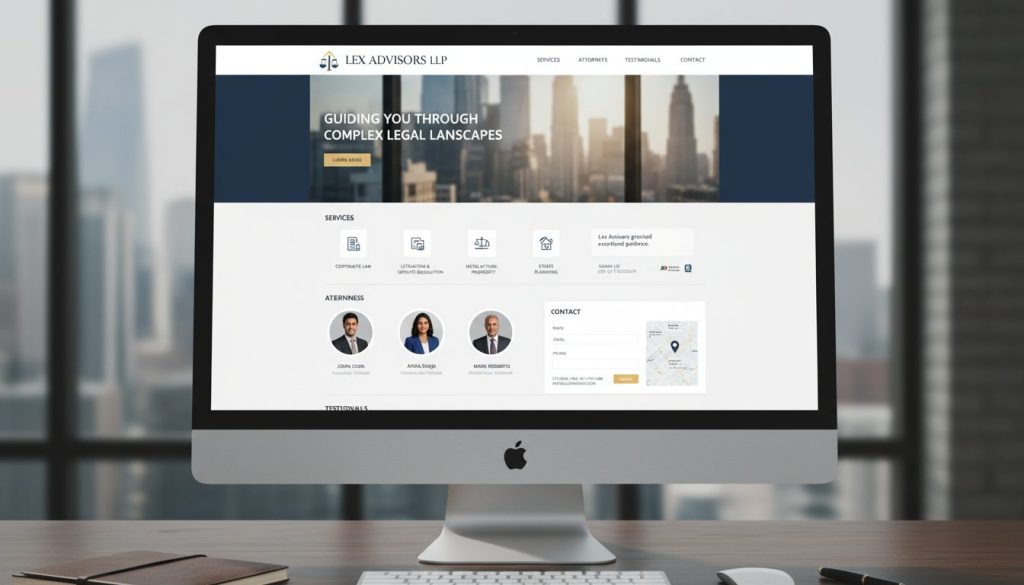
For injury attorneys, transforming their website into a powerful client intake tool is vital for success. A well-optimized website is crucial for attracting visitors and converting them into clients. Essential elements include clear contact information displayed prominently on every page, engaging content through blog posts and FAQs, user-friendly design with clear calls to action, and responsive design that adapts to various devices.
Essential Website Elements for Injury Attorneys
A high-converting website for injury attorneys must include several key elements. First, it must have clear contact information and calls-to-action (CTAs) that guide visitors toward taking desired actions.
Clear Contact Information and CTAs
Displaying phone numbers, email addresses, and contact forms prominently on every page eliminates friction in the inquiry process. Effective CTAs such as “Contact Us,” “Get Your Free Consultation,” or “Learn More” encourage visitors to take action.
User-Friendly Design and Navigation
A user-friendly design with intuitive navigation, fast loading times, and responsive layouts is essential. This ensures a seamless user experience across desktops, tablets, and mobile devices. For example, Page Law’s website is an exemplary model of an intuitive and user-friendly design that prioritizes conversions.
Mobile Optimization and Page Speed
With modern clients increasingly browsing legal services on smartphones, mobile optimization is no longer optional. A fast-loading, mobile-friendly website is critical for retaining visitors and improving search engine rankings. GibsonSingleton Virginia Injury Attorneys PLLC demonstrates a simple yet effective contact form that works well on mobile devices.
Showcasing Case Results and Client Testimonials
Showcasing case results, client testimonials, and attorney credentials provides the social proof that stressed, high-intent visitors need to make confident decisions. This helps build trust and credibility with potential clients.
Creating Case-Type Specific Landing Pages
Creating dedicated landing pages for specific case types (e.g., car accidents, truck accidents, slip and fall) is essential for matching search intent and improving both SEO performance and conversion rates. This targeted approach helps attract relevant traffic and increases the likelihood of converting visitors into clients.
Local SEO Strategies for Injury Law Firms
In the competitive landscape of personal injury law, local SEO strategies can make all the difference. As potential clients search for legal services online, a well-optimized online presence is crucial for injury law firms to attract and retain clients.
Optimizing Your Google Business Profile
A well-managed Google Business Profile is essential for local SEO success. It helps potential clients find your firm in local search results and on Google Maps, thereby boosting visibility and credibility.
Claiming and Verifying Your Profile
The first step in optimizing your Google Business Profile is to claim and verify your listing. This process ensures that your firm is represented accurately online and helps Google trust your business information.
Adding Photos and Business Information
Adding high-quality photos of your office, team, and services can create a personal connection with potential clients. Regularly updating your business hours, services, and contact information is also crucial.
Targeting Local Keywords and Creating Location Pages
To improve local search rankings, injury law firms should target location-specific keywords. Creating dedicated pages for each city or region served, as well as for different case types, can significantly enhance local SEO.
For instance, creating a page for “car accident lawyer in [City]” can help your firm appear in search results for that specific query. This strategy requires matching website pages to real client searches, necessitating one page per case type and geographic area served.
Building Local Citations and Directory Listings
Building local citations through consistent business listings across legal directories and local business directories is vital for improving local search rankings. Ensuring that your firm’s name, address, and phone number (NAP) are consistent across all online platforms strengthens local SEO signals.
By combining strong local SEO with steady review generation, injury law firms can create a powerful foundation for being found and chosen by potential clients in their target markets.
Developing a Comprehensive Online Marketing for Injury Attorneys Strategy
A comprehensive online marketing strategy is the backbone of any successful personal injury law firm in 2025. To develop an effective strategy, injury attorneys must first understand their target audience and set clear, achievable goals.
Understanding Your Target Audience
Understanding your ideal client is paramount. This involves analyzing demographics such as age, location, and income level, as well as the types of injuries they typically sustain and where they tend to look for legal help. By identifying these factors, law firms can tailor their marketing efforts to effectively reach and engage their target audience.
Setting SMART Goals for Lead Generation
Marketing goals should be SMART: Specific, Measurable, Achievable, Relevant, and Time-bound. Examples of SMART goals include increasing website traffic by 20% in the next quarter, generating 50 qualified leads per month, or increasing case intake by 15%. By setting such goals, law firms can focus their marketing efforts and measure their success.
Choosing the Right Marketing Channels
Different marketing tactics serve different purposes. For instance, Search Engine Marketing (SEM) ads target individuals actively searching for legal help, while TV advertisements generate broader awareness. Social media builds relationships, and content marketing establishes expertise and nurtures leads. By choosing the right mix of marketing channels, law firms can effectively reach their target audience.
Budget Allocation and Resource Management
Effective budget allocation and resource management are crucial for a successful marketing strategy. Law firms must determine how much to invest in each marketing channel based on expected return on investment and firm resources. This may involve building an in-house marketing team, outsourcing to specialized agencies, or using a hybrid approach.
By developing a comprehensive online marketing strategy that includes understanding the target audience, setting SMART goals, choosing the right marketing channels, and managing resources effectively, injury attorneys can enhance their online presence and attract more clients.
Content Marketing That Attracts Personal Injury Clients

Content marketing serves as a powerful tool for personal injury attorneys to build trust and credibility with their target audience. By creating and sharing valuable content, law firms can attract and retain a clearly defined audience, ultimately driving more clients to their practice.
Creating Valuable Blog Posts and Articles
Blogging is an excellent way to provide valuable information while improving SEO. Informative blog posts that address common personal injury concerns, offer advice, and showcase expertise can help establish a personal injury lawyer as a trusted authority in their field.
Addressing Common Questions is crucial in personal injury law. Potential clients often ask questions like “Should I talk to insurance first?”, “How much is my case worth?”, “What if I was partly at fault?”, and “How long do I have to file?” Effective content should address these questions in plain language, demonstrating expertise while making complex legal concepts accessible to non-lawyers.
Using AI Content Generators for Efficiency
For law firms with limited time or resources, AI content generators can be a valuable solution. These tools can produce SEO-ready blog posts in minutes by suggesting engaging topics, drafting posts, and delivering them with royalty-free images for editing and publishing.
Ready-to-Post Legal Content Libraries
Another option is to subscribe to ready-to-post legal content libraries that provide up to 125 branded videos and written content on personal injury topics. This solution allows firms to publish content without manual creation, ensuring consistency and saving time.
The key to successful content marketing is consistency. Regular publication builds trust faster, improves search rankings, and maintains a steady flow of inbound leads. By incorporating relevant keywords naturally into blog content, law firms can signal search engines while providing genuine value to human readers.
Furthermore, repurposing content across multiple channels can maximize its impact. Turning blog posts into social media content, email newsletter topics, and video scripts can help reach a wider audience and reinforce the firm’s message.
Social Media Marketing for Personal Injury Lawyers
Social media has emerged as a powerful medium for personal injury lawyers to share their expertise, engage with their audience, and drive their marketing efforts.
Choosing the Right Platforms
Personal injury lawyers should focus on platforms like Facebook for broad reach, LinkedIn for professional networking, TikTok and Instagram for younger audiences, and X (formerly Twitter) for real-time engagement.
Content Ideas That Build Trust and Engagement
To build trust, consider posting short “what to do after an accident” clips, common myths and mistakes, and “meet the team” trust-building posts. These content ideas help establish the firm’s personality and demonstrate expertise.
Social Media Automation and Scheduling Tools
Tools like Buffer and Hootsuite help manage social media presence by scheduling posts in advance. Socialite is another tool that automates content generation from news sources, saving time and maintaining a steady content flow.
Leveraging Video Content on Social Media
Video content is highly effective on social media. Use TikTok for short, engaging videos and YouTube for more in-depth explanations. Firms like Rafi Brown | Stokes Lawyers have seen success with video series like “Do I Have a Case?” to educate and engage their audience.
Pay-Per-Click Advertising and Search Engine Marketing

Pay-per-click (PPC) advertising allows personal injury law firms to reach potential clients at the moment they are searching for legal services. This form of advertising is particularly effective in the personal injury law sector because individuals searching for legal representation often have immediate needs and high intent to hire.
Google Search Ads for Personal Injury Cases
Google Search Ads are a powerful tool for personal injury attorneys, enabling them to target specific keywords related to their practice areas. By focusing on case-type specific keywords, firms can improve ad performance and reduce costs.
Keyword Selection and Ad Copy
Effective keyword selection is crucial for a successful PPC campaign. Targeting specific case types and locations rather than generic terms can significantly enhance ad relevance. Additionally, creating compelling ad copy that highlights firm strengths and includes clear calls-to-action can encourage clicks from qualified prospects.
Geographic Targeting
Geographic targeting allows firms to control where their ads are displayed, ensuring they reach potential clients in their service areas. Adjusting bids based on geographic performance can further optimize ad spend.
Google Local Services Ads for Attorneys
Google Local Services Ads (LSAs) are designed for service-based businesses, including law firms. These ads appear at the top of relevant search results, significantly increasing visibility to local clients. LSAs allow prospects to contact firms directly from the ad, streamlining the intake process.
Social Media Paid Advertising
Social media platforms like Facebook, LinkedIn, and Twitter offer robust advertising options that allow targeting of specific demographics, interests, and behaviors. By leveraging these platforms, personal injury lawyers can reach a broader audience and drive traffic to their websites.
Optimizing Landing Pages for Ad Campaigns
Optimizing landing pages is critical to the success of PPC campaigns. Ensuring that landing pages match ad promises, load quickly, and provide clear next steps can significantly enhance conversion rates.
By implementing these strategies, personal injury law firms can maximize their online visibility, capture high-intent leads, and ultimately drive more cases to their practice.
Email Marketing and Lead Nurturing Automation

For personal injury attorneys, email marketing is a powerful tool for lead nurturing and maintaining top-of-mind awareness among potential clients. Not every lead is ready to hire a lawyer immediately; many wait until their symptoms worsen or they receive an unsatisfactory insurance offer.
Building and Segmenting Your Email List
To effectively use email marketing, personal injury lawyers must first build a robust email list. This can be achieved through website opt-in forms, offering downloadable guides, and capturing contact information during initial consultations.
Creating Effective Email Newsletter Campaigns
Email newsletters should provide valuable content, such as legal insights, updates on personal injury law, and firm news. By doing so, lawyers can position their firm as a trusted resource.
Automated Follow-Up Sequences for Leads
Automated follow-up sequences help maintain contact with leads over time. This can include confirmation emails, “what happens next” sequences, and consultation reminders.
Email Marketing Metrics to Track
Key metrics to monitor include open rates, click-through rates, conversion rates, and unsubscribe rates. Most importantly, tracking which email campaigns lead to signed cases is crucial.
Online Reputation Management and Client Reviews>

For injury attorneys, managing their online reputation is vital, as client reviews significantly influence potential clients’ decisions. In today’s digital landscape, online reviews are the most powerful trust-building element in personal injury lawyer marketing.
The Impact of Reviews on Client Decisions
Statistics show that 82% of people who contact an attorney after researching them online start by reading reviews, with 40% stating that reviews were their primary deciding factor. Moreover, nearly 70% of clients find reviews the most helpful element when searching for legal representation. Positive reviews serve as social proof, reducing perceived risk and building confidence in choosing a particular law firm.
Requesting and Collecting Client Reviews
To leverage the power of reviews, injury lawyers should make it easy for clients to leave feedback. Providing direct review links to Google Business Profile and other platforms simplifies the process. Using QR codes can also facilitate client reviews. It’s essential to ask for reviews at the right time, such as after successful case resolution or positive interaction, and to personalize requests by reminding clients of the positive impact made on their case.
Responding to Positive and Negative Feedback
Responding to both positive and negative reviews is crucial for demonstrating firm responsiveness and professionalism. Quick, professional responses signal credibility to prospects and activity to Google, improving both trust and local search rankings.
Review Automation and Management Tools
Tools like Feedback Automatic can handle reputation management by automatically requesting reviews, collecting feedback, and making positive responses public while keeping negative reviews private. This automation helps in maintaining a consistent online reputation.
By integrating review management into the intake process, law firms can create a competitive advantage in local search results. Consistent review generation is key to enhancing online visibility and attracting new clients.
Video Marketing for Injury Attorneys
For injury attorneys, video marketing offers a compelling way to explain complex legal concepts and build trust with potential clients. Videos can convey a wealth of information in an engaging and easily digestible format, making them an invaluable tool in the competitive landscape of personal injury law.
Types of Video Content That Convert Clients
Creating the right type of video content is crucial for attracting and converting potential clients. Two particularly effective types are educational videos and client testimonials.
Educational Videos and FAQ Content
Educational videos that address common questions and concerns can significantly enhance a potential client’s understanding of personal injury law. Topics might include “What to do immediately after an accident,” “How settlement calculations are made,” or “Common mistakes that can hurt your claim.” Such content not only provides value but also positions the injury firm as a trusted authority in the field.
Client Testimonials and Case Studies
Client testimonials and case study videos serve as powerful social proof, demonstrating real results and satisfied clients. These videos help potential clients envision their own positive outcomes and build confidence in the firm’s capabilities.
Short-Form vs Long-Form Video Strategy
The choice between short-form and long-form video content depends on the marketing goals and the platforms being utilized. Short-form videos (suitable for TikTok, Instagram Reels, and YouTube Shorts) are ideal for quick tips and driving traffic to more comprehensive content. Long-form videos, on the other hand, are better suited for in-depth explanations and detailed legal process walkthroughs on platforms like YouTube and the firm’s website.
- Short-form videos are perfect for capturing attention and providing bite-sized information.
- Long-form videos allow for more detailed storytelling and can help build deeper connections with potential clients.
Video Distribution Across Multiple Channels
To maximize reach, it’s essential to distribute video content across multiple channels. This includes publishing videos on the firm’s website, social media platforms, YouTube, and even incorporating them into email newsletters and blog posts. By diversifying the distribution channels, injury attorneys can ensure that their video content reaches the widest possible audience.
“Video marketing is not just about creating content; it’s about creating content that resonates with your audience and drives results.” – Marketing Expert
By leveraging video marketing effectively, injury attorneys can enhance their online presence, engage potential clients more effectively, and ultimately drive more conversions related to their case work.
Tracking Marketing Performance and ROI
Most personal injury firms face a common issue: they struggle to connect their marketing spend to actual revenue. According to Maria Monroy, owner of LawRank, “It doesn’t matter how good your marketing is if you don’t know where the leads are coming from. If you can’t handle the intake properly, you’re bleeding out.”
Key Metrics Every Injury Attorney Should Monitor
To effectively track marketing performance, injury attorneys must monitor several key metrics. These include website traffic sources, visitor behavior, time on site, and bounce rates, which indicate content effectiveness.
Website Traffic and Conversion Rates
Understanding website traffic and conversion rates is crucial. Conversion rates represent the percentage of visitors who take desired actions, such as submitting contact forms or requesting consultations.
Cost Per Lead and Cost Per Signed Case
While cost per lead is a common metric, it’s insufficient on its own. Firms must also track cost per signed case and time to conversion to understand the true marketing ROI and profitability.
Essential Analytics and Tracking Tools
Several tools are essential for tracking marketing performance. These include:
Google Analytics for Website Performance
Google Analytics provides comprehensive insights into website traffic, user behavior, and conversion tracking.
Call Tracking Solutions
For firms relying on phone inquiries, call tracking solutions like CallRail are essential. They provide attribution data that connects calls to specific marketing sources and campaigns.
CRM Systems for Lead Management
CRM systems, particularly CASEpeer, are critical for tracking the complete journey from initial inquiry through consultation, signing, and case outcome.
Connecting Marketing Activities to Signed Cases
The ultimate measurement of marketing success lies in connecting marketing activities to signed cases. By building tracking systems that attribute revenue to specific channels, campaigns, and tactics, firms can make data-driven decisions.
Additional tools like Ahrefs for SEO performance analysis and competitor insights help firms understand how their organic search efforts contribute to overall marketing success.
Legal Directories, Referral Networks, and Community Engagement
Beyond digital advertising, personal injury firms can leverage legal directories and referral networks to attract clients and build their professional reputation. These traditional marketing strategies complement online efforts and provide additional channels for reaching potential clients.
Top Legal Directories for Personal Injury Lawyers
Being listed in reputable legal directories improves visibility for personal injury lawyers. Popular directories include Lawyer Legion, Justia, FindLaw, and Enjuris. To maximize the effectiveness of these listings, it’s essential to maintain complete and optimized profiles.
| Directory | Description |
|---|---|
| Lawyer Legion | A comprehensive directory for lawyers, offering detailed profiles and client reviews. |
| Justia | A well-established legal directory that connects potential clients with qualified attorneys. |
| FindLaw | One of the most recognized legal directories, providing extensive lawyer profiles. |
Building Referral Partnerships with Other Professionals
Networking with other professionals is crucial for personal injury lawyers. Key referral sources include chiropractors, physical therapists, and urgent care clinics. Establishing strong relationships with these professionals can lead to valuable referrals.
“Networking is one of the best opportunities for personal injury lawyers to market their services—it allows connection with other legal professionals and potential clients, opening doors to referrals.”
Networking at Legal Conferences and Events
Attending legal conferences like the American Bar Association (ABA) Techshow and PILMMA Conference provides opportunities for professional development and marketing. These events help personal injury lawyers stay updated on industry trends and build connections.

Hosting Webinars and Educational Workshops
Hosting webinars on topics like “Understanding Your Personal Injury Rights” educates the community and generates leads. These events position personal injury lawyers as thought leaders and build trust with potential clients.
Sponsoring Local Community Events
Sponsoring local events demonstrates a firm’s commitment to the community and enhances visibility. This strategy builds goodwill among potential clients who appreciate community support.
Leveraging Marketing Technology and AI Tools

The integration of AI and automation is revolutionizing the way injury attorneys market their services and attract new clients. By adopting emerging marketing technologies, personal injury law firms can increase efficiency, reduce manual workload, and improve marketing effectiveness.
AI Chatbots for Lead Qualification
AI chatbots are game-changing tools that handle initial client interactions 24/7, answering basic questions, collecting preliminary information, and scheduling consultations without human intervention. This allows intake staff to focus on complex tasks while ensuring prospects receive immediate responses.
Predictive Analytics for Marketing Decisions
Predictive analytics analyzes historical data trends to identify high-value marketing opportunities and forecast which channels will produce the best results. By leveraging AI-powered predictive analytics, firms can make informed decisions about where to invest marketing resources.
Marketing Automation Platforms
Marketing automation platforms streamline repetitive tasks, including email sequences, social media posting, review requests, and lead nurturing, without requiring constant manual effort. This enables firms to stay consistent and efficient in their marketing efforts.
Integrating Technology with Your Marketing Strategy
It’s crucial to integrate technology with your marketing strategy, ensuring that tools enhance human efforts rather than replace the personal touch that builds trust with personal injury clients. By doing so, firms can maintain authentic client relationships while leveraging automation.
By embracing these emerging marketing technologies and AI tools, personal injury law firms can stay competitive in 2025 and beyond, improving their marketing effectiveness and attracting new clients.
Conclusion
To achieve sustainable growth, personal injury lawyers must adopt a systematic approach to online marketing. Firms that grow steadily aren’t doing everything themselves but doing the right things consistently: a website built to convert, local SEO that keeps them visible, reviews that build trust, follow-up that happens automatically, and content that keeps prospects coming back until they’re ready to hire.
With a conversion-focused website, consistent social posting through automation, automated review collection, a legal CRM to track leads, and starter content to build trust faster, marketing starts working in the background instead of becoming another full-time job. The most successful personal injury law firms focus on doing essential things consistently and well, rather than attempting every marketing tactic simultaneously.
By leveraging key technology tools as force multipliers, law firms can maintain consistency without an overwhelming workload. It’s essential to view the marketing budget as an investment with measurable returns rather than an expense, tracking cost per signed case rather than vanity metrics. With the right systems, tools, and consistent execution, personal injury law firms of any size can compete effectively and grow their client base in increasingly competitive markets.
Maintaining ethical standards and regulatory compliance throughout all marketing activities is non-negotiable. By starting with foundational elements like a solid website and SEO, and then expanding to advanced tactics, firms can establish a robust online presence.
FAQ
What is the importance of having a website for a personal injury law firm?
A website is crucial for a personal injury law firm as it serves as a digital storefront, providing potential clients with a first impression of the firm’s services and expertise. It also allows for the showcase of case results, client testimonials, and other relevant information that can help build trust and credibility.
How can I optimize my law firm’s website for search engines?
To optimize your law firm’s website for search engines, focus on creating high-quality, relevant content that targets specific keywords, such as “personal injury lawyer” or “injury law firm.” Ensure your website is mobile-friendly, has a fast page speed, and is easy to navigate. Additionally, claim and optimize your Google Business Profile to improve local search visibility.
What is the role of social media in personal injury law firm marketing?
Social media plays a significant role in personal injury law firm marketing by providing a platform to engage with potential clients, share valuable content, and build brand awareness. It also allows for targeted advertising, helping to reach a specific audience and drive traffic to the firm’s website.
How can I measure the effectiveness of my law firm’s online marketing efforts?
To measure the effectiveness of your law firm’s online marketing efforts, track key metrics such as website traffic, search engine rankings, social media engagement, and lead generation. Use analytics tools, such as Google Analytics, to monitor these metrics and adjust your marketing strategy accordingly.
What is the significance of client reviews for a personal injury law firm?
Client reviews are essential for a personal injury law firm as they provide social proof, helping to build trust and credibility with potential clients. Positive reviews can also improve the firm’s online reputation and increase its visibility in search engine results.
How can I generate leads for my personal injury law firm?
To generate leads for your personal injury law firm, focus on creating a comprehensive online marketing strategy that includes search engine optimization, pay-per-click advertising, social media marketing, and email marketing. Additionally, leverage marketing technology and AI tools, such as AI chatbots, to qualify leads and improve conversion rates.
What is the importance of content marketing for personal injury lawyers?
Content marketing is vital for personal injury lawyers as it allows them to create valuable, informative content that addresses the needs and concerns of potential clients. This helps to establish the firm as a thought leader in the industry, build trust, and drive traffic to the website.
How can I build trust with potential clients online?
To build trust with potential clients online, focus on creating a professional website, engaging in social media, and showcasing client testimonials and case results. Additionally, provide valuable content that addresses the needs and concerns of potential clients, and be transparent about the firm’s services and expertise.