

Car Accident Lawyer: Boost Your Search Visibility
In today’s digital landscape, search visibility is crucial for law firms, particularly in the competitive personal injury niche. With over 80% of people turning to search engines like Google to find legal services, appearing prominently in search results directly impacts a firm’s ability to attract qualified leads.

Effective SEO strategies can help car accident lawyers reduce their dependency on expensive pay-per-click advertising and connect with clients at the exact moment they need legal representation. By understanding the unique challenges and opportunities in this field, law firms can improve their online presence and attract high-intent clients.
Key Takeaways
- Understanding the importance of search visibility for law firms
- Improving online presence through strategic SEO practices
- Reducing dependency on expensive pay-per-click advertising
- Connecting with high-intent clients through effective SEO
- Understanding the unique challenges in the personal injury niche
Why Search Engine Visibility Matters for Car Accident Lawyers
Search engine visibility is vital for car accident lawyers looking to attract clients in need of legal representation. In today’s digital-first world, potential clients often turn to search engines immediately after an incident, making it crucial for lawyers to have a prominent online presence.
The importance of search engine optimization (SEO) for personal injury lawyers cannot be overstated. Most personal injury searches occur on mobile devices, often at the moment of or shortly after an accident. Effective SEO strategies enable law firms to capture these high-intent leads before competitors do.
- Search engine visibility directly determines which car accident lawyers connect with injured clients who are actively seeking legal representation.
- Top search rankings are essential for capturing high-intent leads immediately after an incident.
- Appearing on the first page of search results creates an immediate credibility advantage.
- Organic search visibility provides a sustainable flow of qualified leads without the need for continuous spending on traditional advertising.
- The competitive nature of personal injury law means firms not investing in search visibility risk losing potential clients to competitors.
- Strong search presence allows smaller and mid-sized firms to compete effectively against larger practices.
By focusing on SEO and improving their search engine visibility, car accident lawyers can increase their chances of being found by potential clients at the moment they need legal representation the most.
Understanding the Competitive Landscape of Car Accident Lawyer SEO
The SEO landscape for car accident lawyers is characterized by intense competition and high stakes. This competitive environment is driven by established law firms that have invested heavily in SEO optimization over the years.
How Car Accident SEO Differs from Other Legal Niches
Car accident SEO differs significantly from other legal niches due to the urgent nature of the cases and the hyper-local focus required. Unlike estate planning or business law, where clients may research over weeks or months, car accident victims often need immediate assistance and make hiring decisions within hours or days.
This urgency demands a different approach to content creation, focusing on empathetic and reassuring language rather than aggressive sales messaging. Moreover, the hyper-local nature of car accident cases means that SEO strategies must be tailored to specific cities and neighborhoods.
The Cost of Competing: PPC vs. Organic Search
The cost of competing in car accident lawyer SEO is substantial, particularly when it comes to pay-per-click (PPC) advertising. Keywords like “car accident lawyer” can cost $100-$500+ per click in competitive cities, making it one of the most expensive legal niches in digital advertising.
In contrast, organic search optimization provides a sustainable competitive advantage by generating visibility without the ongoing expense of PPC campaigns. This approach allows law firms to allocate their marketing budgets more effectively while building long-term digital assets.
Car Accident Lawyer Search Engine Visibility: Core Principles
Car accident lawyers need to understand the core principles of search engine visibility to succeed online. Search engine optimization (SEO) is crucial for making a law firm’s website visible to potential clients searching for related services.
The core search engine visibility principles for car accident lawyers center on proving to search algorithms that your firm represents the most authoritative, relevant, and trustworthy choice for accident victims in your specific geographic service area.
What Makes a Car Accident Law Firm Visible Online
A car accident law firm’s online visibility is determined by several key factors. These include:
- Demonstrating experience through real case results and client testimonials
- Building expertise by creating comprehensive, well-researched content
- Establishing authoritativeness through recognition from reputable legal directories and media citations
- Showcasing trustworthiness through transparent communication and secure website infrastructure
The Role of E-E-A-T in Personal Injury Search Rankings
Google’s E-E-A-T framework (Experience, Expertise, Authoritativeness, Trustworthiness) plays a critical role in personal injury search rankings. This framework is particularly important for YMYL (Your Money or Your Life) topics, which include personal injury law.
To improve E-E-A-T, car accident lawyers should focus on:
- Creating high-quality, relevant content that addresses the complex legal questions accident victims face
- Earning high-quality backlinks from trusted sources to validate their firm’s standing in the legal community
- Displaying credentials and bar admissions prominently on their website
- Encouraging authentic client reviews across multiple platforms
By understanding and implementing these core principles, car accident lawyers can improve their search engine visibility and attract more potential clients.
Keyword Research Strategy for Car Accident Lawyers

Keyword research is a vital component of a successful SEO strategy for car accident lawyers. It involves identifying and implementing phrases that potential clients are searching for, such as “personal injury lawyer near me” or “car accident lawyer [city].”
Identifying High-Intent Car Accident Keywords
High-intent keywords for car accident practices typically combine practice area terms with geographic modifiers and urgency signals. Examples include “car accident lawyer [city],” “auto accident attorney near me,” or “car crash lawyer free consultation [location].” Tools like Google Keyword Planner, SEMrush, Ahrefs, and Moz provide essential data on search volumes, competition levels, and cost-per-click metrics.
These tools help prioritize which keywords offer the best opportunity for ranking and conversion. Effective keyword research begins with identifying the specific phrases and questions that injured accident victims type into search engines when seeking immediate legal assistance after a collision.
Balancing Broad and Long-Tail Keywords
Balancing broad keywords like “car accident lawyer” with long-tail variations such as “rear-end collision attorney for whiplash injury” allows firms to compete for high-volume searches while capturing specific, lower-competition queries with strong conversion potential.
Question-based keywords addressing common concerns—such as “what to do after a car accident,” “how much is my car accident case worth,” or “who pays medical bills after car accident”—target prospects in the research phase and position your firm as a helpful educational resource.
Geographic keyword variations at multiple levels (city, neighborhood, county, metro area) ensure visibility across all relevant local searches.
On-Page SEO Optimization for Car Accident Law Firms
On-page SEO optimization plays a vital role in helping car accident law firms reach their target audience more effectively. By fine-tuning various elements on their website, law firms can improve their search engine rankings, drive more relevant traffic, and increase their online visibility.
Crafting Effective Title Tags and Meta Descriptions
Crafting effective title tags requires placing primary keywords near the beginning while staying within 60 characters, incorporating location modifiers, and creating compelling headlines that encourage clicks when displayed in search results. For instance, “Miami Car Accident Lawyer | Free Case Review | No Win, No Fee” is an effective title tag. Meta descriptions should summarize page content in 150-155 characters while encouraging clicks by including target keywords and a clear call-to-action.
- Include primary keywords and location
- Create compelling headlines
- Summarize page content effectively
Header Tag Optimization and Content Structure
A well-structured content hierarchy is crucial for both search engines and users. Using header tags (H1, H2, H3) creates a logical content structure that helps navigate information effectively. The H1 tag should reinforce the primary page topic, while H2 tags organize major sections, and H3 tags break down detailed subtopics. This hierarchy not only improves readability but also enhances SEO by highlighting key areas of the content.
Creating SEO-Friendly URLs
SEO-friendly URL structures use descriptive, keyword-rich paths rather than generic parameter strings. For example, “yourfirm.com/car-accident-lawyer-denver” is more effective than a URL with parameters. Such URLs are more memorable for users and more meaningful for search engine crawlers assessing page relevance. This practice contributes to better search engine rankings and improved user experience.
By implementing these on-page SEO strategies, car accident law firms can significantly enhance their online presence, making it easier for potential clients to find them when searching for relevant legal services.
Technical SEO Essentials for Law Firm Websites
The foundation of a successful car accident law firm’s online presence lies in its technical SEO, which encompasses various elements that improve search engine rankings and user experience. Technical SEO ensures that a law firm’s website is not only accessible and user-friendly but also optimized for search engines to crawl and index effectively.
Mobile Optimization and Page Speed
With most personal injury searches happening on mobile devices, often immediately after an incident, having a mobile-optimized website is crucial. A responsive design that adapts to smaller screens with easily tappable buttons and readable text without zooming is essential. Moreover, page speed directly impacts both search rankings and conversion rates. Even a one-second delay can cause significant visitor abandonment, particularly among stressed accident victims who may interpret slow-loading sites as indicators of an unresponsive firm.
- Optimizing images through compression to reduce file size without compromising quality.
- Implementing browser caching to store frequently-used resources locally.
- Minimizing HTTP requests by reducing the number of elements on a page.
- Using content delivery networks (CDNs) to distribute content across different geographic locations.
Site Architecture and Internal Linking
A logical site architecture with a clear hierarchical structure helps search engines understand content relationships and topic authority. This structure enables visitors to find specific information quickly through intuitive navigation menus, dropdown categories, and related content links. Internal linking strategies distribute ranking authority throughout the website, connecting practice area pages to relevant blog content, case results, and attorney biographies.
- Creating a clear main menu with tabs like Home, About Us, and Personal Injury Services.
- Using breadcrumb navigation to help visitors understand the site structure.
- Linking to relevant content to guide visitors deeper into the content ecosystem.
By focusing on these technical SEO essentials, car accident law firms can improve their website’s visibility, credibility, and overall user experience, ultimately driving more conversions and growing their practice.
Local SEO for Car Accident Lawyers
In the competitive landscape of car accident legal services, local SEO emerges as a key differentiator for lawyers seeking to establish a strong local presence. Local SEO is critical for personal injury lawyers as it connects clients with firms in their area, increasing the chances of contact and consultation.

Why Local Search Dominates Personal Injury Marketing
Local search dominates car accident lawyer marketing because personal injury cases are inherently geographically specific. Accident victims must hire attorneys licensed in their state who can appear in local courts and understand jurisdiction-specific laws and procedures. Google’s Map Pack, which displays three local businesses prominently at the top of search results for location-based queries, represents prime digital real estate that generates substantially higher click-through rates than traditional organic results appearing below.
“The local nature of personal injury law means that lawyers must optimize their online presence to appear in local search results,” as emphasized by the importance of geographic proximity in legal services.
NAP Consistency Across Online Directories
NAP consistency (Name, Address, Phone Number) across all online platforms is crucial as it signals legitimacy and trustworthiness to search engines. Inconsistencies in NAP can create confusion, damaging local rankings and preventing search algorithms from confidently matching your firm to local search queries. Ensuring NAP consistency is a foundational element of local SEO.
- Verify your firm’s NAP across all directories and citations.
- Update any inconsistent or outdated information.
- Monitor your listings regularly to maintain accuracy.
Local Citations and Legal Directory Listings
Local citations from reputable legal directories like Avvo, FindLaw, Justia, and Lawyers.com, as well as general business directories such as Yelp and Yellow Pages, accumulate authority signals that reinforce your firm’s geographic relevance and professional standing. Ensuring that your firm is listed in these directories and that the information is accurate and uniform is vital for enhancing your local SEO.
By focusing on local SEO strategies, car accident lawyers can improve their visibility, attract more local clients, and establish a strong presence in their community.
Google Business Profile Optimization

Google Business Profile optimization is a key strategy for car accident lawyers aiming to improve their local search presence. A well-optimized profile can significantly enhance your firm’s visibility in Google Maps and local search results.
Claiming and Verifying Your Law Firm Profile
Claiming and verifying your law firm profile establishes ownership and unlocks full feature access. This process requires accurate NAP (Name, Address, Phone Number) information, selection of appropriate business categories (such as Personal Injury Attorney or Trial Attorney), and completion of verification through postcard, phone, or email methods.
Generating and Managing Client Reviews
Generating consistent client reviews creates the social proof essential for both search rankings and prospect decision-making. To achieve this, implement systematic post-case review requests, simplify the review process with direct Google review links, and respond graciously to all reviews to demonstrate professionalism.
Google Local Service Ads for Car Accident Lawyers
Google Local Service Ads (LSAs) provide car accident lawyers with a powerful way to boost visibility through a pay-per-lead model. LSAs place “Google Screened” badge listings at the top of search results, charging only for qualified leads who directly contact your firm. This makes LSAs a cost-effective complement to organic SEO efforts.
By optimizing your Google Business Profile and leveraging Google Local Service Ads, car accident lawyers can significantly improve their online visibility and attract more potential clients. Regularly updating your profile with posts about case results, legal tips, and firm news keeps your listing active and signals to Google that your firm remains engaged and relevant.
Content Marketing Strategies That Drive Rankings
In the competitive landscape of personal injury law, a well-crafted content marketing strategy can be a game-changer for car accident lawyers. By creating informative and engaging content, lawyers can establish their authority, build trust with potential clients, and improve their search engine rankings.
Building Topic Clusters Around Car Accident Cases
Building topic clusters involves creating a comprehensive content structure that revolves around major practice areas, such as “Car Accident Lawyer.” This approach includes developing pillar pages supported by 10-20 detailed blog posts addressing specific subtopics like “What to do immediately after a car accident” or “Understanding comparative negligence in car accident cases.” By doing so, car accident lawyers can demonstrate their expertise and provide valuable information to potential clients.
This hub-and-spoke content structure channels ranking authority from multiple informational articles to the main service pages, enhancing the overall SEO performance. It showcases comprehensive topical coverage, which search engines reward with higher rankings for competitive commercial keywords.
Creating Empathetic, Trustworthy Content
Creating empathetic content is crucial in personal injury marketing. By validating the emotional experiences of potential clients, car accident lawyers can build trust and establish a connection. For instance, opening articles with statements like “We understand the fear and confusion after a serious car accident” helps to create a supportive tone.
To further enhance engagement, lawyers can incorporate multimedia content, such as explanatory videos, infographics breaking down the claims process, and visual guides to accident scenes or injury types. This not only accommodates different learning preferences but also keeps visitors on the site longer, improving overall user experience and SEO performance.
By focusing on content marketing strategies that drive rankings, car accident lawyers can improve their online visibility, attract more qualified leads, and ultimately grow their practice.
Building High-Quality Backlinks for Authority
High-quality backlinks serve as a cornerstone for effective SEO, signaling to search engines that your car accident law firm is a trusted authority in its field. These backlinks are crucial because they act as endorsements from other reputable sites, enhancing your site’s credibility and search rankings.
Guest Blogging and Legal Content Partnerships
Guest blogging on respected legal publications and industry blogs allows your attorneys to demonstrate their expertise while earning valuable backlinks. By contributing informative articles to authoritative sites, you can build your site’s authority profile through author bio links and contextual in-content links. Legal content partnerships with complementary service providers, such as medical professionals or accident reconstruction experts, create natural backlink opportunities through co-authored content and mutual referrals.
Effective guest blogging involves:
- Identifying relevant, high-authority blogs in your niche
- Crafting well-researched, engaging content that adds value
- Building relationships with editors and other contributors
Local Business Partnerships and Cross-Promotion
Local business partnerships with auto body shops, medical practices, chiropractors, and mental health professionals can create cross-promotional opportunities, including website links and joint educational events. These partnerships not only generate backlinks but also enhance your local SEO by associating your law firm with other reputable local businesses.
Key strategies for local business partnerships include:
- Identifying businesses that serve your target audience
- Proposing mutually beneficial content and promotional opportunities
- Engaging in community events to build visibility and credibility
By focusing on these strategies, car accident lawyers can build a strong backlink profile that enhances their online authority and search engine rankings.
Schema Markup and Structured Data

By implementing schema markup, car accident lawyers can significantly boost their website’s search engine visibility. Schema markup is structured data that helps search engines understand your website better, making it a better match for more specific searches.
Schema markup transforms your car accident law firm website from standard HTML into richly structured data that search engines understand with precision. This enables enhanced search result displays that attract more clicks and convey key information before visitors even reach your site.
Implementing Local Business Schema
Local Business Schema provides search engines with detailed information about your business, including address, phone number, business hours, and areas served. This schema helps eliminate ambiguity about your location and services, increasing your chances of appearing in local search results.
By implementing Local Business Schema, you provide search engines with explicit structured data about your firm’s name, address, phone number, geographic service areas, business hours, and accepted payment methods.
Review and FAQ Schema for Legal Sites
Review schema markup enables star ratings to appear directly in search results alongside your website listing, creating powerful visual differentiation that increases click-through rates. FAQ schema allows you to feature question-and-answer pairs directly in search results, occupying additional screen space while providing immediate answers to common questions.
By leveraging Review and FAQ schema, you can make your search result listings more informative and attractive, potentially increasing your website’s traffic.
Optimizing for AI Search and Voice Queries
As AI continues to transform search engine results, car accident lawyers must prioritize AI and voice search optimization to remain visible in an increasingly competitive online landscape.
The way users interact with search engines is changing, with AI-driven results and voice queries becoming more prevalent. To adapt, car accident lawyers need to focus on creating content that is not only informative but also structured in a way that AI models can easily understand and present in search results.
Preparing Content for AI Overviews
To ensure your law firm’s content is cited in AI-generated overviews, it’s essential to structure your information with clear headings, concise bullet points, and direct answers to specific questions. AI models prefer content that is authoritative, up-to-date, and directly relevant to the search query.
- Use structured lists and bullet points to make your content easily digestible by AI models.
- Focus on conversational queries by optimizing for full questions rather than just keywords.
- Provide recent data and updates to improve your chances of being cited in AI overviews.
Voice Search Optimization for Near Me Queries
Voice search optimization is particularly important for “near me” queries, which are typically longer and more conversational. Car accident lawyers should optimize their content for natural language questions like “find a car accident lawyer near me who offers free consultations.”
To optimize for voice search, consider the following strategies:
| Strategy | Description |
|---|---|
| Use Natural Language | Optimize for conversational queries that mirror how people speak. |
| Local SEO | Ensure your law firm’s NAP (Name, Address, Phone Number) is consistent across online directories. |
| FAQ Content | Create comprehensive FAQ sections that address common questions related to car accidents. |
“The future of search is not just about keywords, but about understanding the intent behind the query.” –
Website Conversion Optimization
Effective website conversion optimization is crucial for car accident lawyers to turn search visibility into actual client consultations. By removing friction from the contact process and building sufficient trust, law firms can encourage vulnerable accident victims to reach out during a traumatic life moment. This process directly supports SEO goals as search engines track user engagement metrics, including time on site and bounce rates.
Mobile-First Contact Experience
Most personal injury searches happen on mobile devices, often moments after an incident. To cater to this, a mobile-first contact experience is essential. This includes implementing “sticky” call buttons that remain visible as users scroll, preventing them from having to navigate back to find the phone number. Simplifying forms to request just the essential information—Name, Phone Number, and a brief description of what happened—also enhances the user experience. By making these adjustments, law firms can reduce abandonment rates and signal their understanding that potential clients need immediate assistance.
- Implement tap-friendly phone buttons
- Use simplified forms
- Ensure prominent click-to-call functionality
Building Trust Through Social Proof
An injured person is vulnerable and skeptical—they need rapid reassurance. Social proof elements such as client testimonials, case result tickers displaying recent settlements, video success stories, and professional recognition badges can address this skepticism. By strategically placing trust indicators throughout the site, including attorney credentials and “no fee unless we win” guarantees, law firms can collectively overcome the natural hesitation potential clients feel about contacting lawyers.
- Use client testimonials and video success stories
- Display case result tickers
- Show professional recognition badges
Tracking and Measuring SEO Success

Measuring SEO success is vital for car accident lawyers to understand their online visibility and make data-driven decisions. By implementing analytics tools, lawyers can gain valuable insights into their website’s performance, enabling them to refine their SEO strategy and improve their online presence.
Essential SEO Metrics for Car Accident Lawyers
To effectively track SEO success, car accident lawyers should focus on key metrics that provide insights into their website’s performance. These include organic search traffic volume, keyword ranking positions, and conversion metrics. By monitoring these metrics, lawyers can identify areas for improvement and adjust their SEO efforts accordingly.
Organic search traffic volume helps lawyers understand how many visitors are arriving at their site through non-paid search results. Keyword ranking positions indicate how well their website is ranking for target terms. Conversion metrics, such as contact form submissions or phone calls, show how many searchers are becoming actual clients.
Using Google Analytics and Search Console
Google Analytics and Google Search Console are essential tools for tracking SEO success. Google Analytics provides comprehensive data on website traffic, user behavior, and goal completions. Google Search Console offers search-specific intelligence, including exact search queries, click-through rates, and average ranking positions.
By integrating these tools, car accident lawyers can gain a deeper understanding of their website’s performance and make informed decisions to enhance their SEO strategy. Regular SEO audits using tools like SEMrush, Ahrefs, or Moz can also help identify technical issues, content gaps, and competitive position shifts.
To maximize their online presence, car accident lawyers must continually monitor and refine their SEO efforts. By tracking key metrics and using analytics tools, lawyers can stay ahead of the competition and attract more clients.
Common SEO Mistakes Car Accident Lawyers Make
Understanding and avoiding common SEO mistakes is vital for car accident lawyers to improve their search rankings and attract more clients. Many law firms struggle with SEO due to missteps that can be easily avoided with the right knowledge and strategies.
Avoiding Keyword Stuffing and Duplicate Content
Keyword stuffing and duplicate content are two significant SEO mistakes that car accident lawyers often make. Keyword stuffing refers to the practice of unnaturally repeating target keywords throughout content, which triggers search engine spam filters and creates unreadable text. Duplicate content, on the other hand, occurs when similar content is used across multiple pages, confusing search engines and diluting ranking authority.
To avoid these mistakes, car accident lawyers should focus on creating unique, high-quality content for each practice area. This can be achieved by:
- Writing detailed, comprehensive guides for each major practice area
- Using synonyms and related terms to vary keyword usage
- Optimizing attorney biographies with natural, readable content that showcases expertise and credentials
| SEO Mistake | Consequence | Solution |
|---|---|---|
| Keyword Stuffing | Triggers spam filters, unreadable content | Use keywords naturally, vary terminology |
| Duplicate Content | Confuses search engines, dilutes ranking authority | Create unique content for each practice area |
Why Blackhat SEO Tactics Backfire
Blackhat SEO tactics, such as buying links, using private blog networks, and hiding keywords, may provide temporary ranking improvements but inevitably lead to severe penalties. These tactics violate search engine guidelines and can devastate online visibility for months or years.
Car accident lawyers should opt for sustainable, organic growth by:
- Focusing on high-quality, relevant content
- Building genuine backlinks through guest blogging and local business partnerships
- Optimizing website performance and mobile responsiveness
By avoiding common SEO mistakes and adopting best practices, car accident lawyers can improve their search engine rankings, attract more clients, and grow their practice.
Conclusion
The importance of SEO for personal injury law firms cannot be overstated in the current digital age. As we’ve explored throughout this guide, a comprehensive SEO strategy is crucial for car accident lawyers aiming to enhance their online visibility and attract high-quality leads.
By implementing the strategies outlined, law firms can significantly improve their search engine rankings. This includes conducting thorough keyword research, optimizing on-page elements, and creating valuable content that resonates with potential clients. Local SEO plays a vital role in targeting specific geographic areas, ensuring that your firm appears in relevant search results.
It’s essential to recognize that SEO is a long-term investment. Results typically materialize over several months as search engines index and evaluate your site’s content, backlinks, and relevance. As you continue to add more content and refine your strategy, your rankings will improve, driving more traffic to your site.
To maximize your online presence, it’s crucial to stay updated with the latest developments in AI-powered search and voice queries. By adapting your strategy to these emerging trends, you can maintain a competitive edge in the personal injury law market.
In conclusion, a well-executed SEO strategy is vital for personal injury lawyers seeking to stand out in a competitive landscape. By focusing on local SEO, creating authoritative content, and optimizing technical elements, law firms can achieve sustained visibility and attract more clients.
FAQ
What is the importance of having a Google Business Profile for a personal injury law firm?
A Google Business Profile is crucial for local SEO, allowing potential clients to find your law firm when searching for personal injury services in your area. It also provides an opportunity to showcase your firm’s reputation through client reviews.
How can I improve my law firm’s website to rank higher in search results?
To improve your website’s ranking, focus on creating high-quality, relevant content, optimizing on-page elements like title tags and meta descriptions, and ensuring a mobile-friendly, fast-loading site. Additionally, building high-quality backlinks from authoritative sources can enhance your site’s authority.
What is E-E-A-T, and how does it impact personal injury search rankings?
E-E-A-T stands for Experience, Expertise, Authoritativeness, and Trustworthiness. It’s a framework used by Google to evaluate the credibility of online content. For personal injury law firms, demonstrating E-E-A-T through high-quality content, client testimonials, and a professional online presence can improve search rankings.
How often should I update my law firm’s website with new content?
Regularly updating your website with fresh, relevant content can improve search rankings and keep potential clients engaged. Aim to publish new content at least once a month, but prioritize quality over quantity to maintain a high standard.
What is the role of schema markup in SEO for personal injury law firms?
Schema markup helps search engines understand the context and structure of your website’s content. For personal injury law firms, implementing schema markup can enhance search result listings, improve click-through rates, and provide users with more detailed information about your services.
How can I measure the success of my SEO efforts?
To measure SEO success, track key metrics such as organic traffic, search rankings for target keywords, and conversion rates. Utilize tools like Google Analytics and Search Console to monitor your website’s performance and adjust your SEO strategy accordingly.
What are some common SEO mistakes that personal injury law firms should avoid?
Common SEO mistakes include keyword stuffing, duplicate content, and neglecting mobile optimization. Avoid using blackhat SEO tactics, as they can lead to penalties and harm your online reputation. Focus on creating a user-friendly, informative website that provides value to potential clients.

Boost Your Personal Injury Law Firm’s Website Ranking
Your law firm’s website is often the first impression potential clients have of your practice. For personal injury lawyers, this first impression can make or break a case inquiry. A well-designed website can be one of your strongest lead-generation tools.
Prospective clients will likely visit your site before contacting you, whether they discover your firm on Google or through a referral. An informative, easy-to-use website demonstrates professionalism and expertise, while a poor online experience can send prospects to your competitors.
More than one-third of potential clients start their attorney search online, making your digital presence essential for business growth. A well-optimized website acts as a 24/7 lead generation tool, working harder than traditional marketing methods.
Key Takeaways
- A well-designed website is crucial for personal injury law firms to attract potential clients.
- A poorly designed website can negatively impact a firm’s credibility.
- More than one-third of potential clients begin their attorney search online.
- A well-optimized website is essential for business growth and lead generation.
- Improving website ranking requires a holistic approach covering design, content, and technical optimization.
1. Why Website Rankings Determine Your Law Firm’s Success
A high-ranking website is crucial for personal injury law firms to attract potential clients in today’s digital landscape. With the majority of consumers turning to the internet to find legal representation, a law firm’s online presence is more important than ever.
In 2025, 56% of search traffic comes from mobile devices, and while law firm websites may see slightly lower levels of mobile traffic, mobile users remain a vital source of leads. More than one-third of potential clients start their attorney search online, making it essential for law firms to have a strong online presence.
A poorly designed website can raise red flags about a firm’s credibility for 75% of consumers. This highlights the importance of not only having a high-ranking website but also ensuring that it is well-designed and user-friendly.
- The direct correlation between a law firm’s search engine ranking and the number of qualified injury cases it attracts.
- The typical search behavior of prospective clients looking for personal injury representation and why appearing on page one of Google is crucial.
- How higher search rankings translate to increased website traffic, more consultation requests, and ultimately more signed cases for your injury law practice.
The majority of prospective clients never scroll past the first page of search results, making top rankings critical for firm growth. By investing in SEO and improving website ranking, law firms can create a compounding advantage over time, attracting more backlinks and authority signals.
Poor website rankings essentially make your firm invisible to injury victims actively searching for legal help in your geographic area. In contrast, a high-ranking website can significantly improve visibility and attract new clients.
“The first step in solving a problem is understanding the problem itself. For personal injury law firms, understanding the importance of website rankings is crucial to attracting new clients and growing their practice.”
Investing in website ranking improvement delivers a better ROI than many traditional marketing channels for personal injury law firms. By prioritizing SEO and website optimization, law firms can stay ahead of the competition and attract more clients.
2. Create Intuitive Navigation and Information Architecture
The success of a personal injury law firm’s website hinges on its ability to guide visitors through a logical and user-friendly interface. A well-designed navigation system and information architecture are crucial for ensuring that potential clients can easily find the information they need.
When visitors land on your website, they should be able to access critical information within two clicks. This includes lawyer bios, practice areas, case results, and contact forms. A clear and intuitive navigation menu is essential for achieving this.
Design Clear, Logical Menu Structures
Designing a clear and logical menu structure is vital for helping visitors navigate your website. This involves grouping related pages under intuitive headings such as “About Us,” “Practice Areas,” “Results,” and “Contact.”
For example, Grillo Law’s website uses straightforward menus with prominent “Free Consultation” buttons, guiding visitors toward taking action. A simple and logical menu structure can significantly improve the user experience and increase the chances of converting visitors into clients.
A well-organized menu structure also helps search engines understand your website’s hierarchy, improving crawlability and, ultimately, your site’s search ranking.
| Menu Structure Best Practices | Description | Benefits |
|---|---|---|
| Simple and Logical Grouping | Group related pages under clear headings | Improves user experience and conversion rates |
| Prominent Calls-to-Action | Use clear and visible CTAs | Guides visitors toward taking action |
| Search Functionality | Include a search bar for larger sites | Enhances user experience and helps visitors find information quickly |
Organize Practice Areas for Easy Discovery
Organizing your practice areas for easy discovery is critical for personal injury law firms. Visitors should be able to quickly identify whether you handle their specific type of injury case.
A clear and concise presentation of practice areas can help build trust with potential clients and increase the chances of conversion. For instance, a mega-menu can be an effective way to display extensive practice area offerings.
By organizing practice areas in a logical and user-friendly manner, you can improve both the user experience and your website’s SEO. This is because search engines can more easily crawl and understand your site’s structure.
In conclusion, creating intuitive navigation and information architecture is essential for personal injury law firms to improve their website’s user experience, conversion rates, and search engine rankings.
3. Build a Professional, Trust-Focused Design
The design of a personal injury law firm’s website is often the first impression potential clients have of the firm, making it a critical aspect of their online presence. A well-crafted website not only showcases the firm’s expertise but also conveys empathy and understanding, essential qualities for building trust with visitors.
Implement Modern Visual Elements
Leading personal injury law firms utilize modern visual elements to create a professional and engaging online experience. This includes thoughtful color schemes that evoke feelings of trust and comfort, contemporary typography that enhances readability, and strategic use of whitespace to prevent clutter and guide the visitor’s attention.
For instance, a firm might use a calming color palette and clean typography to create a soothing atmosphere, making potential clients feel more at ease when seeking legal representation.
Display Credentials and Trust Badges
Displaying credentials and trust badges is a straightforward way to establish credibility at a glance. This can include bar association memberships, professional certifications, awards, and “As Seen On” media logos. By prominently showcasing these elements, a law firm can reassure visitors of its legitimacy and expertise.
| Credential Type | Examples | Benefit |
|---|---|---|
| Professional Certifications | Board Certifications, Specialized Training | Demonstrates expertise in specific areas of law |
| Awards and Recognition | AV Preeminent, Super Lawyers | Highlights the firm’s reputation and standing in the legal community |
| Media Presence | “As Seen On” logos, Featured Articles | Shows the firm’s visibility and influence beyond its own marketing |
Use Authentic Photography Instead of Stock Images
Using authentic photography of actual attorneys and staff instead of generic stock images can significantly enhance the trustworthiness of a law firm’s website. Authenticity builds trust, and by showcasing real people, a firm can create a more personal connection with potential clients.
For example, Gray Injury Law effectively uses photos of their attorneys and highlights notable case results and testimonials on their homepage, reinforcing their track record and trustworthiness.
By implementing these strategies, personal injury law firms can create a website that not only looks professional but also effectively communicates their credibility and expertise, ultimately attracting more clients and growing their practice.
4. Optimize Your Site for Mobile Users
In today’s digital landscape, a responsive website that caters to mobile users is crucial for the success of personal injury law firms. With more than half of web traffic now coming from mobile devices, a mobile-friendly design is not just a recommendation but a necessity.
Prioritize Mobile-First Design
Adopting a mobile-first design approach means building your website primarily for smaller screens first, then scaling up for desktop. This method ensures that your site’s core functionality and content are preserved across all devices. Google’s mobile-first indexing means that the mobile version of your site is what primarily determines your search rankings, making mobile performance critical.
To implement a mobile-first design effectively, consider using responsive frameworks that adapt content and buttons for smaller screens. Ensure that text remains legible without zooming, menus collapse into mobile-friendly hamburger formats, and tap targets (links, buttons) are easily clickable on touchscreens.
Test Functionality Across All Devices
Testing your website on multiple devices is crucial to ensure a consistent user experience. This includes various smartphone models, tablets, and different screen orientations. Pay particular attention to load times and layout optimization for mobile devices.
Google recommends aiming for a load time of under 3 seconds on mobile. Beyond that, bounce rates increase dramatically—a 32% increase as page load time goes from 1 to 3 seconds. Mobile users, often injured clients searching for immediate help, require a frictionless mobile experience with larger fonts, prominent contact options, and fast-loading pages.
- Ensure that your site’s layout is flexible and adapts seamlessly to different screen sizes.
- Use touch-friendly navigation that makes it easy for users to find what they’re looking for.
- Regularly test your site on various devices to identify and fix any usability issues.
5. Improve Your Personal Injury Law Firm Website Ranking with Speed Optimization
A fast-loading website is essential for personal injury law firms to retain potential clients and boost their search engine rankings. With most users abandoning sites that take more than 3 seconds to load, optimizing your website’s speed is critical for both user experience and SEO.
Compress and Optimize Images
One of the most effective ways to improve your website’s loading speed is by compressing and optimizing images. Using modern formats like WebP and proper sizing for different devices can significantly reduce file sizes without sacrificing quality. Compression tools can further reduce the file size, making your pages load faster.
By optimizing images, you not only improve your website’s loading speed but also enhance the overall user experience. This is particularly important for personal injury law firms, as a slow-loading website can deter potential clients from seeking your services.
Implement Caching and CDN Technology
Implementing caching mechanisms and Content Delivery Network (CDN) technology can significantly improve your website’s loading speed. Caching stores frequently-used resources in memory, reducing the need for repeat requests to the server. CDN technology serves your site content from servers geographically closer to your visitors, ensuring faster loading times.
For personal injury law firms serving clients across various regions, leveraging CDN technology can be particularly beneficial. By reducing the distance between your website’s content and your visitors, you can provide a faster and more reliable user experience.

Reduce Code Bloat and Plugin Overload
Reducing code bloat and plugin overload is another crucial step in optimizing your website’s speed. Auditing your site for unnecessary scripts and eliminating redundant plugins can significantly improve performance. Choosing lightweight page builders optimized for performance can also help.
By minimizing code bloat and plugin overload, you can ensure that your website loads quickly and efficiently, providing a better user experience for potential clients. This, in turn, can positively impact your search engine rankings and overall online presence.
According to BigCommerce, a 1-second delay in page load time can reduce conversions by 7% and page views by 11%. By optimizing your website’s speed, you can improve user experience, boost conversion rates, and enhance your search engine rankings.
6. Establish Credibility with Social Proof and Case Results
Credibility is the cornerstone of a successful personal injury law firm’s online presence, and it can be achieved through strategic use of social proof. In a competitive legal landscape, potential clients are more likely to trust a firm that showcases real case results and client testimonials.
Feature Compelling Client Testimonials
Client testimonials are a powerful tool for building trust with potential clients. By featuring compelling stories of how your firm helped real people through difficult personal injury situations, you can create an emotional connection with your audience. Use authentic testimonials that highlight the positive outcomes of your cases, and consider including video testimonials to add a personal touch.
For instance, Gray Injury Law’s website highlights notable case results and testimonials right up front, reinforcing the firm’s track record and trustworthiness. When showcasing testimonials, it’s essential to use real names and experiences to maintain credibility.
Showcase Settlement Amounts and Verdicts
Showcasing settlement amounts and verdicts is an effective way to demonstrate your firm’s expertise and success in handling personal injury cases. By highlighting specific case types and dollar amounts, you can provide tangible evidence of your firm’s capabilities. Consider using aggregate statistics, such as “over $100 million recovered,” to emphasize your firm’s achievements.
Page Law showcases real client testimonials to build trust and highlights major settlement wins to establish expertise. When presenting case results, be sure to note the case type for each result to provide context and clarity.
Integrate Google Reviews and Rating Displays
Integrating Google reviews and rating displays directly on your website can significantly enhance credibility. Third-party validation carries more weight than self-promotion, and potential clients are more likely to trust a firm with a strong online reputation. By showcasing your Google reviews and ratings, you can demonstrate your firm’s commitment to client satisfaction and build trust with potential clients.
Many top firms prominently display trust badges, awards, and client testimonials on the homepage to establish credibility at a glance. By leveraging social proof and case results effectively, your personal injury law firm can differentiate itself from competitors and attract more clients.
7. Design High-Converting Calls-to-Action
Designing high-converting calls-to-action (CTAs) can significantly boost consultation requests from your website. Effective CTAs guide visitors through the decision-making process, encouraging them to take the next step towards becoming clients.
Craft Value-Driven CTA Messaging
Crafting value-driven CTA messaging is crucial for converting visitors into potential clients. Instead of using generic phrases like “Contact Us,” law firms should focus on specific, benefit-focused language that clearly communicates the value of taking action. For example, “Get a Free Case Review” or “Schedule a Consultation Today” directly informs visitors about what they can expect by engaging with the firm.
Using action-oriented language and emphasizing the benefits can significantly increase click-through rates. Phrases like “Free Consultation—No Obligation” remove barriers to contact, making it more likely for visitors to reach out.
Position CTAs Strategically Throughout Your Site
Positioning CTAs strategically throughout your website is essential for maximizing visibility and encouraging action. CTAs should be placed prominently on every page, particularly above the fold, to ensure they are seen immediately by visitors.
Additionally, CTAs should be repeated after compelling content sections to capture visitors’ attention when they are most engaged. Using sticky headers or footers with CTAs can also help guide visitors towards taking the next step, regardless of where they are on the site.
By creating multiple CTA options for visitors at different stages of the decision process, law firms can cater to a broader range of potential clients. This might include options for downloading informational resources, initiating a chat, or making a direct phone call.
Effective CTAs not only guide visitors through the website experience but also build trust and reduce friction in the conversion process. By using contrasting colors, appropriate sizing, and whitespace around CTA buttons, firms can make their CTAs visually prominent without appearing pushy or overly sales-focused.
8. Develop SEO-Optimized Content That Ranks
High-quality, SEO-optimized content is essential for establishing your personal injury law firm’s authority and improving website rankings. By focusing on creating comprehensive and informative content, you can attract potential clients and increase your online visibility.

Create In-Depth Practice Area Pages
Developing detailed practice area pages is crucial for targeting specific keywords related to your services, such as “car accident lawyer” or “slip and fall attorney.” These pages should comprehensively cover each type of injury case you handle, providing valuable information to potential clients. For instance, a practice area page on car accidents could include information on the causes of car accidents, the legal process for claiming compensation, and the importance of hiring an experienced car accident lawyer.
By creating in-depth practice area pages, you can improve your website’s visibility for relevant searches and establish your firm as an authority in personal injury law. This approach not only enhances your SEO but also provides potential clients with the information they need to make informed decisions.
Maintain a Regular Blog Publishing Schedule
Maintaining a regular blog publishing schedule is vital for attracting organic search traffic and building topical authority. By regularly publishing high-quality, informative blog posts that address common questions injury victims search for, you can increase your website’s visibility and attract more potential clients.
For example, blog posts could cover topics such as “What to Do After a Slip and Fall Accident” or “How to Choose the Right Personal Injury Lawyer.” By addressing these topics, you can provide valuable information to potential clients while also showcasing your firm’s expertise.
Offer FAQs and Downloadable Legal Resources
Offering FAQs and downloadable legal resources, such as injury guides or case checklists, can provide additional value to potential clients while capturing visitor contact information. These resources should be comprehensive and informative, addressing common questions and concerns potential clients may have.
For instance, an FAQ page could cover questions such as “What is the statute of limitations for personal injury claims?” or “How much compensation can I receive for my injuries?” By providing detailed answers to these questions, you can establish your firm as a trusted resource and improve the user experience on your website.
In conclusion, developing SEO-optimized content is a multifaceted approach that involves creating in-depth practice area pages, maintaining a regular blog publishing schedule, and offering FAQs and downloadable legal resources. By implementing these strategies, you can improve your personal injury law firm’s website ranking, establish your authority in the field, and attract more potential clients.
9. Ensure ADA Accessibility Compliance
Ensuring ADA accessibility compliance is crucial for personal injury law firms to expand their reach and demonstrate their commitment to client service. This involves implementing various accessibility features to make the website usable for everyone, including those with disabilities.
Apply Proper Color Contrast and Alt Tags
One key aspect of ADA compliance is ensuring sufficient color contrast between text and backgrounds to enhance readability for visitors with visual impairments. Following the Web Content Accessibility Guidelines (WCAG) 2.1, law firms should aim for a contrast ratio of at least 4.5:1 for normal text and 3:1 for large text. Additionally, adding descriptive alternative text (alt tags) to images is essential for screen reader users to understand visual content, which also improves SEO.
To achieve this, firms can use tools like color contrast analyzers to check their website’s color scheme and modify it accordingly. For images, using descriptive alt tags that include target keywords can enhance both accessibility and search engine rankings.
| Accessibility Feature | Description | Benefit |
|---|---|---|
| Color Contrast | Ensuring sufficient contrast between text and background | Enhances readability for visually impaired users |
| Alt Tags | Adding descriptive text to images for screen readers | Improves accessibility and SEO |
Add Captions and Transcripts to Multimedia Content
Another critical aspect of ADA compliance is making multimedia content accessible. This involves adding captions to videos and providing transcripts for both video and audio content. Captions enable deaf and hard-of-hearing users to understand video content, while transcripts offer an alternative way to consume information.
To implement captions and transcripts effectively, law firms can use video editing software to add captions directly to their videos. For transcripts, they can provide a text version of the content below the video or audio player. This not only aids accessibility but also improves user experience and can boost SEO by providing additional text for search engines to index.
By prioritizing ADA accessibility compliance, personal injury law firms can not only avoid potential lawsuits but also demonstrate their commitment to serving all members of their community. This includes roughly 26% of Americans who have some form of disability. Implementing accessibility features like proper color contrast, alt tags, captions, and transcripts enhances the overall user experience, improves SEO, and expands the firm’s reach.
10. Streamline Contact Forms and Lead Capture
To maximize consultation requests, personal injury law firms must optimize their website’s contact forms and lead capture processes. A streamlined contact process not only enhances user experience but also significantly increases the likelihood of converting visitors into clients.
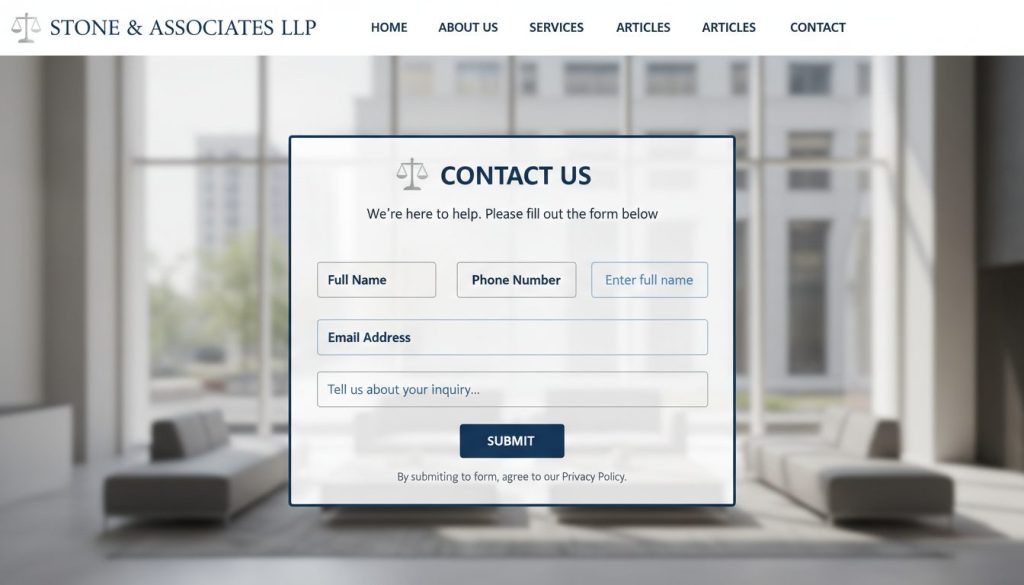
Simplify Form Fields for Higher Conversions
Simplifying form fields is crucial for higher conversions. By collecting only essential information such as name and phone number, law firms can reduce friction and encourage more visitors to complete the contact form. Smart form solutions like 8am MyCase dynamic forms can integrate directly into the website, hiding fields for data that’s already been collected, thus streamlining the process further.
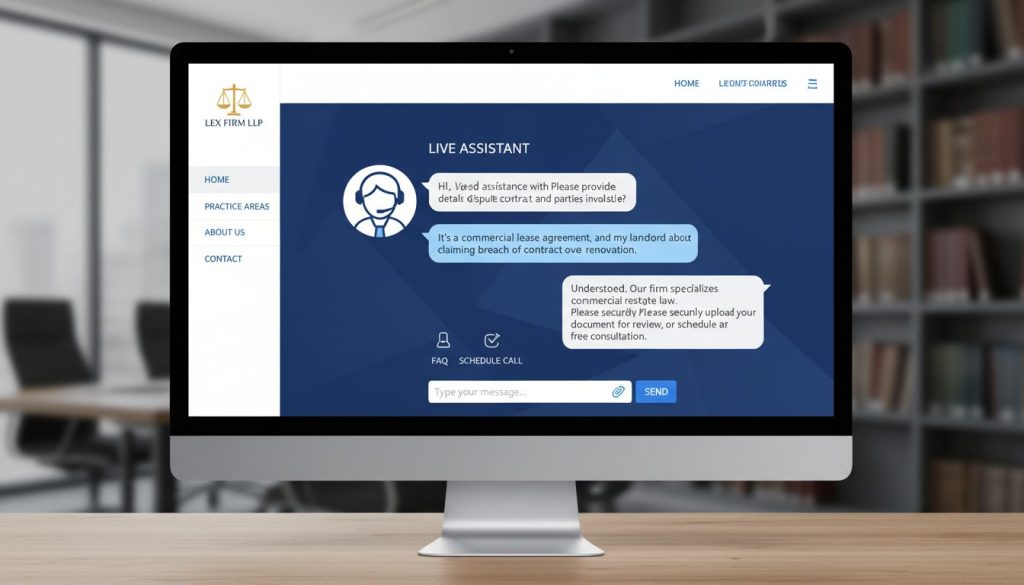
Implement Live Chat and 24/7 Contact Options
Implementing live chat and 24/7 contact options can significantly enhance the accessibility of your law firm. Potential clients often search for legal assistance outside traditional business hours, and providing immediate access through live chat or a readily available contact form can be a decisive factor. Services like Intercom for AI-powered chat support and CallRail for call tracking can help manage and attribute leads effectively.
Making your phone number and firm’s address clickable on all devices is another crucial step. This allows mobile visitors to call or get directions with a single tap, further simplifying the process. Firms like Wattel & York exemplify this by combining availability messaging, live chat, and clear contact information, ensuring potential clients always have immediate access to legal support.
By implementing these strategies, personal injury law firms can significantly improve their website’s ability to capture leads and convert visitors into clients. The key is to provide a seamless, user-friendly experience that encourages potential clients to take action without delay.
11. Master Local SEO for Personal Injury Lawyers
To stand out in a crowded legal landscape, personal injury lawyers must master local SEO strategies that target their specific geographic service area. This involves a combination of techniques designed to increase visibility in local search results, making it easier for potential clients to find and contact the law firm.
Target Location-Specific Keywords
One of the foundational elements of local SEO is targeting location-specific keywords. This means incorporating the names of cities, neighborhoods, or regions into the website’s content, particularly in the practice area pages. For example, using keywords like “Dallas car accident attorney” or “Phoenix personal injury lawyer” can help attract searches from individuals in those areas looking for legal representation.
Effective keyword targeting involves understanding the search terms potential clients use and incorporating them into the website’s content in a natural way. This not only helps with search engine rankings but also ensures that the content resonates with the target audience.
To further enhance local SEO, it’s essential to optimize the Google Business Profile with accurate and up-to-date information, post regular updates, solicit reviews, and select categories that improve visibility in local map pack results. This profile is often one of the first things potential clients see when searching for local services, making it a critical component of local SEO.
Build Dedicated Location Pages
For law firms with multiple office locations, creating dedicated location pages is a highly effective strategy. These pages should be designed to provide unique content that addresses local statistics, laws, and community information relevant to each area served by the firm.
By building province-specific or state-specific pages, law firms can cater to users browsing by both injury type and geographic area, enhancing the user experience and improving local search visibility. It’s also crucial to incorporate local schema markup and maintain NAP (Name, Address, Phone) consistency across directories to signal relevance to search engines.
Firms like Preszler have successfully implemented these strategies, maintaining a broad reach while feeling local and personal through tailored navigation, content, and branding for specific communities. This approach not only boosts local SEO but also builds trust with potential clients by showing a deep understanding of their local needs and legal environment.
By mastering local SEO, personal injury lawyers can gain a competitive advantage by capturing high-intent searches from injury victims looking specifically for attorneys in their immediate area. This targeted approach ensures that the law firm’s website appears in front of the right people at the right time, increasing the likelihood of converting searches into clients.
12. Learn from the Best Personal Injury Law Firm Websites
Top-performing personal injury law firm websites demonstrate a blend of trust-building elements, user-friendly design, and strategic content that drives client engagement. By examining these exemplary sites, we can glean valuable insights into creating a compelling online presence that resonates with potential clients.
Grillo Law – Building Trust Through Legacy and Results
Grillo Law’s website succeeds by blending trust, accessibility, and conversion-focused design into a cohesive experience. It immediately establishes credibility through its legacy tagline, “Injury Lawyers Since 1984,” and transparent case results. Social proof is woven throughout via strong Google ratings and authentic client testimonials. The site’s design is modern and intuitive, making it easy for visitors to find the information they need.
The combination of legacy messaging, transparent results, and social proof creates a powerful narrative that builds trust with potential clients. Grillo Law’s website serves as an excellent example of how to effectively leverage these elements to drive conversions.
Parris Law Firm – Leading with Billion-Dollar Recoveries
Parris Law Firm is a well-established and highly reputable firm in California. The Parris website stands out by showcasing billions recovered for clients alongside high-impact visuals and a refined layout. Highlighting high-value settlements and awards builds legal credibility and demonstrates the firm’s ability to secure significant compensation for its clients. The site’s design is both visually appealing and functional, providing a seamless user experience.
The strategic use of high-impact visuals and the prominent display of billion-dollar recoveries work together to establish immediate credibility with visitors. This approach not only showcases the firm’s achievements but also instills confidence in potential clients.
West Coast Trial Lawyers – Accessibility and No-Fee Guarantees
West Coast Trial Lawyers is a top-rated personal injury firm serving clients in California and Nevada. The website is built to foster client confidence by emphasizing the firm’s commitment to excellence and a strong track record. Multilingual support and free consultations are offered to reach a wider audience and reduce barriers to seeking legal help. The site prominently features the “no win, no fee” model, reducing client hesitation and making it clear that the firm only gets paid if they win the case.
| Firm | Key Features | Benefits |
|---|---|---|
| Grillo Law | Legacy messaging, transparent case results | Builds trust, establishes credibility |
| Parris Law Firm | Billion-dollar recoveries, high-impact visuals | Demonstrates capability, builds confidence |
| West Coast Trial Lawyers | Multilingual support, “no win, no fee” | Increases accessibility, reduces client hesitation |
Thomson Rogers – Combining 90 Years of Heritage with Modern Design
Thomson Rogers’ website stands out by blending heritage and modernity. The design reflects 90+ years of authority while integrating modern visuals, bold typography, and award banners. Expert navigation is handled with mega-menus across practice areas, making it easy for visitors to explore the site. The 90th Anniversary hub and community partnership showcases demonstrate that longevity and innovation can coexist.
The successful combination of tradition and modern design elements allows Thomson Rogers to honor its heritage while embracing contemporary web practices. This balance between authority and approachability makes the site both impressive and user-friendly.
By analyzing these top personal injury law firm websites, we can identify key strategies that contribute to their success. From building trust through legacy messaging and transparent results to showcasing significant recoveries and emphasizing accessibility, each site offers valuable lessons for creating an effective online presence.
13. Leverage Video Content for Engagement
By integrating video content into their website, personal injury lawyers can significantly enhance the user experience and foster a deeper connection with their audience. This approach not only captivates visitors but also encourages them to engage more meaningfully with the firm’s services.
Produce Professional Attorney Introduction Videos
Creating a personal connection with potential clients is crucial, and one effective way to achieve this is through professional attorney introduction videos. These videos allow visitors to “meet” the lawyers virtually, creating a sense of familiarity and trust before the first consultation. A well-produced introduction video can highlight an attorney’s expertise, experience, and approach to handling cases, thereby establishing credibility and confidence among potential clients.
To maximize the impact, these videos should be concise, well-lit, and feature high-quality sound. The attorney should be comfortable and natural on camera, conveying their message in a clear and compelling manner. By doing so, the firm can create a strong first impression and differentiate itself from competitors.
Create Authentic Client Testimonial Videos
Client testimonials are a powerful form of social proof, and when presented in video format, they become even more compelling. Authentic client testimonial videos featuring real former clients sharing their stories and experiences can resonate deeply with prospective clients facing similar situations. These videos provide a personal touch, showcasing the firm’s success in handling cases and the positive impact on their clients’ lives.
To be effective, testimonial videos should be genuine and unscripted, capturing the client’s true emotions and experiences. The production quality should be high, with good lighting and sound, to ensure that the message is conveyed clearly. By featuring multiple client testimonials, the firm can demonstrate its credibility and build trust with potential clients.
It’s also essential to ensure that all videos are optimized for fast loading and include captions for accessibility. This not only improves the user experience but also maintains the performance benefits discussed in earlier sections. By leveraging video content effectively, personal injury law firms can enhance their website’s engagement, improve their SEO rankings, and ultimately drive more conversions.
14. Build Authority with Media Coverage and Recognition
Media coverage and professional recognitions serve as powerful tools for personal injury law firms to build credibility and trust with potential clients. By showcasing their expertise through various media channels and prestigious awards, law firms can differentiate themselves in a competitive market.
Feature Media Mentions and “As Seen On” Displays
Highlighting media appearances on your law firm’s website is an effective way to demonstrate authority and expertise. By featuring logos of prominent publications and television networks where your attorneys have been featured, you can create a strong impression on potential clients.
“The key to a successful law firm website is showcasing your firm’s credibility through media coverage and professional recognitions.” –
To maximize the impact, consider implementing a scrolling logo display that showcases the media outlets where your firm has been mentioned. This visual representation of your firm’s exposure can significantly enhance credibility.
| Media Outlet | Type of Coverage | Year |
|---|---|---|
| Local News Network | TV Interview | 2022 |
| National Law Journal | Print Article | 2023 |
| Legal Insights Podcast | Audio Interview | 2021 |
Highlight Awards and Professional Memberships
In addition to media coverage, highlighting professional awards and memberships is crucial for establishing your law firm’s authority. Awards such as Super Lawyers, Best Lawyers, and memberships in prestigious legal organizations like the Million Dollar Advocates Forum can significantly boost your firm’s credibility.
To effectively showcase these recognitions, create a dedicated awards page on your website and integrate badges throughout your site. Regularly update this section as your firm earns new accolades to keep your content fresh and authoritative.
- Super Lawyers
- Best Lawyers
- Million Dollar Advocates Forum
- State Bar Association Recognitions
By balancing the display of authority-building elements with approachability, your law firm can appear both highly qualified and accessible to injury victims. This strategic presentation of media coverage and professional recognitions is key to building trust and differentiating your firm in a competitive legal landscape.
15. Avoid These Common Website Mistakes That Tank Rankings
Many personal injury law firms struggle with website issues that can be easily addressed to improve their search rankings. Even strong law firm websites can miss the mark in key areas, leading to lost opportunities and decreased visibility.
Slow Page Load Times
Slow page load times frustrate visitors and create negative SEO signals. Sites that take more than 3 seconds to load see dramatically increased bounce rates. To address this, optimize images by compressing them, and leverage caching and CDN technology to reduce load times.
For instance, a study found that a 1-second delay in page load time can result in a 7% reduction in conversions. By optimizing images and leveraging browser caching, law firms can significantly improve their website’s performance.
| Optimization Technique | Impact on Load Time |
|---|---|
| Image Compression | Up to 50% reduction |
| Browser Caching | Up to 30% reduction |
| CDN Technology | Up to 20% reduction |
Missing or Weak Trust Signals
Law firm websites without testimonials, reviews, or case wins fail to build confidence with potential clients. To fix this, feature compelling client testimonials, showcase settlement amounts and verdicts, and integrate Google Reviews and rating displays.
Client testimonials are particularly effective at building trust, as they provide social proof of a law firm’s capabilities. By showcasing these testimonials prominently on their website, law firms can increase conversions and build credibility with potential clients.
Outdated, Cluttered Design
Old, cluttered layouts feel less credible and may create the wrong impression for your law firm. To address this, implement modern visual elements, display credentials and trust badges, and use authentic photography instead of stock images.
A modern design not only looks more professional but also improves user experience. By using clean layouts and clear typography, law firms can make their website more navigable and increase user engagement.
Poor Mobile User Experience
You will lose leads if your website’s menus or CTAs don’t work on smaller screens. To fix this, prioritize mobile-first design, test functionality across all devices, and ensure that CTAs are clear and actionable.
With the majority of users accessing websites through mobile devices, a poor mobile user experience can be detrimental. By using responsive design and testing across multiple devices, law firms can ensure that their website provides a seamless experience for all users.
Regular website audits can help identify and address these common mistakes before they significantly impact your ability to attract and convert injury clients.
16. Conclusion
In today’s digital landscape, a personal injury law firm’s website is often the first point of contact with potential clients, making its optimization critical. By integrating the strategies outlined in this article, personal injury law firms can significantly improve their website’s ranking and conversion rates.
The best personal injury attorney websites don’t just look professional; they are designed to convert visitors into clients through strategic combinations of design, content, and technical optimization. To achieve this, it’s essential to audit your current law firm website against the strategies outlined, identifying priority improvements that will deliver the greatest impact on rankings and leads.
Website optimization is an ongoing process requiring regular updates, content additions, and technical maintenance to maintain competitive search rankings. Combining strong website performance with proper lead management systems, such as CASEpeer CRM, ensures that potential clients who visit your site are captured, tracked, and contacted promptly.
Improving your injury law firm’s website ranking requires a holistic approach addressing user experience, credibility-building, technical performance, and local SEO simultaneously. By systematically implementing these strategies, starting with quick wins before tackling more complex technical optimizations, you can generate measurable returns through increased search visibility and client acquisition.
Investing time and resources into your law firm website will yield significant benefits, turning your online presence into a powerful tool for attracting and converting clients. Start enhancing your website today to boost your firm’s online success.
FAQ
What are the key factors that determine a law firm’s website ranking?
A law firm’s website ranking is determined by several factors, including intuitive navigation, professional design, mobile optimization, speed, social proof, and SEO-optimized content.
How can I improve my law firm’s website user experience?
To improve user experience, focus on creating a clear and logical menu structure, organizing practice areas for easy discovery, and implementing modern visual elements that build trust with potential clients.
Why is mobile optimization crucial for a law firm’s website?
With most users accessing websites through mobile devices, a mobile-optimized website ensures that your site is accessible and usable across all devices, improving overall user experience and search engine rankings.
How can I establish credibility on my law firm’s website?
Establishing credibility can be achieved by featuring compelling client testimonials, showcasing settlement amounts and verdicts, and integrating Google Reviews and rating displays to demonstrate social proof.
What role does content play in improving my law firm’s website ranking?
High-quality, SEO-optimized content is crucial for improving website rankings. Focus on creating in-depth practice area pages, maintaining a regular blog publishing schedule, and offering FAQs and downloadable legal resources.
How can I optimize my law firm’s website for search engines?
To optimize your website for search engines, target location-specific keywords, build dedicated location pages, and ensure that your website is ADA accessibility compliant.
What are some common website mistakes that can negatively impact my law firm’s website ranking?
Common mistakes include slow page load times, missing or weak trust signals, outdated and cluttered design, and poor mobile user experience, all of which can negatively impact your website’s ranking and credibility.