

Effective SEO Strategies for Personal Injury Attorneys
In today’s digital landscape, personal injury law firms must prioritize online visibility to attract new clients. With over 80% of people using search engines like Google to find legal services, a well-crafted SEO strategy is crucial for success.
Potential clients under immense stress from medical bills and uncertain futures turn to Google to find reliable legal help. Law firms that don’t appear prominently in search results miss valuable opportunities. A comprehensive guide to SEO for personal injury attorneys can transform your firm’s online presence and client acquisition.
This guide explores proven strategies that go beyond basic website optimization to create a holistic digital presence. By understanding how modern search engine algorithms evaluate law firm websites, you can improve your rankings for high-intent keywords and attract more qualified leads.
Key Takeaways
- Understand the importance of SEO for personal injury law firms.
- Learn how to improve your website’s visibility in search engine results.
- Discover strategies to attract high-intent clients.
- Explore the role of content creation in SEO.
- Find out how to measure the success of your SEO strategy.
Why SEO Is Critical for Personal Injury Attorneys
The digital age has transformed how people seek legal help after an injury. In today’s digital-first world, personal injury lawyers must embrace search engine optimization (SEO) to ensure they stand out in a crowded legal market.
The Digital-First Reality of Legal Services
The legal services landscape has fundamentally shifted to a digital-first environment. Potential clients now begin their search for representation through search engines rather than traditional referrals or phone book listings.
How Potential Clients Search for Legal Help After an Injury
When someone suffers a personal injury, they’re typically experiencing one of the most vulnerable and stressful moments of their life, dealing with medical treatment, lost wages, and uncertainty about their future. These individuals turn to search engines seeking immediate answers and local legal help.
- Potential clients are under immense stress due to medical bills and lost work.
- They turn to Google to find a lawyer, making it essential for personal injury attorneys to appear prominently in search results.
- Appearing on the first page of search results provides a significant competitive advantage.
The Competitive Advantage of Ranking on Page One
Studies show that top-ranking websites receive substantially more clicks and engagement than those appearing on subsequent pages. High search engine visibility builds implicit trust and credibility, as potential clients perceive firms ranking at the top as more established and reputable.
Without a strong SEO strategy, even highly qualified personal injury lawyers may remain invisible to the clients who need them most. The digital-first reality means that your online presence now serves as your firm’s primary first impression, making SEO investment essential for sustainable growth.
Understanding How SEO Works for Personal Injury Law Firms
Effective SEO is the backbone of a personal injury law firm’s online presence. In today’s digital landscape, having a well-optimized website is crucial for attracting potential clients.
What Is Personal Injury Lawyer SEO?
Personal injury lawyer SEO involves optimizing a law firm’s website to rank higher in search engine results for specific keywords related to their practice areas. This includes refining website content to match what potential clients are searching for online.
The Difference Between SEO and SEM for Attorneys
It’s essential to distinguish between SEO and SEM (Search Engine Marketing). While SEO focuses on organic visibility through content optimization, SEM includes paid strategies like pay-per-click campaigns to increase visibility.
How Search Engine Algorithms Evaluate Law Firm Websites
Search engine algorithms assess law firm websites based on factors like content relevance, website structure, and user engagement metrics. Modern algorithms evaluate the overall value and trustworthiness of a website.
The Impact of AI Overviews on Search Results
The rise of AI overviews is changing how search results appear, with search engines providing direct answers at the top of results pages. Law firms must adapt by creating clear, structured content that can be easily extracted and featured.
Defining Your Target Audience and Client Personas
To create a successful SEO plan, personal injury law firms must first identify and understand their ideal client base. Developing detailed client personas is a foundational step in creating an SEO strategy that connects with the people who need your personal injury legal services.
Creating Detailed Client Profiles Based on Practice Areas
Start by creating comprehensive profiles of your ideal clients based on the specific practice areas you focus on, such as car accidents, workplace injuries, medical malpractice, or slip and fall cases. Each client persona should include demographic information, typical injury circumstances, emotional state during their search process, search behavior patterns, and specific legal concerns they’re likely to have.
Understanding Client Pain Points During Vulnerable Moments
Understanding the pain points clients experience during these vulnerable moments allows you to create content that addresses their immediate concerns with empathy and authority rather than aggressive sales tactics. For instance, a 35-year-old construction worker in Houston seeking compensation for a workplace injury may search for “construction injury lawyer Houston.”
Geographic Targeting and Location-Based Audience Research
Geographic targeting is especially critical for personal injury law firms since you serve specific local markets where you’re licensed to practice, requiring location-based keyword research and content optimization.
Conducting Competitor Analysis in Your Market
Conducting thorough competitor analysis in your market helps you identify what’s already working, where gaps exist in the information available to potential clients, and what opportunities you can capitalize on. By combining client personas with competitor insights, you can develop a targeted SEO strategy that positions your firm to capture high-intent searches from people actively seeking representation in your area.
- Identify demographics and behaviors of your ideal clients.
- Understand the specific legal concerns of your target audience.
- Optimize your content with geo-specific keywords.
- Analyze competitors’ SEO strategies and content.
Conducting Strategic Keyword Research for Personal Injury Cases

Strategic keyword research forms the foundation of a successful SEO campaign for personal injury law firms. By identifying and implementing the right keywords, attorneys can improve their online visibility and attract potential clients.
Identifying High-Value Personal Injury Keywords
To start, personal injury law firms should list their main services, such as car accident claims, slip and fall injuries, and medical malpractice. These terms serve as foundational keywords.
Foundation Keywords for Your Practice
Foundation keywords include broad terms that describe core services, such as “personal injury lawyer,” “car accident attorney,” and “medical malpractice attorney.”
Location-Specific Keyword Combinations
Combining core services with geographic identifiers like city names or regional descriptors creates location-specific keyword combinations, such as “Houston car accident lawyer.”
High-Intent Keywords That Signal Readiness to Hire
High-intent keywords, like “car accident attorney near me” or “local slip and fall lawyer,” indicate that searchers are ready to hire an attorney.
Balancing Search Volume and Competition
It’s crucial to balance search volume and competition when selecting keywords. While popular keywords may have high competition, niche long-tail keywords can offer better opportunities.
Using SEO Tools to Research Keyword Opportunities
Professional SEO tools like Google Keyword Planner, SEMrush, Ahrefs, and Moz provide valuable data on search volumes, competition levels, and related keyword suggestions.
Examples of High-Converting Keywords for PI Attorneys
Examples include “car accident lawyer free consultation [city],” “[city] personal injury attorney,” and “wrongful death lawyer near me.” These keywords are high-converting and relevant to personal injury attorneys.
Optimizing Your Law Firm Website for Search Engines
For personal injury law firms, having a website that is optimized for search engines can significantly impact their online visibility. Optimizing your law firm’s website for SEO goes beyond just content; it’s about ensuring every element of your site is set up for both search engines and user engagement.
Prioritizing Above-the-Fold Content and Clear CTAs
The content users first see when landing on your page should grab attention, provide essential information, and encourage them to explore further. For personal injury lawyers, this might include a clear call-to-action, contact details, and trust-building elements like testimonials or recognizable logos. Above-the-fold content should immediately communicate your value proposition.
Improving Site Structure and Navigation for Better User Experience
Site structure and navigation must be intuitive and logical, allowing visitors to find information about specific practice areas, your firm’s credentials, and contact information within just a few clicks. This improves user experience and helps search engines understand your site’s hierarchy.
Ensuring Mobile-Friendliness and Fast Loading Speed
Mobile-friendliness is non-negotiable in today’s environment where most searches occur on smartphones. Your website must display properly and function smoothly on all device sizes and screen types. Technical SEO best practices include ensuring fast loading speeds (ideally under 3 seconds) and secure HTTPS connections.
Technical SEO Best Practices
- Proper indexing of all important pages
- Clean code structure
- Error-free functionality across all pages
Image Optimization and Compression
Image optimization involves compressing file sizes without sacrificing quality, using descriptive file names that include relevant keywords, and adding alt text that describes images for both accessibility and SEO purposes.
| Optimization Technique | Description | Benefit |
|---|---|---|
| Image Compression | Reducing file size without losing quality | Faster page loading |
| Descriptive File Names | Using keywords in image file names | Improved SEO |
| Alt Text | Describing images for accessibility and SEO | Better search engine understanding |
Implementing Schema Markup for Legal Services
Implementing schema markup for legal services provides search engines with structured data about your firm, practice areas, location, reviews, and other details that can enhance your search result listings with rich snippets.
Creating SEO-Friendly URLs and Internal Linking
Creating SEO-friendly URLs involves using descriptive keywords and structuring your URLs in a logical manner. Internal linking helps users and search engines navigate your site, distributing link equity and enhancing user experience.
Mastering Local SEO to Attract Nearby Clients
To succeed, personal injury lawyers must prioritize local SEO to connect with potential clients in their geographic area. Local SEO is critical because clients typically seek representation from attorneys licensed to practice in their specific location.
Why Local SEO Matters for Personal Injury Lawyers
Local SEO matters for personal injury lawyers because it ensures that their firm appears in search results for clients in their area. This increases the likelihood of attracting nearby clients who are searching for immediate legal help.
Optimizing Your Google Business Profile
Optimizing your Google Business Profile is a crucial step in local SEO. This free tool from Google significantly influences your visibility in local searches and map results.
Completing Your Profile with Accurate Information
To optimize your Google Business Profile, you must provide accurate and comprehensive information, including your firm name, full address, phone number, website URL, practice area categories, business hours, and service area specifications.
Adding High-Quality Photos of Your Office
Adding high-quality photos of your office exterior, interior, staff members, and local landmarks helps potential clients feel more familiar and comfortable with your firm before they ever make contact.
Managing and Responding to Client Questions
Managing and responding to client questions posted on your Google Business Profile demonstrates your firm’s responsiveness and commitment to client communication, building trust with prospective clients.
Building Local Citations and Directory Listings
Building local citations means ensuring your firm’s name, address, and phone number appear consistently across online directories like Yelp, Avvo, Justia, FindLaw, Yellow Pages, and local chamber of commerce listings.
Appearing in Google’s Local 3-Pack
Appearing in Google’s Local 3-Pack—the top three local business listings displayed prominently with map locations—provides exceptional visibility and significantly increases the likelihood of attracting nearby clients searching for immediate legal help.
Google Local Service Ads for Personal Injury Attorneys
Google Local Service Ads (LSAs) provide personal injury lawyers with another powerful way to boost their firm’s visibility through a pay-per-lead model that places ads directly on Google’s SERP.
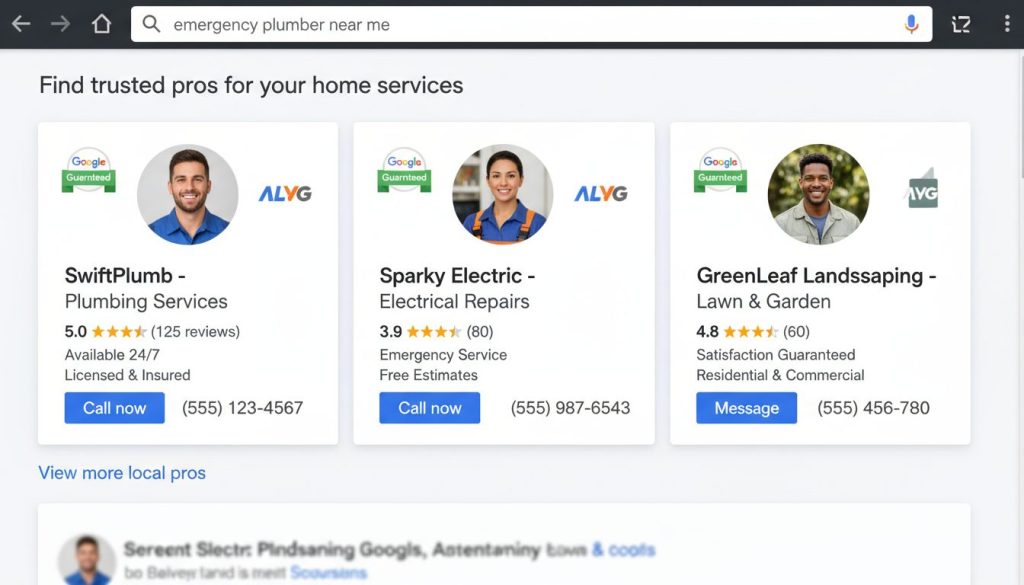
Effective SEO for Personal Injury Attorneys: Strategic Content Creation
In the realm of personal injury law, strategic content creation plays a pivotal role in SEO success. Creating informative and engaging content is key to resonating with your audience, especially for personal injury lawyers whose clients often seek guidance during times of stress.
Developing Content That Addresses Client Questions
Strategic content creation for personal injury SEO means developing articles, guides, and resources that directly address the questions and concerns your potential clients are actively searching for online. Content that addresses client questions serves a dual purpose: it provides genuine value to people seeking information during difficult times while positioning your firm as a knowledgeable and trustworthy authority.
Writing for Different Stages of the Client Journey
Writing for different stages of the client journey ensures you capture potential clients regardless of where they are in their decision-making process. This includes:
- Top-of-Funnel: Educational content like “What to Do Immediately After a Car Accident” or “Understanding Personal Injury Law Basics.”
- Mid-Funnel: Consideration and comparison content such as “How Personal Injury Settlements Work” or “What to Look for When Hiring an Injury Lawyer.”
- Bottom-of-Funnel: Decision-making content including case results, attorney profiles, and testimonials that demonstrate why your firm is the right choice.
Top-of-Funnel: Educational Content
Educational content attracts people just beginning to understand their situation. Examples include articles on common types of workplace injuries and initial steps after an injury.
Mid-Funnel: Consideration and Comparison Content
This type of content addresses topics like average settlement amounts for different case types and how to evaluate potential legal representation.
Bottom-of-Funnel: Decision-Making Content
Decision-making content helps potential clients choose your firm by showcasing your expertise, success stories, and client testimonials.
Blog Topics That Resonate with Injury Victims
Blog topics should resonate with injury victims and address their immediate concerns. Examples include “Common Injuries in Car Accidents” and “How to Prove Liability in a Personal Injury Case.”
Balancing SEO Optimization with an Empathetic Tone
Balancing SEO optimization with an empathetic tone is essential. While including relevant keywords and phrases, your content must remain sensitive to the trauma and stress your potential clients are experiencing.
Creating Compelling Content That Converts Visitors into Clients
In the realm of personal injury law, compelling content serves as a critical bridge between attorneys and the clients they seek to serve. To effectively convert website visitors into clients, personal injury attorneys must focus on creating high-quality, engaging content.
Characteristics of High-Quality Legal Content
High-quality legal content that converts visitors into clients must possess certain key characteristics. These include relevance, depth, readability, originality, and the incorporation of multimedia elements.
Relevance and Depth
Relevance is crucial as it ensures that the content addresses the specific needs and concerns of the target audience. Personal injury attorneys should focus on common topics such as car accident claims, slip and fall injuries, and medical malpractice.
Depth is equally important, as it signals authority to both search engines and readers. Providing thorough, well-researched information on a topic is more likely to be seen as authoritative and thus improves SEO rankings.
Readability and Clear Language
Readability is paramount because legal concepts can be complex and intimidating. Breaking down information into digestible sections with short paragraphs, bullet points, and explanatory subheadings improves user experience.
- Use clear and simple language
- Break up text with headings and subheadings
- Incorporate bullet points for easy reading
Originality and Real-World Insights
Originality means avoiding generic, recycled content. Instead, incorporate real-world insights from your own case experience, unique perspectives, and specific local information to make your content stand out.
Incorporating Multimedia Elements
images, explanatory videos, downloadable infographics, and visual case timelines makes content more engaging and helps visitors understand complex information.
Strategic Keyword Placement Throughout Content
Strategic keyword placement involves naturally incorporating target keywords in the opening paragraph, headers, body text, and conclusion without disrupting readability. This enhances the SEO of the content.
Including Strong Calls-to-Action in Every Post
Including a strong call-to-action (CTA) in every piece of content provides clear next steps for visitors. Examples include “Schedule Your Free Consultation,” “Call Now for Immediate Assistance,” or “Download Our Free Injury Claim Guide.”
By focusing on these elements, personal injury attorneys can create compelling content that not only attracts visitors but also converts them into clients, ultimately improving their website’s traffic and rankings.
Building Authority Through Quality Backlinks
Quality backlinks play a pivotal role in the SEO strategy of personal injury attorneys by signaling to search engines that their content is trustworthy and authoritative. When other reputable sites link to your law firm’s website, it’s seen as an endorsement of your content’s value.
Understanding the Value of High-Quality Backlinks
Backlinks serve as digital endorsements from other websites, indicating to search engines that your law firm website contains valuable, trustworthy information worth referencing. High-quality backlinks from authoritative sources like established legal publications and respected news outlets carry significantly more weight than links from low-quality directories or unrelated sites.
Guest Blogging on Legal and Industry Websites
Guest blogging provides an excellent opportunity to showcase your expertise to new audiences while earning valuable backlinks to your website. By writing informative articles for authoritative blogs or websites in your industry, you can link back to your website in author bios or contextual references, enhancing your backlink profile.
Earning Links Through Press Releases and Media Coverage
Earning links through press releases and media coverage involves sharing newsworthy information about significant case results, community involvement, or firm milestones that journalists and publications find worth covering. This not only boosts your credibility but also generates high-quality backlinks.
Partnering with Local Businesses and Healthcare Providers
Partnering with local businesses and healthcare providers creates natural backlink opportunities through mutual referrals. Collaborating with medical practices, rehabilitation centers, or auto repair shops that serve similar client populations can lead to valuable backlinks.
Avoiding Low-Quality and Paid Link Schemes
Avoiding low-quality and paid link schemes is critical because search engines have become sophisticated at detecting manipulative link-building tactics. Violations can result in severe penalties that dramatically reduce your website’s visibility.
To build a strong backlink profile, focus on creating genuinely valuable content that others naturally want to reference while actively pursuing legitimate relationship-building opportunities in your legal community.
- Focus on earning backlinks from authoritative sources.
- Utilize guest blogging as a strategy to expand your audience.
- Leverage press releases for media coverage.
- Partner with local businesses for mutual benefit.
- Avoid manipulative link-building tactics.
Optimizing Meta Tags, Titles, and On-Page Elements
Optimizing meta tags, titles, and on-page elements is crucial for personal injury attorneys to improve their website’s search engine ranking. These elements serve as critical communication tools between the website and search engines, helping algorithms understand and properly categorize the content for relevant searches.
Crafting Compelling Title Tags with Keywords
Crafting compelling title tags with keywords means creating concise, descriptive headlines that include the primary target keyword near the beginning. A well-crafted title tag is unique, descriptive, and accurately represents the page content, enticing clicks from search engine users.
Writing Effective Meta Descriptions That Drive Clicks
Effective meta descriptions drive clicks by providing summaries that include relevant keywords, highlight the unique value of the page, and include compelling calls-to-action. These descriptions should be 150-160 characters in length and differentiate the listing from competitors.
Using Header Tags (H1, H2, H3) Strategically
Using header tags strategically creates both SEO value and improved user experience by organizing content into scannable sections with a clear hierarchy. The H1 tag should contain the primary keyword, while subsequent headers use related terms.
Optimizing Image Alt Text and File Names
Optimizing image alt text and file names requires describing what each image depicts using natural language that incorporates relevant keywords where appropriate. This improves both accessibility for visually impaired users and search engine understanding.
By optimizing these on-page elements, personal injury attorneys can improve their website’s visibility in search results, driving more qualified leads and enhancing their online presence.
The Role of Client Reviews in SEO Success
In the digital age, client reviews have become an indispensable factor in the SEO success of legal professionals. The influence of client reviews extends beyond mere testimonials; they play a critical role in shaping a law firm’s online presence and credibility.
Why Reviews Matter for Local Rankings and Conversions
Client reviews are pivotal for local SEO rankings. Google’s algorithm favors businesses with numerous positive reviews, considering factors such as review quantity, quality, recency, and overall star rating. This means that law firms with a strong review profile are more likely to appear in the coveted Local 3-Pack.
Review Impact on Local Rankings:
| Ranking Factor | Importance | Review Influence |
|---|---|---|
| Review Quantity | High | Increases visibility |
| Review Quality | High | Enhances credibility |
| Review Recency | Medium | Shows current satisfaction |
| Star Rating | High | Directly impacts ranking |
Strategies for Generating More Positive Reviews
To maximize the benefits of client reviews, law firms should implement systematic strategies to encourage satisfied clients to leave feedback. This includes simplifying the review process and timing requests when client satisfaction is highest.
- Implement a systematic review request process after successful case resolutions.
- Make the review process as simple as possible with direct links.
- Time requests when client satisfaction is highest.
Responding to Reviews Professionally and Promptly
Responding to reviews, both positive and negative, demonstrates a law firm’s commitment to client communication. Professional and timely responses can enhance a firm’s reputation and show potential clients how they handle feedback.
Showcasing Testimonials Throughout Your Website
Featuring client testimonials on the homepage, practice area pages, and dedicated testimonials page reinforces the positive reputation established through review profiles. This strategic placement helps convert potential clients into actual clients.
By understanding the importance of client reviews and implementing strategies to generate and manage them effectively, personal injury attorneys can significantly improve their SEO success and attract more clients.
Leveraging Social Media to Boost Your SEO Efforts
In today’s digital landscape, social media plays a crucial role in supporting SEO strategies for personal injury attorneys. By effectively leveraging social media, law firms can enhance their online presence, drive more traffic to their website, and ultimately boost their search engine rankings.
Promoting Your Content Across Social Platforms
Promoting your content on social media can significantly extend the reach of your blog posts, case results, and legal insights. By sharing your content on platforms like Facebook, LinkedIn, Instagram, and Twitter, you can drive more traffic to your website and increase your online visibility. Consider turning your blog posts into engaging social media content, such as short Instagram carousels or informative videos.

Building Trust Through Video Content on TikTok and Instagram
Building trust with potential clients is crucial for personal injury attorneys. Video content on platforms like TikTok and Instagram can help achieve this by showcasing your personality, expertise, and approachability. Ideas for video content include explaining complex legal concepts in simple terms, sharing tips on what to do after an accident, and addressing common misconceptions about injury claims.
Engaging with Your Local Community Online
Engaging with your local community online is vital for building your firm’s reputation and attracting local clients. This can be achieved by participating in local group discussions, sharing community news, and supporting local events on social media. By doing so, you position your firm as an active and invested member of the community you serve.
Using Social Signals to Support Your SEO Strategy
While social media platforms don’t directly influence search engine rankings, they significantly impact the factors that do. Content that generates significant social engagement often attracts attention from bloggers, journalists, and website owners who may link to it as a resource. This can lead to earning quality backlinks, which are crucial for SEO success.
By integrating social media into your SEO strategy, you can create a powerful synergy that enhances your online presence, drives more traffic to your website, and ultimately improves your search engine rankings.
Tracking and Measuring Your SEO Performance

The key to a successful SEO strategy lies in continuously monitoring and adjusting your approach based on data-driven insights. For personal injury lawyers, this means leveraging the right tools to track your website’s performance and understand how potential clients interact with your online presence.
Setting Up Google Analytics and Google Search Console
To start, it’s essential to set up Google Analytics and Google Search Console. These tools provide foundational data on your website’s traffic, user behavior, and search engine rankings, allowing you to make informed decisions about your SEO strategy.
Key Metrics to Monitor Regularly
Several key metrics should be monitored regularly to gauge the effectiveness of your SEO efforts:
Organic Traffic and Traffic Sources
Understanding how many visitors arrive from search engines versus other channels helps you assess the success of your SEO efforts.
Conversion Rates and Goal Completions
Tracking the percentage of visitors who take desired actions, such as submitting contact forms or calling your office, is crucial for measuring the impact of your SEO strategy on business growth.
Keyword Rankings and Visibility
Monitoring your position in search results for target keywords helps identify which optimization efforts are effective and which need more focus.
Bounce Rate and User Engagement
Metrics like time on page, pages per session, and scroll depth indicate whether visitors find your content valuable and engaging.
Conducting Regular SEO Audits
Regular SEO audits using tools like SEMrush, Ahrefs, or Moz help identify technical issues, broken links, and other problems that may be limiting your website’s search performance.
Making Data-Driven Adjustments to Your Strategy
By analyzing the data from your SEO metrics, you can make informed adjustments to your strategy, prioritizing content and keywords that drive the most valuable traffic to your site.
By continuously tracking and measuring your SEO performance, you can refine your strategy to maximize your online visibility and attract more potential clients.
Conclusion
In today’s digital landscape, SEO is a fundamental component of a successful marketing strategy for personal injury attorneys. By optimizing for relevant keywords, creating valuable content, and implementing local SEO strategies, personal injury law firms can significantly boost their online visibility and attract more high-quality leads.
The comprehensive approach outlined in this guide provides a roadmap for law firms at any stage of their digital journey. Success in personal injury lawyer SEO requires understanding that you’re not just optimizing for algorithms but creating genuinely valuable resources for people experiencing some of the most vulnerable and stressful moments of their lives.
Effective SEO strategies for personal injury attorneys represent not just a marketing tactic but a fundamental business necessity. By investing in SEO, law firms can target high-intent leads and gain a competitive edge in the market. The more clients a firm brings in, the more prosperous the business becomes.
The investment in SEO delivers compounding returns over time, as each piece of optimized content, earned backlink, and positive client review builds upon previous efforts to strengthen overall online authority and visibility. While SEO is a long-term strategy, the sustainable organic traffic and high-quality leads it generates make it one of the most cost-effective marketing channels available to personal injury practices.
By implementing the strategies covered in this guide and maintaining a patient, consistent approach, personal injury law firms can achieve the online visibility needed to connect with more clients who need their expertise, ultimately growing their practice while serving their community.
FAQ
What is the importance of having a law firm website optimized for search engines?
A well-optimized website helps potential clients find your law firm when searching online for legal services, increasing the chances of attracting new clients and growing your business.
How do I identify the right keywords for my personal injury law firm?
To identify relevant keywords, consider your practice areas, such as car accident or law firms, and use tools like Google Keyword Planner to research terms potential clients are searching for, including phrases related to your location and services.
What is the difference between SEO and SEM, and which one should I focus on?
SEO focuses on organically improving your website’s visibility in search results, while SEM involves paid advertising. Both are valuable; SEO provides long-term benefits, while SEM can offer immediate visibility.
How can I improve my law firm’s local search rankings?
To improve local search rankings, optimize your Google Business Profile, build local citations, and ensure your website is mobile-friendly and contains location-based keywords, helping you appear in the local 3-pack and attract nearby clients.
What role do client reviews play in my law firm’s online presence?
Client reviews significantly impact your online reputation and can influence potential clients’ decisions. Positive reviews can improve your local search rankings and increase trust in your law firm.
How often should I update my law firm’s website with new content?
Regularly updating your website with fresh, relevant content, such as blog posts addressing client questions and concerns, can improve your search engine rankings and demonstrate your expertise to potential clients.
What are some common SEO mistakes that law firms should avoid?
Common SEO mistakes include keyword stuffing, neglecting mobile-friendliness, and failing to optimize meta tags and titles. Avoiding these mistakes can help improve your website’s visibility and user experience.
How can I measure the success of my SEO efforts?
To measure SEO success, track key metrics such as website traffic, search engine rankings, and conversion rates using tools like Google Analytics and Google Search Console, allowing you to make data-driven adjustments to your strategy.