

How To Get Targeted Leads For Free
Generating targeted leads is essential for the growth of any business. Luckily, there are several effective strategies that can help you acquire leads without spending any money. In this article, we will explore some proven lead generation tactics that can help you attract targeted leads for free.
Key Takeaways:
- Learn effective lead generation strategies that don’t require any financial investment
- Discover free tactics to attract targeted leads for your business
- Explore various methods such as utilizing demo Cognism’s sales intelligence platform, leveraging your CRM, targeting additional departments, cold calling, utilizing LinkedIn, and implementing email signature marketing
- Understand the importance of targeted lead acquisition for business growth
- Take advantage of these free lead generation tips to boost your business’s success
Utilize Demo Cognism’s Sales Intelligence Platform
Cognism’s sales intelligence platform is a valuable tool for B2B businesses looking to find leads and accounts that match their ideal customer profile. During a demo call, they offer the opportunity to identify 25 leads for free that meet your requirements.
The platform provides a variety of lead and company-related filters, allowing you to find email addresses of CEOs, key data points, and essential contact information. This is a quick and easy way to generate a list of free business leads.
Why Choose Cognism’s Sales Intelligence Platform?
“Cognism’s sales intelligence platform provides a comprehensive solution for lead generation. Their demo call allows you to experience the platform firsthand and identify potential leads that align with your target audience.”
“With Cognism’s lead and company filters, you can narrow down your search to find the most relevant and qualified leads for your business.”
“The platform’s ability to provide email addresses of CEOs and other key decision-makers is invaluable for B2B sales professionals.”
By utilizing Cognism’s sales intelligence platform, you can streamline your lead generation process and focus on connecting with prospects who are most likely to convert into customers.
Benefits of Utilizing Cognism’s Sales Intelligence Platform
- Access to a vast database of potential leads
- Customizable lead and company filters
- Email addresses of key decision-makers
- Efficient and time-saving lead generation
Don’t miss out on the opportunity to leverage Cognism’s sales intelligence platform for your lead generation needs. Take advantage of their demo call and explore the power of finding free business leads with ease.
Utilize Your CRM for Free Leads
Your CRM can be a valuable source of free leads. By mining your CRM for churned former customers or potential buyers who made it far into the sales cycle but didn’t make a purchase, you can re-engage with them and potentially convert them into leads. Look for sales triggers such as new funding, role changes, company expansions or relocations, pricing or feature changes. By running a “Closed/Lost Accounts” report and filtering out any failed deals, you can identify potential leads to reach out to and inquire about their decision. Initiating conversations based on their previous interest and addressing any pain points can lead to successful lead generation.
Re-engaging churned customers can be a fruitful strategy for generating free leads. These customers have already expressed interest in your product or service, and by understanding their reasons for not making a purchase, you can tailor your approach to address their specific concerns. By utilizing the data in your CRM, you can personalize your outreach and remind them of the value you can provide.
Sales triggers are essential indicators that a lead may be ready to re-engage. Keep an eye out for any news or updates within their company that signal a potential need or interest in your offering. Whether it’s securing new funding, undergoing organizational changes, or expanding their operations, these triggers can serve as an opportune time to reach out and start a conversation.
Running a “Closed/Lost Accounts” report in your CRM allows you to filter out any failed deals and focus on potential leads. Reviewing the reasons behind their decision not to purchase can provide invaluable insights into areas that need improvement or potential objections that can be addressed in your outreach. Tailor your approach to acknowledge their previous interest and offer solutions that address their pain points.
Utilizing your CRM for free leads is a cost-effective strategy that taps into existing data to generate new opportunities. By re-engaging churned customers and leveraging sales triggers, you can create a targeted approach that increases the likelihood of successful lead conversion.

| Steps to Utilize Your CRM for Free Leads |
|---|
| 1. Review churned customers and potential buyers who made it far into the sales cycle but didn’t make a purchase. |
| 2. Look for sales triggers such as new funding, role changes, company expansions or relocations, pricing or feature changes. |
| 3. Run a “Closed/Lost Accounts” report and filter out any failed deals. |
| 4. Reach out to potential leads and inquire about their decision. |
| 5. Personalize your outreach based on their previous interest and address any pain points. |
Target Additional Departments in Your Accounts
Within your existing accounts, there may be additional departments that can benefit from your product or service. By targeting these departments, you can generate free business leads. Reach out to your main point of contact and ask for an introduction to the head of the department you want to target. Come prepared with solid reasons why the other department would find value in your solution. If your customer is satisfied with your product, they may advocate for your solution within the other department, helping you seal the deal and generate free leads.
Identify Untapped Opportunities
When targeting additional departments in your accounts, it’s essential to identify untapped opportunities where your product or service can provide value. Analyze your customer’s organization and identify departments that align with your offering. Look for areas where your solution can solve challenges or enhance operations.
For example, if you’re a software provider specializing in project management, consider reaching out to the IT department for potential implementation across the organization. Highlight the benefits of streamlining processes and improving collaboration. Emphasize how your solution can save time, reduce costs, and increase efficiency.
Build Relationships with Decision Makers
When targeting additional departments, it’s crucial to build relationships with key decision makers in those departments. These individuals can help champion your solution and influence the adoption of your product or service.
Request an introduction to the head or senior leadership of the target department through your main point of contact. Use this opportunity to schedule a meeting or presentation where you can showcase your solution’s benefits and address any questions or concerns.
Nurture Advocacy Within the Organization
Once you have successfully engaged with decision makers in the target department, it’s important to nurture advocacy within the organization. Encourage your satisfied customers to share their positive experiences with colleagues, reinforcing the benefits and value of your offering.
- Ask for testimonials or case studies from satisfied customers in the target department.
- Offer incentives, such as referral programs or discounts, for customers who refer your solution to other departments.
- Provide ongoing support and training to ensure successful implementation and usage of your solution.
Measure and Refine Your Approach
As you target additional departments within your accounts, it’s important to measure the results and refine your approach for maximum effectiveness. Track key metrics such as conversion rates, customer satisfaction, and revenue generated from these efforts. Analyze the data to identify areas of improvement and adjust your strategy accordingly.
Remember, generating leads within key accounts is an ongoing process. Stay proactive, adapt to changing needs, and continue to provide value to your existing customers while expanding into new departments.
| Benefits of Targeting Additional Departments in Your Accounts | Effective Strategies |
|---|---|
| 1. Increased revenue potential | 1. Request introductions from your main point of contact |
| 2. Capitalize on existing customer relationships | 2. Build relationships with decision makers |
| 3. Leverage customer advocacy | 3. Nurture advocacy within the organization |
| 4. Expand your product/service usage | 4. Measure and refine your approach |
Cold Calling for Free Leads
Cold calling is a tried-and-true method for generating free leads, especially if you can navigate past the gatekeeper. It may seem daunting, but with the right approach, cold calling can be a highly effective lead generation strategy.
When embarking on a cold calling campaign, it’s crucial to conduct thorough research to identify the decision-makers you want to speak to. Look for their name, position, and contact information, ensuring you have the correct details before making the call. This preparation will show your professionalism and help you make a strong impression.
Demonstrate your knowledge and interest by mentioning any previous interactions or pain points that the prospect may have shared. This personalized approach can significantly increase your chances of success and engage the prospect in a meaningful conversation.
Cold calling can be particularly effective for technology companies, as research shows that a substantial percentage of technology leads prefer to be contacted by phone. By leveraging this preference, you can tap into a potentially receptive audience and generate quality leads.
“Cold calling is not about selling, it’s about identifying prospects who need your product or service and starting a conversation.” – John Smith, Sales Expert
Finding Decision-Makers Using Cold Calling
One of the challenges of cold calling is getting past the gatekeeper—the person who screens and filters incoming calls. To increase your chances of reaching decision-makers directly, here are a few tips:
- Do your homework. Gain a clear understanding of the company’s organizational structure and identify the relevant decision-makers.
- Be polite and professional. Treat gatekeepers with respect and establish rapport. They can often provide valuable insights and help facilitate your conversation with the decision-maker.
- Ask for referrals. If the gatekeeper is unable to connect you with the decision-maker, politely inquire if they can recommend another person who might be interested in your offering. This can open doors to new opportunities within the organization.
Summary
Cold calling is a cost-effective lead generation strategy that can yield impressive results when done correctly. By conducting thorough research, personalizing your approach, and navigating past gatekeepers, you can generate free leads and establish meaningful connections with your target audience.
Illustrate the section with an image related to cold calling for leads:
Utilize LinkedIn for Lead Generation
LinkedIn is a powerful tool for lead generation. With over 700 million professionals on the platform, it offers immense potential for connecting with prospective customers in your target market. By utilizing LinkedIn’s search function, you can easily find and engage with potential leads that match your target criteria.
When searching for leads on LinkedIn, start by narrowing down your search parameters based on key factors such as location, industry, job titles, and company size. This will help you identify individuals and organizations that are most relevant to your business.
Once you’ve identified potential leads, take full advantage of LinkedIn’s comprehensive profiles. These profiles provide valuable information about a person’s professional background, skills, experience, and interests. Use this information to personalize your outreach messages and establish a connection with your prospects.
Steal Competitors’ Audience
Another strategic way to leverage LinkedIn for lead generation is by stealing your competitors’ audience. This can be done by extracting the commenters on your competitors’ posts or the attendees of their events.
By identifying the individuals who are actively engaging with your competitors’ content, you can target them as potential leads. Engage with these individuals by connecting with them, commenting on their posts, or sending them personalized messages that highlight how your product or service can solve their pain points.

LinkedIn provides a unique opportunity to network and build relationships with professionals in your industry. By utilizing its resources effectively, you can uncover valuable leads and grow your business.
Use Email Signature Marketing
Email signature marketing is a simple yet effective way to generate free leads. By strategically incorporating banners in your email signatures, you can promote offers, free trials, webinars, or other lead magnets. Encourage recipients to click on these lead magnets and provide their contact information in return.
One tool that can help you optimize your email signature marketing is email signature software. One such software is Mailtastic. It allows you to manage company-wide email signatures and create eye-catching banners, icons, and buttons that grab the reader’s attention.
With email signature marketing, every email exchange becomes a potential lead generation opportunity. Through visually appealing and targeted email signatures, you can attract the attention of prospects and motivate them to take action.
**Image:**
Implementing email signature marketing can significantly enhance your lead generation efforts. It provides a subtle yet impactful way to capture the interest of potential leads and encourage them to engage with your offerings.
Conclusion
In conclusion, when it comes to lead generation strategies, there are numerous free methods that can help you acquire targeted leads. By leveraging the power of sales intelligence platforms like Cognism, you can quickly identify and filter leads that match your ideal customer profile. Utilizing the data within your CRM can also provide valuable insights and opportunities for re-engaging with former customers or potential buyers who didn’t make a purchase.
Targeting additional departments within your existing accounts can be a fruitful approach, as satisfied customers may advocate for your solution within their organization. Cold calling, when done strategically, can be an effective way to reach decision-makers and generate leads. Leveraging LinkedIn’s robust search capabilities allows you to find and connect with potential leads who align with your target criteria.
Last but not least, using email signature marketing with eye-catching banners and lead magnets can turn every email exchange into a potential lead generation opportunity. By implementing these free lead acquisition methods, you can boost your lead generation efforts and drive business growth without breaking the bank.
FAQ
How can I use Cognism’s sales intelligence platform to generate free business leads?
Cognism’s sales intelligence platform offers the opportunity to identify 25 leads for free during a demo call. The platform provides lead and company filters, allowing you to find email addresses of CEOs and key contact information.
How can I leverage my CRM to acquire free leads?
By mining your CRM for churned former customers or potential buyers who made it far into the sales cycle but didn’t make a purchase, you can re-engage with them and potentially convert them into leads. Look for sales triggers such as new funding, role changes, company expansions or relocations, pricing or feature changes. Running a “Closed/Lost Accounts” report and filtering out failed deals can help identify potential leads to reach out to and inquire about their decision.
How can I target additional departments in my accounts to generate free leads?
By reaching out to your main point of contact and asking for an introduction to the head of the department you want to target, you can generate free business leads. Come prepared with solid reasons why the other department would find value in your solution. If your customer is satisfied with your product, they may advocate for your solution within the other department, helping you seal the deal and generate free leads.
How can cold calling help me generate free leads?
Cold calling can be an effective method for generating free leads, especially if you can get past the gatekeeper. Research the person you want to speak to and find out their name and contact information. When calling a company, ask for the person by name and mention any previous interest or pain points they may have expressed. Cold calling can be especially effective for technology companies, as a significant percentage of technology leads prefer to be contacted by phone.
How can I utilize LinkedIn for lead generation?
LinkedIn’s search function allows you to find potential leads that match your target criteria. You can search for companies, job titles, and individual people who may be interested in your product or service. Additionally, you can extract the commenters on your competitors’ posts or attendees of their events to target their audience. Utilizing LinkedIn’s comprehensive profiles can help you learn more about your leads and personalize your outreach messages.
How can I use email signature marketing to generate free leads?
Email signature marketing is a simple yet effective way to generate free leads. Include banners in your email signatures that promote offers, free trials, webinars, or other lead magnets. Encourage recipients to click on the lead magnet and provide their contact information in return. Email signature software, such as Mailtastic, can help you manage company-wide email signatures and create eye-catching banners, icons, and buttons.
What are some other free lead generation methods?
In addition to the strategies mentioned above, you can also consider using other methods such as content marketing, search engine optimization (SEO), social media marketing, and partnerships with complementary businesses to generate free leads.

How To Generate Online Leads For Business
Are you looking to fuel your business growth by reaching more potential customers online? One effective way to accomplish this is through lead generation strategies. Online lead generation is the process of capturing consumer interest in your products and services on the internet, ultimately converting them into valuable leads. By implementing digital marketing for lead generation, businesses can attract and engage with their target audience, turning them into potential customers.
Whether you’re a small business owner or a seasoned marketer, understanding the intricacies of online lead generation is crucial for driving success. In this article, we will explore the different aspects of lead generation and provide you with time-tested techniques to generate leads online.
With the ever-increasing importance of digital marketing and the widespread use of the internet, lead generation has become an indispensable part of any business’s marketing strategy. By effectively capturing and nurturing leads, businesses can fuel their growth and achieve their sales objectives.
Key Takeaways:
- Online lead generation is the process of capturing consumer interest in your products and services on the internet.
- It involves attracting leads through inbound and outbound marketing strategies.
- Inbound leads are attracted through marketing efforts, such as content creation and webinars.
- Outbound leads are reached through methods like cold calling and social media advertising.
- Lead generation is essential for the growth and success of businesses in the digital age.
What Is Lead Generation?
Lead generation is the process of proactively attracting potential customers, or leads, with the goal of converting them into paying customers. It can be categorized into two types: inbound lead generation and outbound lead generation.
Inbound lead generation involves attracting leads who show interest in your products or services through various actions, such as filling out inquiry forms or downloading e-books. This strategy focuses on creating valuable content and providing solutions to address the needs and pain points of your target audience. By offering relevant and informative resources, you can attract high-quality leads that are genuinely interested in what your business offers.
Outbound lead generation, on the other hand, involves reaching out to target audiences, whether or not they have expressed interest, through methods like cold calling and mass emailing. This approach allows you to proactively engage with potential customers, even if they haven’t shown specific interest in your offerings. By targeting specific demographics or industries, you can reach a wider audience and generate leads that might not have found your business otherwise.
Both inbound and outbound lead generation strategies have their advantages and limitations. Inbound lead generation tends to be more cost-effective and focuses on attracting leads that are actively searching for solutions. Outbound lead generation, on the other hand, allows you to reach a larger audience and take a more proactive approach in targeting potential customers.
Ultimately, the choice between inbound and outbound lead generation depends on your specific business goals, target audience, and available resources. By understanding the differences between these strategies, you can develop a comprehensive lead generation plan that effectively drives your business growth.

Benefits of Inbound and Outbound Lead Generation
| Inbound Lead Generation | Outbound Lead Generation |
|---|---|
| Targets leads actively searching for solutions | Reaches a wider audience, including those who may not be actively searching |
| Builds trust and credibility through valuable content | Allows for direct communication and personalized outreach |
| Cost-effective in the long run | Can generate immediate results |
| Requires ongoing content creation and optimization | Relies on precise targeting and effective messaging |
Types of Leads
When it comes to lead generation, it’s essential to understand the different types of leads that you may encounter. This knowledge can help you tailor your marketing strategies and effectively nurture potential customers to conversion. Let’s explore four types of leads commonly encountered in lead generation efforts:
1. Marketing Qualified Leads (MQLs)
Marketing qualified leads are individuals who have engaged with your marketing team and have shown interest in your products or services. These leads are typically not ready for direct sales but have the potential to convert into paying customers with proper nurturing. MQLs may have interacted with your website, downloaded gated content like e-books, or subscribed to your newsletter. They have demonstrated a level of engagement that indicates some interest in your offerings.
2. Sales Qualified Leads (SQLs)
Sales qualified leads are contacts who have expressed direct interest in purchasing your product or service. These leads typically meet specific criteria that indicate their readiness for sales engagement, such as requesting a product demo, submitting a price inquiry, or contacting your sales team directly. SQLs are further along in the buyer’s journey and require more personalized attention from your sales team to guide them through the sales process.
3. Product Qualified Leads (PQLs)
Product qualified leads are customers who have already tried your product, usually in its free or trial version, and have shown interest in upgrading to a paid version or purchasing additional features. PQLs have firsthand experience with your product and have reached a level where they see value in your offerings. These leads require targeted marketing and sales efforts to educate them about the benefits of upgrading or expanding their usage of your product.
4. Service Qualified Leads (SQLs)
Service qualified leads are customers who have expressed interest in your product or service and have also shown interest in additional offerings or services. These leads may require upselling or cross-selling to increase their lifetime value. For example, a customer who purchased a software subscription may express interest in training sessions or consulting services related to your product. SQLs offer opportunities to provide added value and deepen the relationship with your customers.
Understanding the different types of leads allows you to tailor your lead generation strategies to effectively nurture leads through the buyer’s journey. By providing relevant and targeted content, personalized communication, and appropriately timed offers, you can guide leads from initial interest to conversion.
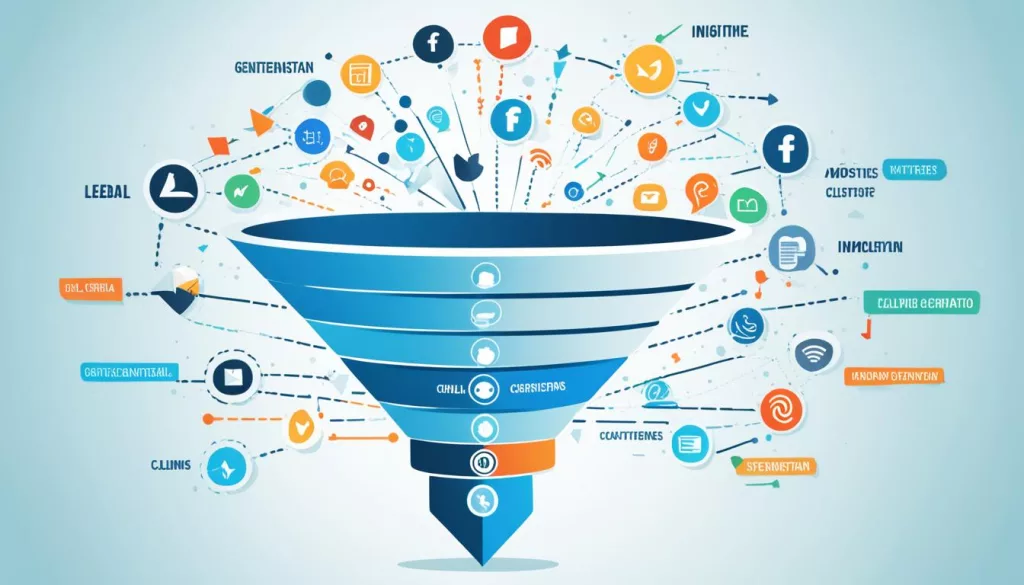
How Online Lead Generation Works: 4 Simple Steps
The online lead generation process consists of four simple steps that enable businesses to capture and nurture leads effectively. Understanding this process is crucial for optimizing your lead generation strategies and driving business growth.
Step 1: Prospects Discover Your Business
Prospects become aware of your business through various marketing channels, such as social media platforms and webinars. These channels serve as effective touchpoints to attract potential leads and generate interest in your products or services.
Step 2: Engaging Content Leads to a Landing Page
Once prospects are drawn to your business, they engage with your content, which prompts them to visit a landing page on your website. This content can include blog posts, videos, or other forms of valuable information that align with your target audience’s interests and needs.
Step 3: Capturing Leads through Contact Information
On the landing page, you offer prospects an incentive, such as an e-book or a newsletter subscription, in exchange for their contact information. This valuable resource serves as a lead magnet, enticing prospects to provide their details and establish an initial connection with your business.
Step 4: Effective Lead Nurturing in CRM
After capturing the leads, you store their information in a customer relationship management (CRM) software. This allows you to manage and track their interactions with your business. Through lead nurturing, you can build meaningful relationships with these prospects by continuously communicating with them, providing valuable content, and guiding them through the decision-making process.
| Step | Action |
|---|---|
| Step 1 | Prospects discover your business through marketing channels |
| Step 2 | Engagement with your content leads to a landing page |
| Step 3 | Leads are captured through contact information exchange |
| Step 4 | Leads are stored and nurtured in a CRM for effective communication |
By following these four simple steps, businesses can optimize their online lead generation process, capture valuable leads, nurture them effectively, and ultimately establish strong customer relationships.
5 Ways Lead Generation Helps Small Businesses
Lead generation offers several benefits for small businesses. It is a crucial aspect of a successful marketing strategy that can drive growth and increase revenue. Here are 5 ways lead generation can help small businesses:
1. Build Brand Awareness and Visibility
Lead generation plays a key role in building brand awareness and visibility for your small business. By generating customer interest in your products and services, you can attract potential customers and create brand recognition. When prospects start trusting your brand, they are more likely to share their contact information and eventually make a purchase.
2. Generate Business Opportunities
A strong lead generation strategy can open doors to new business opportunities for small businesses. It can lead to collaborations, partnerships, and strategic alliances that can help expand your customer base and reach new markets. By attracting leads who are genuinely interested in your offerings, lead generation increases the chances of converting them into valuable business relationships.
3. Improve Lead Quality
Lead generation not only helps attract potential customers but also ensures that the leads you generate are of high quality. By implementing targeted lead generation techniques, you can attract leads who are specifically interested in your products or services. This means that you have a higher chance of converting these leads into paying customers, as they are already interested in what you have to offer.
4. Reduce Dependence on Outbound Marketing
Lead generation allows small businesses to rely less on expensive outbound marketing efforts. Instead of reaching out to a wide audience through traditional advertising methods, lead generation allows you to target specific customer segments. By focusing your efforts on attracting leads who are more likely to be interested in your offerings, you can save time and resources while still achieving effective results.
5. Target Online Brand Awareness
In the era of digital marketing, online brand awareness is crucial for small businesses. Lead generation helps create online brand awareness through various channels, such as social media, content marketing, and search engine optimization. By utilizing these channels effectively, you can increase your online presence, reach a wider audience, and establish your brand as a trusted authority in your industry.
In summary, lead generation offers significant benefits for small businesses, including building brand awareness, generating business opportunities, improving lead quality, reducing dependence on outbound marketing, and targeting online brand awareness. By implementing a comprehensive lead generation strategy, small businesses can create a steady stream of qualified leads and achieve long-term success.
How To Generate Leads Online: 8 Time-Tested Techniques
When it comes to generating leads online, there are several tried and tested techniques that can help your business attract and convert potential customers. By implementing these strategies, you can optimize your online presence, create valuable content, and engage with your target audience. Let’s explore eight effective techniques for online lead generation:
1. Search Engine Optimization (SEO)
SEO is a fundamental technique for improving your website’s visibility and attracting organic traffic from search engines. By optimizing your website’s content, structure, and performance, you can increase your chances of ranking higher in search engine results pages and reaching your target audience.
2. Content Marketing
Content marketing plays a crucial role in attracting and engaging leads. By creating high-quality, informative content that addresses your audience’s pain points and offers valuable insights, you can establish your brand as an authority in your industry and build trust with your target audience.
3. Blogging
Regularly publishing blog posts related to your industry, products, or services can help you attract organic traffic and drive leads to your website. By targeting specific keywords and providing valuable information, you can position your brand as a reliable resource and capture the attention of potential customers.
4. Social Media Marketing
Social media marketing allows you to connect with your target audience on platforms they frequent. By sharing engaging content, running targeted ads, and participating in conversations, you can build a community of followers who are interested in your offerings and generate leads through social media channels.
5. Webinars
Hosting webinars is a powerful way to make personal connections with your audience and generate leads. By offering valuable insights, expert advice, and interactive sessions, you can capture the interest of potential customers and nurture them towards making a purchase.
6. Industry Research Reports
Industry research reports help establish your brand’s credibility and provide valuable information to your target audience. By conducting thorough research and sharing your insights through informative reports, you can attract leads who are actively seeking solutions and position your brand as an industry leader.
7. White Papers or E-books
Creating white papers or e-books allows you to offer in-depth information and insights to your audience. By addressing common challenges and providing practical solutions, you can attract leads who are at the consideration stage and position your brand as a trusted source of expertise.
8. Newsletters
Sending regular newsletters to your subscribers keeps your brand top of mind and helps you stay connected with potential customers. By providing valuable content, exclusive offers, and updates, you can keep leads engaged, nurture their interest, and ultimately convert them into paying customers.
By incorporating these proven techniques into your lead generation strategy, you can effectively attract, nurture, and convert potential customers online. Whether through search engine optimization, content marketing, webinars, or industry research reports, each technique offers unique benefits and contributes to the growth of your business.
| Technique | Benefits |
|---|---|
| Search Engine Optimization (SEO) | Increase organic traffic and visibility |
| Content Marketing | Establish authority, build trust, and engage leads |
| Blogging | Target specific keywords and attract organic traffic |
| Social Media Marketing | Build a community, promote offerings, and generate leads |
| Webinars | Make personal connections and nurture leads |
| Industry Research Reports | Establish credibility and provide valuable information |
| White Papers or E-books | Attract leads actively seeking solutions |
| Newsletters | Keep leads engaged and informed |
Conclusion
Effective lead generation is a fundamental aspect of a successful digital marketing strategy. By adopting the right lead generation strategies, businesses can effectively attract and convert potential customers into valuable paying customers. It is crucial to understand the different types of leads, the lead generation process, and the various techniques available for generating online leads. By leveraging the power of inbound and outbound marketing, optimizing your website, and driving qualified traffic, you can generate a steady stream of online leads that contribute to the growth and success of your business.
Lead generation strategies play a vital role in expanding your customer base and increasing your business’s revenue. By utilizing appropriate techniques such as search engine optimization (SEO), content marketing, social media marketing, webinars, industry research reports, white papers, and newsletters, you can effectively attract and engage with your target audience, cultivating strong relationships and guiding them towards making a purchase decision.
Remember, the key to effective lead generation is to consistently deliver valuable and relevant content that resonates with your audience’s needs and interests. By continuously adapting and refining your lead generation strategies based on data and insights, you can optimize your efforts and maximize the return on investment.
In conclusion, generating online leads through strategic lead generation efforts is a powerful way to grow your business and attain long-term success. By implementing the right lead generation strategies, you can boost brand awareness, increase customer engagement, and drive conversions, ultimately driving business growth and achieving your goals.
FAQ
How can I generate online leads for my business?
Generating online leads for your business involves implementing effective lead generation strategies, such as search engine optimization (SEO), content marketing, social media marketing, webinars, industry research reports, white papers, and newsletters.
What is lead generation?
Lead generation is the process of attracting potential customers, or leads, with the goal of converting them into paying customers. It can be categorized into inbound lead generation, which involves attracting leads who have shown interest, and outbound lead generation, which involves reaching out to target audiences.
What are the different types of leads?
There are different types of leads, including marketing qualified leads, sales qualified leads, product qualified leads, and service qualified leads. Each type represents a different stage of the customer journey and requires tailored lead nurturing strategies.
How does online lead generation work?
The online lead generation process generally involves four steps. Prospects discover your business through marketing channels, engage with your content, provide their contact information on a landing page, and are stored in a CRM software for lead nurturing and eventual conversion.
What are the benefits of lead generation for small businesses?
Lead generation helps small businesses build brand awareness, generate business opportunities, improve lead quality, reduce marketing costs, and target specific customer segments, leading to growth and success.
How can I generate leads online?
To generate leads online, you can use techniques such as search engine optimization, content marketing, blogging, social media marketing, webinars, industry research reports, white papers, and newsletters. These strategies help attract and engage potential customers.
Why is lead generation important for digital marketing?
Lead generation is an essential component of a successful digital marketing strategy because it allows businesses to attract and convert potential customers into paying customers. Effective lead generation strategies drive growth and contribute to the success of businesses online.

How To Generate Leads For Marketing Agency
Lead generation is a critical aspect of running a successful marketing agency. It involves implementing strategies and techniques to attract potential customers and convert them into qualified leads. A strong lead generation strategy not only helps fill your sales pipeline but also enables you to build an email distribution list, identify high-quality prospects, and personalize your marketing and sales efforts.
When it comes to lead generation, there are various proven techniques and tactics that marketing agencies can employ. In this article, we will explore effective strategies to generate leads for your marketing agency, from optimizing your lead generation landing pages to creating quality content and utilizing live chat and lead generation ads.
Key Takeaways:
- Implementing effective lead generation strategies is crucial for the growth of your marketing agency.
- Optimizing your lead generation landing pages can help increase traffic and conversions.
- Creating quality content establishes your agency as a thought leader and attracts potential leads.
- Utilizing live chat and lead generation ads can engage visitors and capture valuable lead data.
- Consistently implementing lead generation techniques can drive growth and expand your client base.
Improve Lead Generation Landing Pages
In the world of lead generation, landing pages play a crucial role in converting prospects into valuable leads. By optimizing these pages, businesses can significantly increase their website traffic, enhance user experience, and boost conversion rates. Let’s explore some best practices to optimize lead generation landing pages and maximize their effectiveness.
Communicate a Clear Value Proposition
One of the most important aspects of an effective lead generation landing page is communicating a clear value proposition. You need to clearly state the benefits and value that your product or service offers to potential customers. Use compelling and concise headlines, subheadings, and persuasive copy to highlight the unique selling points that differentiate your brand.
Provide Social Proof
Social proof plays a significant role in building trust with your landing page visitors. Include testimonials, customer reviews, case studies, and success stories that highlight the positive experiences of your satisfied customers. This social proof helps to instill confidence and credibility in your brand and can significantly impact the decision-making process of your prospects.
Build Trust
Gaining the trust of your visitors is crucial to lead generation success. Make sure your landing page design is clean, professional, and visually appealing. Use high-quality imagery, professional logos, and security badges to convey a sense of authenticity and professionalism. Additionally, clearly display trust signals such as privacy policies and secure payment options to alleviate any concerns about data security.
Deliver a Great Mobile Experience
In today’s mobile-centric world, it is essential to optimize your lead generation landing pages for mobile devices. Ensure that your landing pages are mobile-responsive, load quickly, and provide a seamless user experience across different screen sizes. Mobile users should be able to navigate your landing page easily, fill out forms, and engage with your content without any issues.
Display a “Thank You” Message
Don’t overlook the importance of a “thank you” message on your lead generation landing pages. After a visitor submits their information through the lead generation form, display a personalized and appreciative message. This simple gesture not only shows that you value their interest but also provides a positive user experience that leaves a lasting impression.
Optimizing Lead Generation Forms
The lead generation form on your landing page is a critical element for capturing prospect information. Striking the right balance between simplicity and complexity is key. While a simple form can improve the conversion rate by reducing barriers to entry, a more complex form can help filter out low-quality leads and collect valuable data for personalization.
Consider the essential information you need from your prospects and only include those form fields. Simplify the design by removing unnecessary fields and only asking for information that is truly necessary. This streamlined approach makes it easier for visitors to fill out the form quickly and increases the likelihood of conversion.
On the other hand, for industries that require more detailed lead information, a more complex form may be necessary to gather critical data for qualifying leads. Analyzing lead data gained through these forms is an essential step in better understanding your target audience. By analyzing this data, you can gain valuable insights that can inform your marketing strategy, personalize your messaging, and improve your overall lead generation efforts.
To summarize, optimizing lead generation landing pages is a crucial step in driving successful lead generation campaigns. By following these best practices, you can create landing pages that effectively communicate your value proposition, build trust, and deliver a superior user experience. Additionally, optimizing your lead generation forms and analyzing lead data will enable you to gain valuable insights into your target audience, refine your marketing strategies, and drive better results.

| Benefits of Optimized Landing Pages | Improvements |
|---|---|
| Increase website traffic | Attract more visitors through search engine optimization and better user experience. |
| Boost conversion rates | Engage visitors with compelling content and persuasive design elements. |
| Enhance user experience | Optimize landing pages for mobile devices and provide a seamless browsing experience. |
| Collect valuable lead data | Analyze lead information to gain insights and inform marketing strategies. |
Create Quality Content
Creating quality content is an essential component of a successful content marketing strategy for marketing agencies. By producing valuable and informative content, agencies can attract and engage potential leads, establishing themselves as thought leaders in their industry.
Content marketing encompasses various formats, including articles, videos, podcasts, and more. Through these mediums, agencies can showcase their expertise and provide valuable information to their target audience. They can address pain points, answer frequently asked questions, and offer insights that resonate with their readers.
One effective way to convert prospects into leads is by offering lead magnets such as templates, ebooks, and white papers. These valuable resources can capture prospects’ information, such as their email addresses, in exchange for access to the content. This allows agencies to continue nurturing the leads through email marketing campaigns and build a stronger relationship.
Having a content hub where all the valuable content is accessible in one place is also important. A content hub acts as a centralized resource for prospects and existing clients to explore relevant articles, videos, or other content offerings. This increases visibility, allows for easy navigation, and encourages visitors to spend more time on the website.
“Content marketing is a powerful tool for marketing agencies to showcase their expertise, provide value to their target audience, and build trust with potential leads. By offering valuable resources as lead magnets and maintaining a content hub, agencies can attract and convert high-quality leads.”
Overall, content creation should be driven by the target audience’s needs and interests. By addressing their pain points, offering solutions, and providing valuable information, marketing agencies can establish themselves as trusted advisors in their industry. This ultimately leads to increased lead generation, brand visibility, and overall business growth.
Content Marketing Strategy Checklist:
- Conduct audience research to identify their needs and interests
- Create a content calendar outlining topics and publishing schedule
- Produce high-quality content in various formats
- Optimize content for search engines by incorporating relevant keywords
- Promote content through social media channels and email marketing
- Measure content performance using analytics tools to refine the strategy

| Benefits of Quality Content | Lead Generation Techniques |
|---|---|
| Establishes thought leadership | Offer lead magnets such as templates, ebooks, and white papers |
| Builds trust and credibility | Create a content hub to showcase valuable resources |
| Increases brand visibility | Develop a content marketing strategy aligned with the target audience’s needs |
| Generates organic traffic and social shares | Optimize content for search engines |
Utilize Live Chat and Lead Generation Ads
Live chat is an invaluable tool for marketing agencies to engage with website visitors and capture lead data. By implementing a conversational approach through AI-powered chatbots or live chat support, agencies can effectively address visitors’ questions and encourage them to share their information. This interactive and personalized communication helps in both lead generation and lead qualification, paving the way for meaningful customer interactions.
On the other hand, lead generation ads are specifically designed online advertisements aimed at generating leads. Marketing agencies can leverage various types of online ads, such as paid search, paid social, and display ads, to drive targeted traffic to lead generation landing pages. These ads allow agencies to reach their intended audience with precision, increasing the likelihood of capturing high-quality leads.
Platforms like Facebook and Google offer built-in lead generation tools, including lead ads and lead form assets, which streamline the lead generation process. With these tools, agencies can seamlessly collect lead data directly from the ad platforms, eliminating the need for visitors to manually enter their information. This convenience not only enhances the user experience but also enables agencies to efficiently gather valuable lead data for improved targeting and personalization.
Implementing live chat and incorporating lead generation ads into marketing strategies can significantly boost lead generation efforts. It allows agencies to engage with potential customers in real-time and capture their information efficiently, facilitating effective lead nurturing and conversion.
Conclusion
In conclusion, effective lead generation strategies are essential for the growth of marketing agencies. By implementing various tactics such as optimizing lead generation landing pages, creating quality content, utilizing live chat, and running lead generation ads, agencies can attract and convert prospects into valuable leads.
Understanding the target audience is crucial in developing successful lead generation techniques. By leveraging content marketing and providing valuable information through articles, videos, and other forms of content, agencies can establish themselves as thought leaders and build trust with their audience.
Utilizing tools such as CRM software and video marketing can further enhance lead generation efforts. Tracking and analyzing lead data can provide valuable insights, allowing agencies to tailor their marketing and sales efforts to meet the specific needs and preferences of their prospects.
Consistent implementation of lead generation strategies is key to driving growth and expanding the client base of marketing agencies. By continuously refining and adapting lead generation techniques, agencies can stay ahead of the competition and achieve sustainable growth in the dynamic and ever-evolving digital marketing landscape.
FAQ
What are some effective lead generation strategies for marketing agencies?
Some effective lead generation strategies for marketing agencies include optimizing lead generation landing pages, creating quality content, utilizing live chat, and running lead generation ads.
How can I improve my lead generation landing pages?
To improve lead generation landing pages, you should communicate a clear value proposition, provide social proof, build trust, deliver a great mobile experience, display a “thank you” message, and design the lead generation form for simplicity and data collection needs.
How can content marketing help with lead generation?
Content marketing can attract and engage potential leads by showcasing expertise and providing valuable information. Marketing agencies can leverage various forms of content such as articles, videos, podcasts, and lead magnets like templates, ebooks, and white papers to capture prospects’ information in exchange for valuable content.
What is the importance of live chat and lead generation ads in lead generation?
Live chat helps engage website visitors and capture lead data by addressing their questions and encouraging them to share information. Lead generation ads, such as paid search, paid social, and display ads, drive traffic to lead generation landing pages, simplifying the lead generation process.
How can lead generation strategies contribute to the growth of a marketing agency?
By implementing effective lead generation strategies, marketing agencies can attract and convert prospects into leads, expand their client base, and drive growth. This can be achieved through consistent implementation of techniques such as optimizing lead generation landing pages, creating quality content, utilizing live chat, and running lead generation ads.

Successful Guide to a Winning Online Event for Network Marketers
Hosting events is an effective strategy for network marketers to showcase their products, share valuable information, and connect with potential customers and business partners. In a competitive landscape, it’s crucial to effectively promote your events to attract the right audience and maximize attendance.
Key Takeaways:
- Effective event promotion is essential to attract the right audience and maximize attendance.
- Hosting online events allows network marketers to showcase their products, share valuable information, and connect with potential customers and business partners.
- Virtual event hosting tips can help network marketers achieve success in their endeavors.
Why Should I Start a Network Marketing Business?
Network marketing, also known as multi-level marketing (MLM) or direct selling, offers a compelling avenue for starting your own business. It provides numerous benefits and opportunities for aspiring entrepreneurs.
First and foremost, network marketing has low startup costs and risk. Unlike traditional businesses that require significant capital investment, network marketing allows you to get started with minimal financial commitment. This affordability opens doors for individuals from various backgrounds to pursue their entrepreneurial dreams.
Second, network marketing offers flexible lifestyle and time freedom. As a network marketer, you have the flexibility to work on your own terms and manage your time according to your preferences. This is especially attractive for individuals seeking a better work-life balance or looking to escape the constraints of a traditional 9-to-5 job.
Moreover, network marketing provides the potential for leveraged income. By building a network of distributors and earning commissions from their sales, you can create passive income streams. This means that as your team grows and becomes more successful, you can continue to earn income even when you’re not actively working.
Another significant advantage of network marketing is the supportive community it offers. You’ll have access to training, mentorship, and support from experienced network marketers who are invested in helping you succeed. This sense of community can be invaluable, especially for those new to entrepreneurship.
Lastly, network marketing provides an opportunity for personal impact and influence. By sharing products or services that you believe in, you can positively impact people’s lives and make a difference. This aspect of network marketing allows you to align your business with your values and create meaningful connections.
Overall, starting a network marketing business can be an exciting and rewarding venture. It offers low startup costs, flexible lifestyle, leveraged income potential, a supportive community, and the chance to make a personal impact. Whether you’re looking for financial freedom, personal growth, or a way to pursue your passions, network marketing can be a pathway to achieving your goals.
Consistent Social Media Engagement: The Heartbeat of Your Online Presence
Consistent social media engagement is a vital aspect of hosting successful online events for network marketers. By strategically planning content in advance, engaging with followers, monitoring and measuring interactions, and maintaining authenticity, you can build and sustain an engaged online audience. Utilizing popular social media platforms like Facebook can significantly enhance the promotion and success of your network marketing events.
When planning your online event, consider incorporating the following strategies:
- Create a content calendar: Planning your social media content in advance helps ensure a consistent and cohesive online presence. Identify the key themes and topics related to your event and develop a content calendar outlining the types of posts you will share leading up to, during, and after the event.
- Engage followers through interactions: Actively engage with your followers by responding to comments, direct messages, and mentions. Encourage conversations, ask questions, and provide valuable insights to foster meaningful interactions. This not only strengthens relationships with your audience but also demonstrates your expertise and commitment.
- Monitor and measure interactions: Regularly monitor your social media analytics to gain insights into your audience’s preferences and behavior. Pay attention to engagement metrics such as likes, comments, and shares, as well as click-through rates on any event-related links. Use this data to refine your content strategy and optimize future engagement.
- Be authentic: Authenticity is key to building trust and credibility with your audience. Share behind-the-scenes glimpses of your event preparation, showcase testimonials from satisfied customers, and highlight success stories within your network marketing community. By being genuine and transparent, you can connect on a deeper level with your audience and foster long-term relationships.

Remember, social media engagement should be an ongoing and consistent effort, not just limited to the duration of your network marketing event. By leveraging the power of social media and implementing these strategies, you can boost event attendance, increase brand visibility, and foster a loyal community around your network marketing business.
Master the Follow-Up with CRM: Where Fortunes Are Made
Follow-up is a critical aspect of organizing successful network marketing events. It is the key to building and nurturing relationships with your attendees, as well as maximizing conversions and long-term success. To master the art of follow-up, leveraging a Customer Relationship Management (CRM) system is essential. CRM systems provide a centralized platform to track interactions, set reminders for follow-ups, personalize communication, and analyze the effectiveness of your strategies.
The Power of CRM for Virtual Event Management
With virtual events becoming increasingly popular, it is crucial to adapt your follow-up process to the online environment. A CRM system can greatly enhance and streamline your virtual event management efforts, ensuring that no valuable leads slip through the cracks. By capturing attendee data and engagement metrics, you can tailor your follow-up messages based on their specific interests and actions during the event.
In addition, a CRM system allows you to automate various aspects of your follow-up process, saving you time and effort. You can create personalized email sequences, schedule reminders for follow-up calls, and track the progress of each lead as they move through your sales funnel.
Benefits of Using CRM for Follow-Up
By using a CRM system for follow-up, you can experience a range of benefits that will help drive the success of your network marketing events:
- Increased Organization: A CRM system keeps all your contacts, interactions, and follow-up tasks in one place, allowing for efficient management and easy access to important information.
- Improved Personalization: With a CRM system, you can segment your contacts into different groups based on their interests and demographics. This enables you to deliver personalized follow-up messages that resonate with each individual, increasing engagement and conversions.
- Enhanced Efficiency: Automating certain aspects of your follow-up process frees up valuable time and resources, allowing you to focus on building meaningful relationships and growing your network marketing business.
- Data-Driven Insights: The analytics provided by a CRM system enable you to track the effectiveness of your follow-up strategies. By analyzing engagement metrics, conversion rates, and other key indicators, you can refine your approach and maximize your event’s success.
Implementing a Strong Follow-Up System
To ensure an effective follow-up system, consider the following tips:
- Segment your contacts based on their level of interest and engagement during the event. This will allow for more targeted and personalized follow-up communication.
- Use automation features to send timely follow-up emails, reminders, and nurture sequences.
- Monitor the progress of each lead in your CRM system and prioritize follow-ups based on their level of engagement and readiness to take the next step.
- Continuously analyze and optimize your follow-up strategies based on data and feedback from your attendees.
By implementing a strong follow-up system powered by a CRM system, you can significantly increase the success of your network marketing events and propel your business to new heights.
List Building for Lead Generation: Your Business’s Lifeline
Building a solid email list is essential for lead generation and the success of network marketing events. In order to effectively plan online events for network marketers, it is crucial to implement strategies that not only attract subscribers but also nurture relationships and provide ongoing value to your audience. Here are some key steps to consider:
Create Compelling Lead Magnets
Offering valuable resources or exclusive content as lead magnets can incentivize potential subscribers to join your email list. This could include e-books, webinars, templates, or other resources that address the pain points and challenges faced by your target audience. By providing high-quality lead magnets, you can enhance the perceived value and encourage more conversions.
Set Up Landing Pages
A well-designed landing page with a clear call-to-action can significantly increase the conversion rates of your lead generation efforts. When planning online events for network marketers, dedicate specific landing pages for each event to provide detailed information and capture potential attendees’ contact information. Use persuasive copy, compelling visuals, and a user-friendly layout to optimize conversions.
Promote Content
Efficiently promoting your lead magnets and online events is vital for attracting the right audience. Consider utilizing social media platforms, email marketing, and paid advertising as part of your promotional strategy. Use targeted keywords, compelling headlines, and engaging visuals to entice your target audience to sign up for your email list and attend your online events.
Nurture Relationships Through Email Marketing
Once you have subscribers on your email list, it’s important to maintain consistent communication and provide ongoing value. Use email marketing automation tools to segment your audience and send personalized messages that address their specific needs. Share informative content, event updates, and special offers to keep your subscribers engaged and nurture relationships over time.
| Benefits of List Building for Lead Generation | Actions |
|---|---|
| Increased conversion rates | Offer compelling lead magnets |
| Targeted audience | Set up landing pages |
| Ongoing communication | Promote content |
| Long-term customer relationships | Nurture relationships through email marketing |
Building a solid email list is the lifeline of your network marketing business. By implementing these list-building strategies and consistently providing value to your subscribers, you can generate leads, attract attendees to your online events, and ultimately drive the success of your network marketing endeavors.

Personal Branding 101: Stand Out or Sit Down
Building a personal brand is crucial for standing out in the network marketing industry. A strong personal brand can differentiate a network marketer from their competitors, establish credibility, and attract a loyal following. To build a powerful personal brand, consider the following tips:
Define Your Unique Value Proposition
Start by identifying your unique strengths, skills, and qualities that set you apart from others in the industry. What do you bring to the table that others don’t? This is your unique value proposition (UVP), and it will serve as the foundation of your personal brand. Your UVP should resonate with your target audience and communicate the specific benefits they will receive by working with you.
Maintain Visual Consistency
Consistency is key in personal branding. Create a visual identity that aligns with your brand personality and values. Consider using consistent colors, fonts, and design elements in all your marketing materials, social media profiles, and website. This visual consistency will help you establish a memorable and professional brand image.
Share Personal Stories
Authenticity is a powerful tool in personal branding. Share personal stories that relate to your audience and showcase your journey, experiences, and successes. This humanizes your brand and helps build trust and relatability with your audience. Personal stories can be shared through blog posts, social media captions, or even live video streams during virtual events.
“Your personal brand is what people say about you when you’re not in the room.” – Jeff Bezos
Create Valuable, Purpose-Driven Content
Consistently create and share valuable content that aligns with your brand and provides value to your audience. Focus on addressing their pain points, offering solutions, and sharing insights and expertise. This content can be in the form of blog posts, videos, podcasts, or social media updates. By consistently delivering valuable content, you position yourself as a trusted authority in your industry.
Conclusion
Hosting a successful online event for network marketers requires implementing effective event promotion strategies, engaging in consistent social media interactions, mastering follow-up techniques, focusing on lead generation efforts, and developing a strong personal brand. By integrating these best practices and harnessing the power of virtual events, network marketers can effectively showcase their products, cultivate connections with potential customers and business partners, and ultimately achieve success in their endeavors.
Event promotion is essential for attracting the right audience and maximizing event attendance. By utilizing various marketing channels, such as social media, email marketing, and targeted advertising, network marketers can create a buzz around their events and generate excitement among their target audience.
Consistent social media engagement is the heartbeat of a network marketer’s online presence. Engaging with followers, planning content in advance, and monitoring and measuring interactions all contribute to building a strong and engaged online community. This, in turn, enhances the promotion and success of network marketing events.
Follow-up is where fortunes are made in network marketing. Leveraging Customer Relationship Management (CRM) systems to track interactions, personalize communication, and set reminders for follow-ups can lead to increased conversion rates and long-term success. By implementing effective follow-up techniques, network marketers can nurture relationships and drive their business forward.
FAQ
How can I effectively promote my network marketing events to attract the right audience?
To effectively promote your network marketing events, utilize social media platforms like Facebook and plan content in advance. Engage with your followers, monitor and measure interactions, and be authentic in your communication. Consistent social media engagement is crucial for building and maintaining an engaged online audience.
Why is follow-up important for successful network marketing events?
Follow-up is critical for successful network marketing events because it allows you to nurture relationships with potential customers and business partners. Leveraging Customer Relationship Management (CRM) systems can help track interactions, set reminders for follow-ups, personalize communication, and review and refine strategies.
How can I build a strong email list for lead generation?
Building a solid email list is essential for lead generation and the success of network marketing events. Create compelling lead magnets, set up landing pages, promote content, and nurture relationships through email marketing. Provide value and maintain consistent communication with subscribers to generate leads and grow your network marketing business.
How can personal branding help me stand out in the network marketing industry?
Building a personal brand is crucial for standing out in the network marketing industry. Define a unique value proposition, maintain visual consistency, and share personal stories to differentiate yourself from the competition. Create valuable, purpose-driven content and consistently deliver it through various mediums like social media and blog posts to strengthen your personal branding efforts.
What are some key strategies for hosting a successful online event for network marketers?
To host a successful online event for network marketers, you should focus on effective event promotion strategies, consistent social media engagement, follow-up techniques, lead generation efforts, and personal branding. By integrating these practices and leveraging the power of virtual events, you can effectively showcase your products, connect with potential customers and business partners, and achieve success in your network marketing endeavors.

How To Get Leads For Marketing Agency
Lead generation is a critical aspect of the success of any marketing agency. It is essential for attracting and acquiring new clients to grow your business. However, many agencies struggle with effective lead generation strategies and tactics. In this section, we will explore proven methods to help you generate high-quality leads specifically tailored for marketing agencies.
Key Takeaways:
- Implement effective lead generation strategies to attract and acquire new clients for your marketing agency.
- Define your unique selling proposition and agency specialties to differentiate yourself from competitors and attract the right audience.
- Utilize content marketing to generate leads by creating valuable and engaging content that showcases your agency’s expertise.
- Consider buying leads cautiously, weighing the pros and cons to ensure lead quality and compliance with GDPR regulations.
- Create buyer personas to understand your target audience and personalize your marketing efforts for better lead conversion.
Define Your Unique Selling Proposition
One of the most important steps in lead generation for marketing agencies is clearly defining your unique selling proposition and specialties. By clearly communicating what services you offer and what sets you apart from other agencies, you can attract the appropriate audience and eliminate discussions with unqualified leads. Focusing on building relationships with leads that are suited to your target audience will increase the chances of a successful partnership.
| Benefits of Defining Your Unique Selling Proposition | How to Define Your Unique Selling Proposition |
|---|---|
|
|
Defining your unique selling proposition helps you establish your agency’s identity and reputation in the market. It differentiates you from competitors and positions you as the go-to agency for specific services. By attracting the right audience and eliminating unqualified leads, you can focus on building meaningful relationships with clients who resonate with your agency’s values and expertise.
Utilize Content Marketing
Content marketing is a powerful tool for lead generation in the world of marketing agencies. By creating valuable and engaging content, you can attract and generate leads to grow your client base. To make the most of content marketing, it’s important to have a comprehensive strategy that incorporates key elements such as pricing transparency, leveraging client reviews, and showcasing your agency’s expertise.

Pricing transparency is crucial in content marketing for marketing agencies. By openly sharing your pricing information, you build trust and transparency with potential clients, making it easier for them to consider your services. This transparency also helps to prequalify leads, ensuring that you attract those who are genuinely interested and able to afford your services.
“Pricing transparency is an essential aspect of content marketing. By openly sharing our pricing, we have not only attracted leads who are genuinely interested and can afford our services, but we have also built trust and credibility with our audience.”
– Sarah Johnson, Marketing Agency CEO
Leveraging client reviews is another valuable component of content marketing. Positive reviews from satisfied clients serve as powerful testimonials that showcase your agency’s expertise and success. Include client testimonials in your content, whether it be through case studies, video testimonials, or written reviews. This helps to build credibility and trust with potential clients, ultimately generating more leads for your agency.
When it comes to showcasing expertise, content marketing allows you to position your agency as a thought leader in your industry. Create content that demonstrates your knowledge, shares valuable insights, and solves common challenges your target audience faces. This establishes your agency as an industry expert, attracting quality leads who are seeking the expertise and solutions you can offer.
Benefits of Utilizing Content Marketing for Lead Generation:
- Attract and generate leads for your marketing agency
- Show transparency and build trust through pricing transparency
- Leverage client reviews to showcase your agency’s success
- Showcase your expertise and position your agency as a thought leader
By utilizing content marketing effectively, you can generate high-quality leads and drive the growth of your marketing agency. Incorporate pricing transparency, leverage client reviews, and showcase your expertise to attract and engage potential clients. With a strategic content marketing approach, you can position your agency as a trusted industry leader and generate leads that are more likely to convert into long-term clients.
Consider Buying Leads
Buying leads can be a quick and convenient way to generate leads for marketing agencies. However, it is important to weigh the pros and cons before making a decision. Buying leads can offer several advantages:
- Time-Saving: Purchasing leads saves time and effort that would otherwise be spent on manual lead generation.
- Broader Reach: Buying leads allows you to reach a wider audience, potentially expanding your client base.
- Immediate Results: With purchased leads, you can quickly start engaging with potential clients and nurturing them through the sales process.
Despite the benefits, there are also some considerations and potential drawbacks:
- Lead Quality: Not all bought leads may be of high quality. Some leads may not be unique or may not meet your agency’s specific criteria.
- Higher Costs: Buying leads can be expensive, especially if you require a large volume of leads.
- GDPR Compliance: It is crucial to ensure that the leads you purchase are GDPR compliant, with proper consent for contact.
Before purchasing leads, it is essential to verify the lead’s quality and authenticate that they have provided consent to be contacted. This ensures that you are complying with GDPR regulations and avoiding any potential legal issues.
“Buying leads can be a viable option for marketing agencies, but it is important to exercise caution and due diligence. Verify the lead quality and compliance before making a purchase.”
By carefully evaluating the pros and cons, you can determine whether buying leads aligns with your agency’s goals and resources. Remember, it is essential to prioritize lead quality and GDPR compliance to ensure a successful lead generation strategy.
Sample Comparison of Lead Generation Methods
| Lead Generation Method | Pros | Cons |
|---|---|---|
| Buying Leads |
|
|
| Organic Lead Generation |
|
|
Create Buyer Personas
Before implementing any lead generation strategies, it is important to define your ideal customers through buyer personas. Buyer personas help you understand your target audience’s demographics, preferences, and behaviors. By creating detailed profiles of your ideal customers, you can personalize your marketing efforts and target them effectively. This will increase the chances of attracting and converting leads.
Buyer personas are fictional, generalized representations of your target audience that encompass their characteristics, goals, motivations, and challenges. They provide valuable insights into the specific needs and desires of your ideal customers, enabling you to tailor your marketing messages and tactics accordingly.
When defining buyer personas, gather data from market research, customer interviews, and analytics to ensure accuracy and relevance. Consider demographics such as age, gender, location, and income, as well as psychographics like interests, values, and motivations.
Benefits of Creating Buyer Personas:
- Personalization: By understanding your ideal customers on a deeper level, you can craft highly personalized marketing messages and experiences that resonate with their specific needs and interests.
- Targeted Marketing: With buyer personas, you can focus your marketing efforts on the channels and platforms where your target audience is most active, maximizing your reach and engagement.
- Improved Campaign Performance: Creating buyer personas allows you to align your marketing strategies and tactics with the preferences and behaviors of your ideal customers, leading to higher conversion rates and improved campaign performance.
- Effective Content Creation: Buyer personas help you create relevant and valuable content that addresses the pain points and challenges of your target audience. This ensures your content resonates with your ideal customers and establishes your agency as a trusted industry resource.
By investing time and effort into creating buyer personas, you lay the foundation for a successful lead generation strategy. Personalizing your marketing efforts based on the unique needs of your ideal customers will increase the likelihood of attracting and converting high-quality leads.

Once you have defined your buyer personas, you can leverage them throughout your lead generation process. Use your buyer personas to inform your content creation, social media targeting, email marketing campaigns, and website optimization. Tailor your messaging and offerings to address the specific pain points and motivations of each persona.
Remember, buyer personas are not static and should be regularly updated and refined as you gather new data and insights. Stay agile and adaptable to ensure that your marketing efforts remain aligned with the evolving needs and preferences of your target audience.
Develop Lead Magnets
Lead magnets are valuable content resources that incentivize users to share their contact information in exchange for access. By offering valuable content, you can capture leads and showcase your agency’s expertise. Lead magnets can take various forms, such as webinars, checklists, ebooks, and templates. It is important to have a lead generation form to collect user information when delivering lead magnets.
Types of Lead Magnets
Lead magnets come in different formats, each serving a specific purpose in attracting and engaging potential clients. Here are some popular types of lead magnets:
| Lead Magnet Type | Benefits |
|---|---|
| Webinars | Interactive sessions to educate and engage leads. |
| Checklists | Step-by-step guides to help leads achieve specific goals. |
| Ebooks | In-depth resources that provide valuable insights and knowledge. |
| Templates | Ready-made documents or designs that simplify a process for leads. |
Lead magnets give you an opportunity to showcase your expertise and demonstrate the value your agency can provide. They not only attract leads but also establish credibility and trust.
When creating lead magnets, it’s crucial to focus on quality and relevance. Tailor your lead magnets to address the pain points and challenges of your target audience. By offering valuable content that solves their problems, you’ll be able to capture high-quality leads who are genuinely interested in your agency’s services.
Conclusion
Lead generation is a critical aspect of marketing agency success. By implementing effective lead generation strategies, marketing agencies can attract and acquire clients that are a perfect fit for their services. To grow your business and stay ahead in the competitive market, it is essential to employ tactics that have proven to be successful in generating high-quality leads.
Defining your unique selling proposition is the foundation of your lead generation efforts. Clearly communicating what sets your agency apart from others will attract the right audience and eliminate discussions with unqualified leads. Content marketing plays a crucial role in building trust and positioning your agency as an industry leader. Leverage pricing transparency, client reviews, and showcase your expertise to generate leads.
While buying leads can be tempting, it’s important to weigh the pros and cons. Ensure lead quality, uniqueness, and compliance with GDPR regulations before investing in purchased leads. Creating buyer personas helps you understand your target audience better and personalize your marketing efforts. By developing lead magnets like webinars, checklists, and templates, you can incentivize users to share their contact information and capture valuable leads.
By implementing these effective lead generation tactics, marketing agencies can generate high-quality leads and drive business growth. Understanding the importance of lead generation and utilizing these strategies will set your agency on the path to success.
FAQ
What is lead generation?
Lead generation is the process of attracting and acquiring potential customers, known as leads, who have shown an interest in a product or service. It involves capturing information such as names and contact details to initiate further marketing and sales efforts.
Why is lead generation important for marketing agencies?
Lead generation is crucial for marketing agencies because it helps them expand their client base and grow their business. By attracting and acquiring high-quality leads, agencies can increase their chances of converting them into paying clients and generating revenue.
How can I define my unique selling proposition for my marketing agency?
Defining your unique selling proposition involves identifying the specific services and specialties that set your agency apart from competitors. By clearly communicating what makes your agency unique, you can attract the appropriate audience and eliminate discussions with unqualified leads.
What role does content marketing play in lead generation for marketing agencies?
Content marketing plays a crucial role in lead generation for marketing agencies. By creating valuable and engaging content, such as blog posts, videos, and whitepapers, you can attract and capture leads’ attention. It helps build trust with potential clients and positions your agency as an industry leader.
Should I consider buying leads for my marketing agency?
Buying leads can be a quick way to generate leads for marketing agencies. However, it is important to weigh the pros and cons. Buying leads can be expensive and may result in receiving non-unique or unqualified leads. It is essential to verify the leads you purchase and ensure their consent to be contacted. Additionally, consider GDPR compliance and the potential impact on your agency’s reputation.
How can buyer personas help my marketing agency generate leads?
Buyer personas are fictional representations of your ideal customers. They help you understand your target audience’s demographics, preferences, and behaviors. By creating detailed profiles of your ideal customers, you can personalize your marketing efforts and target them effectively, increasing the chances of attracting and converting leads.
What are lead magnets, and how can they help my marketing agency generate leads?
Lead magnets are valuable content resources that incentivize users to provide their contact information in exchange for access. Examples of lead magnets include webinars, checklists, ebooks, and templates. By offering valuable content, your agency can capture leads and demonstrate expertise, helping to generate high-quality leads.
What are some effective lead generation strategies for marketing agencies?
Effective lead generation strategies for marketing agencies include defining your unique selling proposition, utilizing content marketing, considering buying leads cautiously, creating buyer personas, and developing lead magnets. These tactics will help you attract and acquire high-quality leads and grow your business.

5 Simple Ways To Grow Your Brand Using Instagram Reels
Instagram Reels, introduced in August 2020, has quickly become a powerful tool for brands to enhance their social media marketing strategy and boost brand awareness. This new feature allows you to create short, engaging videos that can effectively captivate your audience and build a strong brand identity. In this article, we will explore five simple ways you can utilize Instagram Reels to grow your brand and achieve greater visibility and engagement.
With over a billion active users on Instagram, leveraging the Reels feature can provide your brand with immense opportunities for growth. Whether you’re looking to promote a new product, showcase your company’s culture, or connect with your audience on a more personal level, Instagram Reels can help you achieve your goals.
Key Takeaways:
- Utilize Instagram Reels to enhance your brand’s social media marketing strategy.
- Show what happens behind the scenes to build a strong bond with your audience.
- Aim for high views on Reels to increase brand visibility.
- Create informative and entertaining content to stand out on Instagram.
- Collaborate with influencers and share user-generated content to gain social proof.
Show What Happens Behind the Scenes
With Instagram Reels, you have the perfect platform to show your audience what happens behind the scenes in your company. This is a great opportunity to share short videos that give a glimpse of the hard work and effort that goes into making and delivering your products or services. By showcasing the behind-the-scenes process, you can create a personal connection with your audience, building a strong bond and demonstrating the authenticity of your brand.
One way to utilize Instagram Reels for this purpose is by creating “Day in the Life” video content. Highlight your team members and provide insight into your company’s work culture. By giving your audience a behind-the-scenes look at how your team operates and collaborates, you can showcase your company’s values and commitment to excellence.
Another effective way to utilize Reels is by demonstrating the usage of your products or services. Showcasing your products in action not only helps your audience understand their features and benefits, but it also gives them a real-life perspective of how your products can fit into their daily routines.
The advantage of using Reels for behind-the-scenes content is that you don’t need elaborate edits or production. The short and authentic nature of Reels allows you to save time and money for your marketing department, while still creating engaging content that resonates with your audience.
An Inside Look at Our Team
Let’s take a closer look at how we showcase our team members through Instagram Reels:
| Team Member | Role | Fun Fact |
|---|---|---|
| Emily Smith | Marketing Manager | Enjoys hiking in her free time |
| Alex Johnson | Graphic Designer | Loves experimenting with new art techniques |
| Sarah Thompson | Product Specialist | Passionate about discovering new technologies |
“Instagram Reels allows us to showcase the unique talents and personalities of our team members. We believe that by giving our audience a behind-the-scenes look at our team, we can build a deeper connection and trust with them.” – John Davis, CEO
By using Instagram Reels to show what happens behind the scenes in your company, you can create an emotional connection and foster brand loyalty with your audience. Take advantage of this powerful feature to highlight your team, demonstrate product usage, and save time and money in your marketing efforts.
Aim for Views, Not Engagement With Instagram Reels
When it comes to Instagram Reels, the key to success lies in focusing on views rather than engagement. Unlike other platforms, Instagram’s algorithm gives priority to Reels with high watch and like counts, rather than comments and shares. This means that videos with low comment counts but high watch and like counts can still be featured on the discover page, gaining visibility and attracting more viewers.
It’s important to understand that Instagram users are still getting acquainted with the Reels feature. Therefore, low engagement ratings should not discourage you. Instead, concentrate on creating compelling content that generates consistent high views. This indicates that your content marketing strategy on Instagram is effective and resonating with your audience.
“While engagement is valuable, views are now the primary measure of success on Instagram Reels. So, focus on creating captivating videos that attract a large number of views, as this will position your brand for success on the platform.”
Compared to TikTok, Instagram Reels places more emphasis on views rather than engagement. By aligning your content strategy with this shift, you can optimize your reach on Instagram and achieve better results. Remember, high view counts demonstrate the effectiveness of your content marketing efforts and indicate that your brand is consistently capturing the attention of your audience.
Instagram Reels Engagement Strategy: Best Practices
- Create visually appealing and engaging videos that captivate viewers from the start.
- Use trending music, effects, and filters to enhance the entertainment value of your Reels.
- Experiment with different video lengths, but aim for concise and punchy content that holds viewers’ attention.
- Keep your captions and video descriptions concise, informative, and compelling to encourage viewers to watch and engage with your Reels.
- Utilize relevant hashtags to extend the reach of your Reels and attract a wider audience.
- Promote your Reels on other social media platforms and leverage your existing online presence to drive more views.
By implementing these strategies, you can maximize your brand’s visibility and engagement on Instagram Reels, ultimately driving growth and reaching a larger audience.

| Comparing Instagram Reels to TikTok | Instagram Reels | TikTok |
|---|---|---|
| Focus Metrics | Views, watch and like counts | Views, likes, comments, shares |
| Discoverability | Based on watch and like counts | Based on engagement and algorithmic factors |
| Brand Awareness | Opportunity to gain exposure to Instagram’s vast user base | Opportunity to reach a large and highly engaged community |
| Content Length | Up to 60 seconds | Up to 60 seconds |
| Algorithm Complexity | Relatively simpler algorithm | Advanced algorithm that prioritizes personalized recommendations |
Create Informational Content
When it comes to using Instagram Reels, it’s crucial to create content that is both entertaining and informative. While promoting your product is important, it should take a secondary focus. By doing so, you can capture your audience’s attention amidst the crowded feed on Instagram.
Showcasing your creativity and knowledge is key to creating valuable content. Use Reels as a platform to share informative videos that provide your audience with useful information. This strategy not only helps you stand out but also positions you as an expert in your niche.
Let’s take a look at an example. Kevinbparry, a renowned stop-motion animator, captivates his audience by sharing engaging behind-the-scenes tutorials. These videos not only entertain his followers but also provide valuable insights to fellow animators. This type of informational content is highly popular and demonstrates the potential for success.
To effectively engage your audience, it’s important to follow a structured video format. By incorporating a clear introduction, main content, and call-to-action, you can ensure your message resonates with your viewers. Consider creating a video structure guide that helps you stay organized and deliver content that is both engaging and easily digestible.
Video Structure Guide:
| Section | Description |
|---|---|
| Introduction | Capture your audience’s attention with a compelling opening statement or hook. |
| Main Content | Share valuable information, showcase creativity, or provide step-by-step instructions. |
| Call-to-Action | Direct your audience to take a specific action (e.g., follow, like, share, comment). |
| Conclusion | Summarize the key points and leave your audience with a lasting impression. |
By creating informational content that is both entertaining and informative, you can effectively engage your audience and establish yourself as an authority in your niche. Remember to keep your product as a secondary focus and prioritize delivering value to your viewers. Showcase your creativity, share your knowledge, and own your niche to drive engagement and build a loyal following.
Partner With Influencers and Share UGC
Utilize influencer marketing and user-generated content to enhance your Instagram Reels strategy. Collaborate with micro-influencers to create videos featuring your products or services. This partnership not only adds authenticity to your brand but also exposes you to a wider audience. When selecting influencers, consider their content, industry relevance, audience engagement, and platform activity. Additionally, host hashtag contests where users can submit Reels showcasing your products. Give rewards to participants with the best submissions to create social proof and attract new followers. User-generated content and influencer collaborations are powerful tools for your brand’s social media marketing strategy.
Influencer Selection Criteria
When partnering with influencers for your Instagram Reels strategy, it’s important to consider certain criteria:
- Industry Relevance: Collaborate with influencers whose content aligns with your brand’s industry. This ensures that their audience will be interested in your products or services.
- Audience Engagement: Look for influencers who have an engaged and supportive audience. High levels of likes, comments, and shares indicate that their followers are active and interested in their content.
- Platform Activity: Evaluate the influencer’s activity on Instagram. Regularly posting and engaging with their followers showcases their commitment to the platform and increases the likelihood of reaching a wider audience.
- Follower Quality: While follower counts are important, focus on the quality of the influencer’s followers. Look for followers who actively engage with the influencer’s content, rather than a large number of inactive or fake accounts.
Host Hashtag Contests and Reward Participants
One effective way to generate user-generated content is by hosting hashtag contests. Encourage your audience to create and submit Reels featuring your products or services using a specific hashtag. This not only increases engagement but also exposes your brand to a wider audience through user-generated content.
To incentivize participation, offer rewards to participants with the best submissions. This can include discounts, exclusive offers, or even featuring their content on your official Instagram account. By rewarding participants, you create social proof and build a stronger relationship with your audience.
Benefits of Partnering With Influencers and Sharing UGC
Partnering with influencers and sharing user-generated content on Instagram Reels has several benefits for your brand:
- Authenticity: Collaborating with influencers adds authenticity to your brand by showcasing real people using and endorsing your products.
- Social Proof: User-generated content serves as social proof, demonstrating that real customers are enjoying and benefiting from your products or services.
- Wider Audience Reach: Partnering with influencers exposes your brand to their existing audience, increasing your reach and potential customer base.
- Gaining New Followers: Through influencer collaborations and hashtag contests, you can attract new followers who are interested in the influencers’ content and your brand.
By partnering with influencers and utilizing user-generated content, you can amplify your brand’s presence, engage your audience, and drive growth on Instagram Reels.
Showcase New Releases or Your Products in Action
Utilize the power of Instagram Reels to showcase your latest releases or demonstrate your products in action. This feature allows you to captivate your audience by highlighting the features and benefits of your offerings in real-life scenarios. By showcasing your products in action, you provide your audience with a clear understanding of what they can expect, preventing any misinterpretations and enabling informed purchasing decisions.
A great example of a brand that effectively utilizes Instagram Reels to showcase their products is Coffee Over Cardio. With enticing visuals and captivating product demonstrations, Coffee Over Cardio entices their audience with their various coffee offerings.
When creating a Reel to showcase your new releases or products, it is essential to hook your audience from the start. By grabbing their attention early on, you increase the likelihood of them watching the entire Reel and engaging with your content.
| Benefits | Description |
|---|---|
| Engagement | By showcasing your products in action, you increase engagement and interest from your audience. |
| Clarity | Real-life demonstrations provide a clear understanding of your product’s features and benefits, eliminating any misinterpretations. |
| Authenticity | Showcasing your products in action helps build authenticity and trust with your audience. |
| Customer Education | Demonstrating product usage helps educate your customers and enables informed purchasing decisions. |
Repurpose Your Best Content
Want to maximize the impact of your Instagram Reels? Look no further than repurposing your best-performing content. By leveraging high-engagement content from your website, blogs, YouTube channel, and other social media accounts, you can create compelling Reels that resonate with your audience. Take a deep dive into your analytics and identify the content that has generated the most engagement, whether it’s informative blog posts, captivating YouTube videos, or trending TikTok content.
Condensing your content into 30-second Reels allows you to maintain the essence of the message while capturing your audience’s attention. However, if you’re repurposing TikTok content, remember to remove the TikTok watermarks to enhance visibility on Instagram Reels.
Creating a content calendar is essential for effectively repurposing your best content. Strategically plan and schedule your Reels to ensure a consistent flow of engaging content that aligns with your brand’s objectives. This approach not only maintains your brand visibility but also showcases the versatility of your content across different platforms.

Repurposing your best content not only saves you time and effort but also allows you to maintain brand visibility and engage your audience effectively. So, dive into your archives, find your most engaging content, and repurpose it into captivating Instagram Reels that leave a lasting impression.
Conclusion
Instagram Reels provides brands with an invaluable opportunity to enhance their marketing strategy, drive brand growth, and engage with their audience. By implementing the five simple ways discussed in this article, you can effectively leverage Instagram Reels to grow your brand. From showcasing behind-the-scenes content to partnering with influencers, utilizing user-generated content, creating informative posts, demonstrating product usage, and repurposing your best content, these strategies can significantly contribute to your brand’s success on Instagram.
One of the key factors in building a successful Instagram Reels marketing strategy is building brand authenticity. By giving your audience a glimpse of what happens behind the scenes and involving them in the content creation process through user-generated content, you can establish a strong connection with your audience and foster trust.
Showcasing product demonstrations is another effective way to engage your audience and highlight the features and benefits of your offerings. By capturing your products in action and presenting them in real-life scenarios, you can provide a clear understanding of how your products can add value to your customers’ lives.
Lastly, repurposing your best content allows you to maximize its reach and maintain brand visibility. By condensing high-engagement content from other platforms or repurposing your existing content into Instagram Reels, you can reach a wider audience and reinforce your brand message.
Incorporate these strategies into your Instagram Reels marketing plan, and watch as your brand thrives, attracting more followers, increasing engagement, and building a strong presence on the platform.
FAQ
How can I use Instagram Reels to grow my brand?
You can use Instagram Reels to grow your brand by showcasing behind-the-scenes content, partnering with influencers, sharing user-generated content, creating informational content, demonstrating product usage, and repurposing your best content.
What is the benefit of showing behind-the-scenes content on Instagram Reels?
Showing behind-the-scenes content on Instagram Reels helps build a personal connection with your audience, demonstrates your brand’s authenticity, and gives insight into your company’s work culture.
Should I focus on engagement or views with Instagram Reels?
With Instagram Reels, it’s important to focus on generating high views rather than engagement. Instagram’s algorithm recommends Reels based on watch and like counts, and users are still getting familiar with the Reels feature, so engagement metrics may not accurately reflect the success of your content.
What type of content should I create on Instagram Reels?
It’s recommended to create entertaining and informative content on Instagram Reels rather than solely focusing on promoting your product. By sharing valuable information and showcasing your creativity, you can stand out on Instagram’s crowded feed.
How can I utilize influencer marketing and user-generated content on Instagram Reels?
You can enhance your Instagram Reels strategy by collaborating with micro-influencers to create videos featuring your products or services. Additionally, hosting hashtag contests where users can submit Reels showcasing your products helps create social proof and attract new followers.
How can I effectively showcase my new releases or products in action on Instagram Reels?
You can showcase your new releases or products in action on Instagram Reels by demonstrating their features and benefits in real-life scenarios. This helps give your audience a clear understanding of what they can expect and encourages them to make informed purchasing decisions.
How can I repurpose my existing high-engagement content for Instagram Reels?
To repurpose your best content for Instagram Reels, review your website, blogs, YouTube channel, and other social media accounts to identify content that gained the most engagement. Condense this content into 30-second Reels while maintaining the essence of the message. You can also repurpose content from platforms like TikTok, but remember to remove the TikTok watermark.
How can Instagram Reels help grow my brand?
Instagram Reels presents a valuable opportunity to enhance your marketing strategy, build brand awareness, engage with your audience, and showcase your brand’s authenticity through behind-the-scenes content, influencer collaborations, user-generated content, informative videos, product demonstrations, and repurposing your best content.

How To Generate Leads For Software Company
The martech landscape in the software industry is growing rapidly, with over 11,000 solutions available. To stand out in this highly competitive field, software companies need effective lead generation strategies tailored to their specific needs. In this article, we will explore proven techniques and tips for generating leads for software companies, including lead magnet techniques and lead scoring software. By implementing these strategies, software companies can attract and convert high-quality leads.
Understanding Your Target Audience
Before implementing any lead generation strategy, it is important to understand your target audience. Defining your ideal customer profile or buyer persona is a crucial step in tailoring your lead generation efforts to effectively reach and engage them.
Market research plays a vital role in gaining insights into your target audience. By analyzing the needs, challenges, and buying habits of potential customers in the software industry, you can identify common characteristics and preferences that will help shape your lead generation approach.
“Understanding your target audience is the foundation of successful lead generation. By knowing who your customers are, what they need, and how they make purchasing decisions, you can tailor your strategies to resonate with them on a deeper level.”
Creating an ideal customer profile involves identifying demographic information such as age, gender, occupation, and location. However, diving deeper into psychographic details such as interests, pain points, and motivations can provide a more comprehensive understanding of your target audience.
By segmenting your target audience based on their unique characteristics, you can tailor your lead generation efforts to address their specific needs and preferences. This segmentation allows for personalized messaging and targeted outreach, increasing the chances of attracting and converting high-quality leads.
It is essential to continually update and refine your understanding of your target audience as the market evolves. Stay up to date with industry trends, monitor customer feedback, and regularly analyze data to ensure that your lead generation strategies remain effective.
Key Takeaways:
- Understanding your target audience is crucial for effective lead generation.
- Conduct market research and analyze the needs, challenges, and buying habits of potential customers.
- Create an ideal customer profile or buyer persona to guide your lead generation efforts.
- Consider both demographic and psychographic information to gain a comprehensive understanding.
- Segment your target audience to personalize your messaging and outreach.
- Continually update and refine your understanding to stay relevant in a changing market.
Implementing Outbound Lead Generation Tactics
When it comes to generating leads for software companies, outbound tactics can be highly effective. By utilizing cold emailing, cold calling, and LinkedIn outreach, software companies can reach potential customers and establish themselves as trusted solution providers in the industry.
Cold emailing allows software companies to send targeted messages to specific individuals or companies. This approach enables personalized communication and increases the chances of engagement. By crafting compelling email content and carefully selecting recipients, software companies can generate leads and nurture relationships.
Cold calling is another effective outbound tactic. While it may seem daunting, cold calling allows for personalized conversations that can build trust and establish rapport with potential customers. By having meaningful discussions and addressing their pain points, software companies can showcase their expertise and attract qualified leads.
LinkedIn outreach is a valuable tool for software companies looking to connect with industry professionals and decision-makers. LinkedIn provides a platform to engage with potential customers, share valuable content, and build a strong network. By leveraging LinkedIn’s features, such as advanced targeting options and personalized messaging, software companies can generate leads and establish meaningful connections.
To illustrate the effectiveness of these outbound tactics, here’s a table showcasing the advantages and considerations of each approach:
| Cold Emailing | Cold Calling | LinkedIn Outreach |
|---|---|---|
| Targeted messaging to specific individuals or companies. | Allows for personalized conversations to build relationships. | Access to industry professionals and decision-makers. |
| Higher scalability and reach. | Immediate feedback and opportunity for real-time engagement. | Provides a platform for sharing valuable content and building a professional network. |
| Requires careful crafting of email content and recipient selection. | Initial resistance from prospects; requires effective communication skills. | Needs a strategic approach to connect with targeted individuals or companies. |
By implementing these outbound lead generation tactics, software companies can effectively reach their target audience, generate leads, and ultimately drive business growth.

Creating Engaging Content and Lead Magnets
In the software industry, creating engaging content plays a key role in lead generation. Informative blog posts and videos help software companies attract the attention of potential customers and establish themselves as industry thought leaders. However, content alone is not enough to drive lead generation. Software companies must effectively leverage email marketing and content marketing strategies to convert prospects into leads.
Email marketing is a powerful tool for nurturing leads. By sending targeted and personalized emails to potential customers, software companies can build relationships, provide valuable information, and ultimately drive conversions. Content marketing, on the other hand, involves creating and distributing valuable content that resonates with the target audience. This can include blog posts, whitepapers, case studies, and more.
Effective content marketing not only educates and entertains but also captures the interest of potential customers. By offering valuable insights and solutions to their pain points, software companies can position themselves as trusted advisors.
To supplement their content marketing efforts, software companies can utilize lead magnets. Lead magnets are resources or incentives offered to prospects in exchange for their contact information. This can include free trials, exclusive access to gated content, or downloadable resources. Lead magnets help software companies capture leads and continue nurturing them through targeted email campaigns.
However, it’s important to strike a balance between gated and ungated content. While gated content requires users to provide their contact information to access it, ungated content is freely available. Striking this balance ensures that software companies provide valuable information to their target audience while also capturing leads.
By implementing these strategies, software companies can create a powerful lead generation engine. Engaging content, coupled with effective email marketing, content marketing, and the utilization of lead magnets, can attract and convert high-quality leads for software companies.

Conclusion
Lead generation plays a pivotal role in the success of software companies. By employing effective strategies and understanding their target audience, software companies can attract high-quality leads and expand their customer base. It is crucial to continually optimize and measure the effectiveness of lead generation tactics to achieve optimal results.
One key aspect of lead generation strategies for software companies is to implement outbound tactics such as cold emailing, cold calling, and LinkedIn outreach. These approaches allow companies to directly reach out to potential customers, build relationships, and establish trust in the industry.
In addition, creating engaging content and offering lead magnets are vital strategies to capture the interest of the target audience. Informative blog posts and videos, along with well-executed email and content marketing campaigns, help software companies attract and nurture potential customers. Furthermore, enticing prospects with lead magnets like free trials or gated content can encourage them to provide their contact information.
By incorporating these lead generation strategies, software companies can thrive in the competitive market, drive business growth, and secure a strong customer base. The success of these efforts lies in consistently optimizing and measuring the effectiveness of the strategies employed, ensuring continuous growth and success in the software industry.
FAQ
What are some effective lead generation strategies for software companies?
Effective lead generation strategies for software companies include understanding your target audience, implementing outbound tactics such as cold emailing and cold calling, creating engaging content, and offering lead magnets.
How can I understand my target audience as a software company?
To understand your target audience, conduct market research, analyze the needs and challenges of potential customers, and create buyer personas or ideal customer profiles that reflect their characteristics and buying habits.
What are some outbound lead generation tactics for software companies?
Software companies can use outbound tactics such as cold emailing, cold calling, and LinkedIn outreach to reach potential customers. Cold emailing allows for targeted messaging, cold calling allows for personalized conversations, and LinkedIn outreach provides access to industry professionals and decision-makers.
How can I create engaging content for lead generation?
Create informative blog posts, videos, and other valuable content that address the pain points and interests of your target audience in the software industry. Use email marketing and content marketing to distribute this content and attract potential customers.
What are lead magnets and how can they help generate leads for software companies?
Lead magnets are incentives or offers that entice potential customers to provide their contact information. For software companies, lead magnets can include free trials, gated content, or exclusive resources that provide value to prospects. By offering lead magnets, software companies can capture leads and nurture them towards conversion.
How can I optimize lead generation strategies for my software company?
Continually measure and analyze the effectiveness of your lead generation strategies. Use lead scoring software to prioritize high-quality leads and focus your efforts on those most likely to convert. Test different approaches, track metrics, and make adjustments as needed to optimize your lead generation efforts.

How To Generate Leads For Small Business
Lead generation is essential for the success of any small business. In fact, 91% of marketers believe that lead generation is the most important factor for their business. Small business lead generation involves finding and attracting potential customers who may be interested in the products or services that your business offers. In this article, we will explore effective lead generation strategies and techniques specifically designed for small businesses.
Key Takeaways
- Lead generation is crucial for small businesses to ensure a consistent stream of potential customers.
- Effective lead generation strategies help build stronger relationships with prospects and convert them into buyers.
- Adopting a multi-channel approach can maximize lead generation for small businesses.
- Utilizing CRM systems can effectively manage and organize leads for better follow-ups.
- Content marketing and online advertising play significant roles in generating leads for small businesses.
Why Lead Generation is Important for Small Businesses
Lead generation is crucial for small businesses for several reasons:
- It ensures a consistent stream of leads, attracting potential customers who are interested in your offerings.
- It allows you to build stronger relationships with your prospects, understanding their needs and providing tailored solutions.
- Lead generation strategies help convert prospects into buyers, resulting in more sales and fueling business growth in the long run.
“Effective lead generation is the lifeblood of any small business. Without a steady flow of leads, a business cannot thrive or expand. It is the foundation upon which successful marketing campaigns are built and plays a pivotal role in driving revenue growth.” – Jane Smith, Marketing Expert
By implementing effective lead generation techniques, small businesses can increase their chances of success and outperform their competitors. It is crucial to adopt a proactive approach and utilize various channels to attract and engage potential customers.
One effective strategy is to create compelling and relevant content that addresses the pain points of your target audience. By offering valuable insights, solutions, and educational resources, you can position your brand as a trusted authority, attract leads, and nurture them into loyal customers.
Another crucial aspect of lead generation is leveraging the power of social media. Building a strong presence on platforms like Facebook, Twitter, and LinkedIn can help you reach a wider audience and engage with potential customers on a more personal level.
“Small businesses can significantly benefit from effective lead generation techniques. It allows them to reach their target audience, showcase their offerings, and build meaningful connections. By investing time and resources into lead generation, small businesses can experience increased sales and sustainable growth.” – Mike Johnson, Small Business Consultant
It is essential for small businesses to continuously evaluate and optimize their lead generation strategies to ensure maximum effectiveness. By monitoring key metrics and analyzing the results, you can identify areas for improvement and refine your approach to generate even better results.
| Benefits of Effective Lead Generation for Small Businesses |
|---|
| Increase sales and revenue |
| Build brand awareness and credibility |
| Expand customer base and market reach |
| Enhance customer relationships and loyalty |
| Stay ahead of competitors |
14 Best Ways to Generate More Leads For Your Small Business
To generate leads effectively, it is important to adopt a multi-channel approach. Here are 14 effective lead generation strategies for small businesses:
- Optimize your website for lead generation: Ensure your website is user-friendly, mobile-responsive, and optimized for search engines. Capture visitor information with prominent call-to-action buttons and lead capture forms.
- Create compelling content: Develop high-quality, relevant content that addresses your target audience’s pain points and provides valuable solutions. Utilize blog posts, videos, and social media content to attract and engage potential leads.
- Use social media advertising: Leverage platforms like Facebook, Instagram, and LinkedIn to target specific demographics and promote your products or services. Create attention-grabbing ad campaigns to capture the interest of potential leads.
- Run email marketing campaigns: Build an email list of potential leads and send regular newsletters, updates, and promotions. Personalize your emails and include strong call-to-action buttons to encourage lead conversion.
- Implement search engine optimization (SEO) techniques: Optimize your website and content with relevant keywords, meta tags, and alt tags. This will improve your website’s visibility in search engine results and attract organic traffic.
- Participate in industry events and conferences: Attend trade shows, conferences, and exhibitions relevant to your industry. Network with industry professionals to build relationships and generate potential leads.
- Offer free resources or downloads: Create valuable resources such as e-books, whitepapers, or templates that address the needs of your target audience. Offer them for free in exchange for visitors’ contact information.
- Collaborate with influencers: Partner with influential individuals or brands in your industry to reach a wider audience. Get them to promote your products or services to their followers, generating potential leads.
- Utilize online directories: List your business on popular online directories and review platforms. This will increase your online visibility and attract potential leads who are actively looking for products or services in your industry.
- Host webinars or live events: Organize online webinars or live events where you can share valuable insights and interact with your target audience. Collect attendee information to generate potential leads.
- Offer referral incentives: Encourage your satisfied customers to refer your business to their friends and colleagues by offering referral incentives such as discounts or rewards. This can help generate high-quality leads through word-of-mouth.
- Implement chatbots on your website: Use AI-powered chatbots to engage with website visitors and capture their contact information. Chatbots can provide instant assistance and collect data for lead generation.
- Collaborate with complementary businesses: Partner with businesses that offer complementary products or services to yours. Cross-promote each other to reach a wider audience and generate potential leads.
- Monitor and analyze your lead generation efforts: Regularly track and analyze the performance of your lead generation strategies. Identify what works and what doesn’t, and make necessary adjustments to optimize your results.
By implementing these lead generation strategies, your small business can attract and convert a steady flow of high-quality leads, driving growth and success.

How to Use Customer Relationship Management (CRM) Systems for Lead Generation
Customer Relationship Management (CRM) systems are powerful tools for lead generation. They enable businesses to effectively manage and track customer interactions, store contact information, and automate lead nurturing processes. By utilizing a CRM system, small businesses can streamline their lead generation efforts and maximize their chances of converting prospects into customers.
One of the key advantages of using a CRM system for lead generation is the ability to manage and organize leads more efficiently. With a centralized database, you can keep track of all your leads and their relevant information, such as contact details, interactions, and conversion status. This allows you to prioritize and focus on the most promising leads, increasing the efficiency of your sales process.
CRM systems also provide valuable insights into lead behavior and preferences. By analyzing customer data and tracking their engagement with your business, you can gain a better understanding of their needs and preferences. This information can be used to personalize your communication and tailor your offerings, increasing the chances of converting leads into customers.
Additionally, CRM systems facilitate timely and personalized follow-ups with leads. With automated workflows and reminders, you can ensure that no lead falls through the cracks. Follow-up activities such as email outreach, phone calls, or targeted marketing campaigns can be scheduled and tracked, improving your lead conversion rates and overall sales performance.
Many CRM systems offer integrations with other lead generation tools and platforms, such as email marketing software, lead capture forms, and analytics tools. These integrations allow for seamless data sharing and improve the overall effectiveness of your lead generation efforts.
Here are some popular CRM tools for small businesses:
- Saleshandy
- HubSpot
- Yesware
- Leadfeeder
- Unbounce
By utilizing the right CRM system and integrating it with other lead generation tools, small businesses can effectively manage their leads, optimize their sales processes, and generate sustainable growth.
Key benefits of using a CRM system for lead generation:
“The use of a CRM system for lead generation empowers small businesses to efficiently manage leads, personalize communication, and improve conversion rates.”
The Importance of Content Marketing in Lead Generation
Content marketing is an essential strategy for lead generation. By creating valuable and relevant content, businesses can attract potential customers and establish themselves as trusted sources of information in their industries. Whether it’s through blog posts, articles, videos, or social media content, a well-executed content marketing strategy can significantly contribute to building brand awareness, nurturing relationships, and generating leads.
To effectively use content marketing for lead generation, it’s crucial to create high-quality content that addresses your target audience’s pain points and offers valuable solutions. By understanding your audience’s needs and interests, you can tailor your content to resonate with them and position your business as a go-to resource.
Strong calls to action (CTAs) are essential for encouraging lead generation through content marketing. Your CTAs should be clear, compelling, and relevant to the content at hand. Whether it’s inviting readers to sign up for a free e-book, attend a webinar, or subscribe to your newsletter, a well-placed CTA can help convert readers into leads.
Content marketing for lead generation also involves leveraging various channels and formats. For example, blog posts can provide in-depth information and insights, while videos can engage and educate your audience visually. By diversifying your content and reaching potential customers through different channels, you can maximize your lead generation efforts.

Implementing an effective content marketing strategy requires consistent effort and an understanding of your target audience. By creating valuable content, addressing pain points, and incorporating strong CTAs, you can leverage content marketing to generate high-quality leads for your small business.
Leveraging Online Advertising for Lead Generation
Online advertising is an effective strategy to generate leads for small businesses. By utilizing platforms like Google Ads, Facebook Ads, and LinkedIn Ads, you can target specific demographics and reach potential customers who may be interested in your products or services.
With online advertising, you have the ability to precisely target your audience based on their location, interests, and behavior, ensuring that your ads are seen by the right people. This targeted approach increases the chances of attracting high-quality leads who are more likely to convert into customers.
To make the most out of your online advertising campaigns, it is important to create compelling ad copy that grabs attention and entices users to click. Utilize relevant keywords in your ad copy to optimize visibility and increase the chances of appearing in relevant search queries.
Testing different variations of your ads can also help you optimize your advertising efforts and improve lead generation. By analyzing the performance of different ad creatives, headlines, and calls to action, you can identify what resonates best with your target audience and make data-driven decisions to enhance your campaigns.
Measuring the results of your online advertising campaigns is crucial. Utilize the analytics tools provided by the advertising platforms to track key metrics such as impressions, clicks, and conversions. These insights can help you understand the effectiveness of your campaigns and refine your strategies for better lead generation.
Conclusion
Effective lead generation techniques are essential for the growth and success of small businesses. By implementing strategies such as cold emailing, content marketing, networking, and utilizing CRM systems, small businesses can generate high-quality leads and nurture them into loyal customers.
Cold emailing is a powerful lead generation strategy that involves reaching out to potential customers via email. By crafting personalized and compelling messages, small businesses can pique the interest of their target audience and convert them into leads.
Content marketing is another effective technique for lead generation. Creating valuable and relevant content, such as blog posts, articles, videos, and social media content, helps small businesses establish themselves as trusted sources of information. By addressing their target audience’s pain points and offering solutions, small businesses can attract potential customers and drive lead generation.
In addition, networking plays a vital role in lead generation for small businesses. Building strong relationships with industry professionals, attending events, and leveraging social media platforms can help small businesses expand their network and connect with potential customers.
Finally, utilizing Customer Relationship Management (CRM) systems is crucial for organizing and tracking leads. By managing customer interactions, storing contact information, and automating lead nurturing processes, small businesses can efficiently manage their leads and ensure personalized follow-up. Popular CRM tools like Saleshandy, HubSpot, and Leadfeeder can further enhance lead generation efforts.
To stay ahead of the competition and drive business growth, small businesses need to continuously analyze and optimize their lead generation strategies. By monitoring key metrics, testing different approaches, and making informed adjustments, small businesses can maximize their lead generation efforts and achieve long-term success.
FAQ
What is lead generation?
Lead generation is the process of finding and attracting potential customers who may be interested in your products or services.
Why is lead generation important for small businesses?
Lead generation is crucial for small businesses as it ensures a consistent stream of potential customers, helps build stronger relationships with prospects, and ultimately leads to increased sales and business growth.
What are some effective lead generation strategies for small businesses?
Some effective lead generation strategies for small businesses include customer relationship management (CRM) systems, content marketing, online advertising, networking, and utilizing social media platforms.
How can customer relationship management (CRM) systems be used for lead generation?
CRM systems help businesses manage and track customer interactions, store contact information, and automate lead nurturing processes. They allow for effective lead management, progress tracking, and timely follow-ups, resulting in improved lead generation.
Why is content marketing important for lead generation?
Content marketing helps attract potential customers by providing valuable and relevant content. It establishes your brand as a trusted source of information and helps nurture relationships with prospects, ultimately driving lead generation.
How can online advertising be leveraged for lead generation?
Online advertising platforms like Google Ads, Facebook Ads, and LinkedIn Ads allow you to target specific demographics and reach potential customers. By creating compelling ad copy and utilizing relevant keywords, you can optimize your campaigns for better lead generation.
What is the importance of analyzing and optimizing lead generation efforts?
Regularly analyzing and optimizing lead generation efforts helps you stay ahead of the competition and drive business growth. By understanding what strategies and techniques are yielding the best results, you can continuously improve your lead generation efforts.

How You Can Grow a 6 Figure Network Team & Still Keep Family Time
Growing a successful network marketing team while balancing family responsibilities can be challenging. However, with the right strategies and mindset, it is possible to achieve a six-figure income without sacrificing time with your children. In this article, we will explore tips and techniques for building a thriving network marketing team while still being present for your family.
Key Takeaways:
- Building a successful network marketing team is possible while maintaining work-life balance.
- Strategies and mindset play a crucial role in achieving a six-figure income without sacrificing family time.
- Prioritizing quality time with your family can benefit both your personal and professional life.
- Balancing family responsibilities with networking efforts requires effective time management.
- Implementing effective team-building techniques can contribute to the growth of your network marketing team.
Eight Tips for Growing Your Professional Network
Building a strong professional network is crucial for achieving success in network marketing. By expanding your network and connecting with individuals who can contribute to the growth of your team, you can create valuable partnerships and opportunities. Here are eight effective tips for enhancing your network marketing team leadership:
- Attend industry conferences and events: Take advantage of networking opportunities at conferences, trade shows, and industry events. Engage with fellow professionals, exchange ideas, and establish valuable connections.
- Utilize social media platforms: Leverage social media platforms like LinkedIn, Facebook, and Instagram to connect with industry leaders, experts, and potential team members. Share industry insights, engage in conversations, and build relationships.
- Join professional associations and organizations: Become a member of industry-specific associations and organizations to gain access to a network of professionals in your field. Attend meetings, seminars, and workshops to connect with like-minded individuals.
- Collaborate with influencers and thought leaders: Identify influential figures in your industry and reach out to collaborate on projects, webinars, or podcasts. This allows you to leverage their expertise and tap into their established networks.
- Mentorship and coaching: Seek guidance from experienced leaders in network marketing who can provide valuable insights and advice. Participate in mentorship programs or hire a coach to help you develop effective team building strategies.
- Host networking events: Organize networking events where professionals can connect, share knowledge, and build mutually beneficial relationships. These events can help you establish yourself as a leader in your field.
- Create valuable content: Share informative and engaging content through blogs, videos, podcasts, or newsletters. By providing value to your audience, you can attract like-minded professionals and expand your network.
- Collaborate on projects: Seek opportunities to collaborate on projects with other professionals in your industry. This allows you to share resources, showcase your expertise, and expand your network.
By implementing these tips, you can strengthen your network marketing team leadership and effectively build a thriving network of professionals who can contribute to the growth of your business.
Comparison of Networking Strategies
| Networking Strategy | Benefits | Challenges |
|---|---|---|
| Attending industry conferences and events | – Opportunity to meet industry leaders – Access to the latest industry trends and insights |
– High costs associated with attending events – Limited time for networking |
| Utilizing social media platforms | – Wide reach and access to a large professional network – Cost-effective networking |
– Time-consuming to manage multiple social media accounts – Need to stay updated with platform algorithms |
| Joining professional associations and organizations | – Access to a network of professionals in your field – Opportunities for learning and professional development |
– Membership fees – Limited availability of local associations or organizations |
| Collaborating with influencers and thought leaders | – Exposure to a wider audience – Credibility and reputation enhancement through association |
– Finding the right influencers to collaborate with – Ensuring mutual value in the collaboration |
| Mentorship and coaching | – Access to valuable guidance and insights – Personal and professional growth |
– Cost of hiring a mentor or coach – Finding the right mentor or coach |
| Hosting networking events | – Opportunity to showcase leadership and expertise – Establishing yourself as a network connector |
– Organizational and logistical challenges – Finding the right audience for the event |
| Creating valuable content | – Establishing credibility and thought leadership – Attracting a loyal and engaged audience |
– Consistently producing high-quality content – Staying updated with industry trends |
| Collaborating on projects | – Sharing resources and expertise – Building mutually beneficial relationships |
– Finding the right projects to collaborate on – Ensuring effective communication and coordination |
The Importance of Positive Family Relationships
Maintaining positive family relationships is crucial when balancing work and family responsibilities in network marketing. Strong family relationships provide a supportive foundation that allows you to focus on building your network marketing team. Here are some reasons why positive family relationships are important:
- Emotional Support: Family members who have a strong emotional connection with you can provide the encouragement and motivation you need to navigate the challenges of network marketing. They can offer reassurance during difficult times and celebrate your achievements, creating a sense of belonging and fulfillment.
- Shared Values: Positive family relationships are often built on shared values and goals. When your family shares your passion for network marketing, they become your biggest cheerleaders. They understand the importance of your work and provide unwavering support as you pursue your career goals.
- Quality Time: Balancing work and family is all about finding the right equilibrium. By cultivating positive family relationships, you can ensure that your time spent with your family is of high quality. This strengthens your bond with loved ones and creates cherished memories, allowing you to recharge and refocus on your network marketing endeavors.
- Role Modeling: For those with children, positive family relationships provide an opportunity to be a positive role model. They allow you to demonstrate the values of hard work, perseverance, and dedication that are essential in network marketing. By showing your children that you can succeed in both your career and family life, you inspire them to pursue their dreams.
Remember, when it comes to achieving success in network marketing while maintaining a healthy work-life balance, your family is not a hindrance but a valuable asset. Nurturing positive family relationships creates a strong support system that enables you to thrive in your professional and personal life.
Benefits of Positive Family Relationships in Network Marketing
| Benefits | Description |
|---|---|
| Emotional Support | Family members provide encouragement and motivation during the challenges of network marketing. |
| Shared Values | Families who share your passion for network marketing become your biggest cheerleaders. |
| Quality Time | Positive family relationships ensure that the time spent with loved ones is of high quality. |
| Role Modeling | Positive family relationships allow you to be a positive role model for your children. |

Developing Essential Skills for Six-Figure Success
To achieve a six-figure income in network marketing, you need to nurture your network marketing team while balancing work and family responsibilities. This requires a combination of skills and qualities that can help you excel in your career and maintain a harmonious work-life balance. Here are some essential skills to focus on:
1. Leadership
As a network marketing professional, effective leadership is key to inspiring and motivating your team. Develop leadership skills that enable you to guide and support your team members, empowering them to reach their full potential.
2. Communication
Effective communication is essential in network marketing. Enhance your communication skills to clearly convey your message, build strong relationships, and foster collaboration within your team. This includes active listening, empathy, and adapting your communication style to different individuals.
3. Time Management
Balance is crucial when juggling work and family commitments. Hone your time management skills to prioritize tasks, set realistic goals, and allocate dedicated time for both your network marketing business and your family. Use tools and techniques that help you stay organized and maximize your productivity.
4. Relationship Building
Building genuine connections with your team members and clients is vital for long-term success in network marketing. Invest time and effort in nurturing relationships, fostering trust, and providing valuable support to your team. This will create a positive and collaborative environment where everyone can thrive.
5. Resilience
Network marketing can be challenging, with its fair share of setbacks and obstacles. Develop resilience to bounce back from setbacks, overcome challenges, and maintain a positive mindset. Cultivate a strong belief in yourself and your abilities to weather any storms that come your way.
6. Continuous Learning
Stay ahead of the curve by continuously expanding your knowledge and skills in network marketing. Embrace a growth mindset and seek opportunities to learn from industry experts, attend conferences, and engage in professional development activities. Continual learning will keep you updated with the latest trends and strategies in the field.
By developing these essential skills, you can nurture a thriving network marketing team while finding balance between your work and family life. Remember, success in network marketing is not just about financial achievements, but also creating a fulfilling and harmonious lifestyle for you and your loved ones.

Conclusion
Successfully navigating the world of network marketing while maintaining a healthy work-life balance is a challenge that many professionals face. However, with the right strategies and mindset, achieving network marketing success without sacrificing precious family time is not only possible but also rewarding.
By prioritizing quality time with your family, you can create a harmonious balance between your network marketing career and your family responsibilities. Remember that your loved ones are your greatest support system, and nurturing positive family relationships is essential for long-term success in both aspects of your life.
Building a strong professional network is also key to growing a successful network marketing team. Networking with like-minded individuals, establishing meaningful connections, and constantly expanding your network can provide valuable resources, support, and opportunities that contribute to your overall success.
Lastly, developing essential skills such as effective communication, leadership, and time management will empower you to navigate the demands of both your network marketing business and your family life. With these skills in your arsenal, you can confidently pursue your goals, overcome challenges, and create a thriving career while cherishing precious moments with your loved ones.
FAQ
How can I balance growing my network marketing team with my family responsibilities?
Balancing work and family in network marketing requires strategies such as prioritizing quality time with your family, building a supportive network, and developing essential skills.
What are some tips for growing my professional network in network marketing?
Here are eight tips for expanding your professional network in network marketing: (1) Attend industry events and conferences, (2) Utilize social media platforms, (3) Connect with like-minded individuals through online communities, (4) Offer value and support to others in your industry, (5) Collaborate with influential individuals, (6) Leverage your existing network, (7) Attend networking events and business meetings, (8) Seek out mentorship opportunities.
Why are positive family relationships important in balancing work and family in network marketing?
Positive family relationships provide a supportive foundation that allows you to focus on building your network marketing team. They also contribute to your overall happiness and well-being, which positively impacts your productivity and success in your network marketing career.
What are some essential skills for achieving six-figure success in network marketing?
Some essential skills for success in network marketing include effective communication, leadership, time management, goal setting, perseverance, and the ability to build and nurture relationships.
How can I grow a six-figure network marketing team without sacrificing time with my children?
By prioritizing quality time with your family, building a strong professional network, maintaining positive family relationships, and developing essential skills, you can achieve network marketing success while still being present for your children.

How To Generate Leads For A Business
Lead generation is a crucial aspect of any business. Without a consistent flow of leads, businesses may struggle to grow and thrive in a competitive market. Fortunately, there are proven strategies and techniques that can help businesses effectively generate high-quality leads. By implementing these strategies, businesses can increase their pipeline, attract potential customers, and ultimately drive more sales.
In this article, we will explore various lead generation strategies and provide valuable tips and ideas on how businesses can boost their lead generation efforts. From asking for referrals to leveraging the power of the internet, we will cover a range of tactics that businesses can employ to increase their business leads and achieve greater success.
Key Takeaways:
- Lead generation is essential for business growth and success.
- Asking for referrals can be a powerful way to generate high-quality leads.
- Regular customer care calls can help nurture relationships and increase customer satisfaction.
- Lead nurturing is important to guide prospects through the decision-making process.
- Positioning as a trusted source of information can attract leads and build credibility.
Ask for Referrals
Asking for referrals is a powerful way to generate leads for a business. Happy customers are often willing to provide referrals, and potential customers are more likely to trust recommendations from friends and family. By actively asking for referrals, businesses can tap into their existing network and expand their customer base through word-of-mouth marketing. This strategy is cost-effective and can result in high-quality leads.
When it comes to asking for referrals, timing and approach are key. You want to ask at a point when customers are satisfied with your product or service and are most likely to recommend it to others. Consider reaching out to customers shortly after a successful transaction or when they express their satisfaction.
An effective way to ask for referrals is through personalized communication. Instead of sending a mass email or generic request, take the time to reach out to each customer individually. By personalizing the request and highlighting their positive experience with your business, you show that you value their opinion and are more likely to receive a positive response.
Here are some tips for asking for referrals:
- Create a referral program: Reward customers who refer others to your business, providing them with incentives such as discounts or exclusive offers. This not only encourages referrals but also shows your appreciation for their support.
- Use social media: Leverage platforms like Facebook, Instagram, and LinkedIn to ask for referrals. Share success stories, testimonials, and customer reviews to showcase the value of your products or services, encouraging others to recommend your business.
- Offer referral templates: Make it easy for customers to refer others by providing them with ready-to-use referral templates or scripts. This simplifies the process and increases the likelihood of them reaching out to their network on your behalf.
- Follow up and express gratitude: When a customer provides a referral, make sure to follow up with them and express your gratitude. Thank them for their support and keep them updated on the progress of the referred customer. This strengthens the relationship and encourages further referrals.
The Power of Customer Referrals
“Customer referrals are a powerful form of marketing that can significantly impact the success of your business. People trust recommendations from their friends and family, making it more likely for them to choose your business based on a referral. Additionally, customer referrals often result in higher conversion rates and more loyal customers. By asking for referrals, you harness the power of word-of-mouth marketing and gain access to a whole new pool of potential customers.”

| Benefits of Asking for Referrals | Strategies for Asking for Referrals |
|---|---|
|
|
Conduct Regular Customer Care Calls
Following up with customers after a sale is crucial for building strong relationships and increasing customer retention. Regular customer care calls allow businesses to stay in touch with customers, address any concerns or questions they may have, and nurture the relationship over time. By providing exceptional customer service and personalized attention, businesses can enhance customer satisfaction and increase the likelihood of customer referrals.
Customer care calls provide a valuable opportunity for businesses to show their customers that they genuinely care about their needs and want to ensure their satisfaction. By reaching out proactively, businesses can address any issues or challenges that may arise, demonstrating their commitment to delivering exceptional service. This level of attentiveness helps foster trust and loyalty, leading to increased customer retention.
During customer care calls, businesses can also gather valuable feedback and insights from their customers. By actively listening to their concerns and suggestions, businesses can identify areas for improvement and take proactive steps to enhance their products or services. This feedback loop not only strengthens the bond between the business and the customer but also allows for continuous improvement and growth.
Additionally, customer care calls provide an opportunity to educate customers about new offerings or promotions. By keeping customers informed about the latest updates and relevant information, businesses can nurture their relationship and encourage repeat purchases or referrals. This proactive communication helps businesses stay top-of-mind and positions them as trusted partners in their customers’ journey.
Benefits of Conducting Regular Customer Care Calls
1. Enhanced Customer Satisfaction: By addressing concerns promptly and providing personalized attention, businesses can significantly improve customer satisfaction.
2. Increased Customer Retention: Regular communication and exceptional service help businesses retain their existing customers, minimizing churn and maximizing revenue opportunities.
3. Stronger Customer Relationships: By nurturing the customer relationship over time, businesses can build trust, loyalty, and long-term partnerships.
4. Higher Likelihood of Customer Referrals: Satisfied customers are more likely to recommend a business to their friends, family, or colleagues, leading to valuable referrals and new leads.
Customer Care Call Best Practices
1. Be Proactive: Reach out to customers regularly rather than waiting for them to contact you. This shows your dedication to their satisfaction and builds trust.
2. Listen Actively: Give customers your undivided attention during the call, listen carefully to their concerns, and show empathy in your responses.
3. Personalize Communication: Address customers by their name and reference previous interactions or purchases to make the conversation more meaningful and personalized.
4. Provide Solutions: Be prepared to offer solutions or alternatives to address any concerns raised by customers and ensure their needs are met.
5. Follow-Up: After the call, send a follow-up email or message summarizing the discussion and any agreed-upon action steps. This reinforces your commitment to their satisfaction.
| Benefits of Conducting Regular Customer Care Calls | Customer Care Call Best Practices |
|---|---|
|
|
Lead Nurturing: Keep in Contact with Past Referrals
Not all leads are ready to convert immediately. Lead nurturing is a vital process in staying connected with prospects who have expressed interest in your business but may not be prepared to make a purchase. By maintaining personalized communication and providing valuable information, businesses can build trust and stay top-of-mind with their prospects.
Lead nurturing involves sending helpful content, personalized offers, and gentle reminders about your business to keep prospects engaged. This ongoing interaction allows you to guide prospects through their decision-making process, addressing their concerns and providing the information they need to make a purchase.
With lead nurturing, you can cultivate a relationship with your prospects, establishing yourself as a reliable source of information and a trusted partner in their purchasing journey. By leveraging personalized communication, you can demonstrate your understanding of their needs and reinforce the value of your product or service.
“Lead nurturing is the art of staying relevant to your prospects and continuing the conversation with them until they are ready to buy.”
When nurturing leads, it’s important to focus on building genuine connections. Personalize your messaging based on the prospect’s interests, preferences, and stage in the buying process. Tailor your content to address their specific pain points and provide solutions that resonate with them.
Lead nurturing not only helps keep your business top-of-mind but also establishes a foundation of trust and credibility. By consistently providing value and demonstrating expertise, you position yourself as a dependable resource. This can significantly increase the likelihood of converting leads into paying customers.
As you nurture your leads, it’s crucial to track their interactions and assess their engagement levels. This data will help you understand their interests, behaviors, and readiness to make a purchase. By leveraging this information, you can further personalize your communication and tailor your offers to meet their evolving needs.
In conclusion, lead nurturing plays a crucial role in keeping prospects engaged, building trust, and guiding them towards conversion. By implementing personalized communication strategies and staying top-of-mind with past referrals, businesses can increase customer engagement, establish credibility, and ultimately boost their bottom line.
| Key Benefits of Lead Nurturing: |
|---|
| 1. Increased customer engagement |
| 2. Building trust and credibility |
| 3. Guiding prospects through the decision-making process |
| 4. Higher conversion rates and improved ROI |
| 5. Improved customer satisfaction and loyalty |

Be a Trusted Source of Information
Positioning oneself as a trusted source of information is a powerful way to generate leads. By sharing valuable insights, industry expertise, and educational content, businesses can establish themselves as thought leaders and gain the trust of potential customers.
Customers appreciate businesses that go the extra mile to provide useful information and solutions to their problems. By positioning themselves as experts in their field, businesses can increase their credibility and attract leads who are seeking reliable information and guidance.
Why Being a Trusted Source of Information Matters
When businesses are seen as trusted sources of information, it not only helps them generate leads but also builds long-term credibility and customer loyalty. By consistently providing high-quality content that educates and informs customers, businesses can create a positive reputation and be top-of-mind when potential customers are ready to make a purchase.
“Being a trusted source of information helps businesses establish themselves as industry leaders and go-to experts, giving them a competitive edge in the market.” – Jane Smith, Marketing Consultant
How to Establish Thought Leadership
To be a trusted source of information, businesses need to showcase their expertise and provide valuable insights. Here are a few strategies to consider:
- Create informative blog posts and articles: Share industry trends, best practices, and advice that educates and empowers customers.
- Offer free resources and guides: Develop e-books, whitepapers, or case studies that provide in-depth knowledge on relevant topics.
- Host webinars or live events: Share expertise through interactive sessions where customers can learn and engage with the business.
- Collaborate with industry influencers: Partner with respected individuals or organizations to co-create content and tap into their established audiences.
- Engage on social media: Share valuable tips, answer customer questions, and participate in industry discussions to demonstrate expertise and build credibility.
Benefits of Being a Trusted Source of Information
Establishing thought leadership and being a trusted source of information has several benefits:
- Increased brand awareness: When businesses consistently provide valuable information, they become known within their industry and are more likely to be noticed by potential customers.
- Enhanced credibility and trust: Customers are more likely to trust businesses that demonstrate expertise and are reliable sources of information.
- Higher quality leads: By positioning themselves as industry leaders, businesses attract leads who are actively seeking relevant information and solutions.
- Long-term customer loyalty: When businesses consistently provide valuable insights and solutions, they foster long-term relationships with customers, leading to repeat business and referrals.
To summarize, businesses can generate leads and build credibility by becoming a trusted source of information. By sharing valuable insights, thought leadership, and expertise, businesses can educate their customers, establish themselves as industry leaders, and ultimately attract high-quality leads.
Be Creative
In today’s competitive business landscape, it’s essential to stand out from the competition and find unconventional strategies for lead generation. By thinking outside the box and embracing creativity, businesses can capture the attention of their target audience and generate high-quality leads.
Creative lead generation involves finding unique ways to interact with potential customers. One effective strategy is sponsoring events relevant to your industry or target market. By associating your brand with a well-curated event, you can create memorable experiences for attendees and increase brand visibility.
Hosting educational workshops is another creative approach to lead generation. By positioning yourself as an expert in your field and providing valuable knowledge to participants, you can establish trust and credibility. This can lead to long-term relationships and a steady stream of quality leads.
Collaborating with complementary businesses is yet another unconventional strategy. By partnering with a brand that shares a similar target audience but offers different products or services, you can tap into their customer base and expand your reach. This mutually beneficial arrangement can result in increased brand exposure and new leads.
In addition, running exclusive promotions can create a sense of urgency and excitement among potential customers. By offering limited-time discounts, special offers, or early access to your products or services, you incentivize prospects to take action and become leads.
In conclusion, being creative in lead generation is crucial for businesses aiming to stand out from the competition. By daring to explore unconventional strategies such as event sponsorship, educational workshops, collaborations, and exclusive promotions, businesses can differentiate themselves and capture the attention of their target audience, ultimately boosting business growth.
FAQ
How can I generate leads for my business?
There are several effective lead generation strategies you can implement for your business. Some of the techniques include asking for referrals, conducting regular customer care calls, nurturing past referrals, becoming a trusted source of information, using the internet to highlight expertise, networking online and in person, engaging with social media, doing good old-fashioned networking, and being creative.
How can asking for referrals help generate leads for my business?
Asking for referrals is a powerful way to generate leads for your business. When you have happy customers, they are often willing to provide referrals. Potential customers are more likely to trust recommendations from friends and family. By actively asking for referrals, you can tap into your existing network and expand your customer base through word-of-mouth marketing.
Why is it important to conduct regular customer care calls?
Conducting regular customer care calls is crucial for building strong relationships and increasing customer retention. These calls allow you to stay in touch with customers, address any concerns or questions they may have, and nurture the relationship over time. By providing exceptional customer service and personalized attention, you can enhance customer satisfaction and increase the likelihood of customer referrals.
What is lead nurturing, and why is it important?
Not all leads are ready to convert immediately. Lead nurturing is the process of staying in contact with prospects who have shown interest in your business but may not be ready to make a purchase yet. By sending them helpful information, personalized offers, and reminders about your business, you can stay top-of-mind and build trust with your prospects. Lead nurturing is essential in guiding prospects through the decision-making process and converting them into paying customers.
How can I position myself as a trusted source of information?
Positioning yourself as a trusted source of information is a powerful way to generate leads. By sharing valuable insights, industry expertise, and educational content, you can establish yourself as a thought leader and gain the trust of potential customers. Customers appreciate businesses that go the extra mile to provide useful information and solutions to their problems. By positioning yourself as an expert in your field, you can increase your credibility and attract leads who are seeking reliable information and guidance.
How can I be creative in lead generation?
In a competitive business landscape, it’s important to think outside the box and be creative in lead generation efforts. By finding unique ways to interact with potential customers, you can differentiate yourself from the competition and capture the attention of your target audience. Creative strategies can include sponsoring events, hosting educational workshops, collaborating with complementary businesses, or running exclusive promotions. The key is to be bold, innovative, and memorable in order to generate leads and boost business growth.